
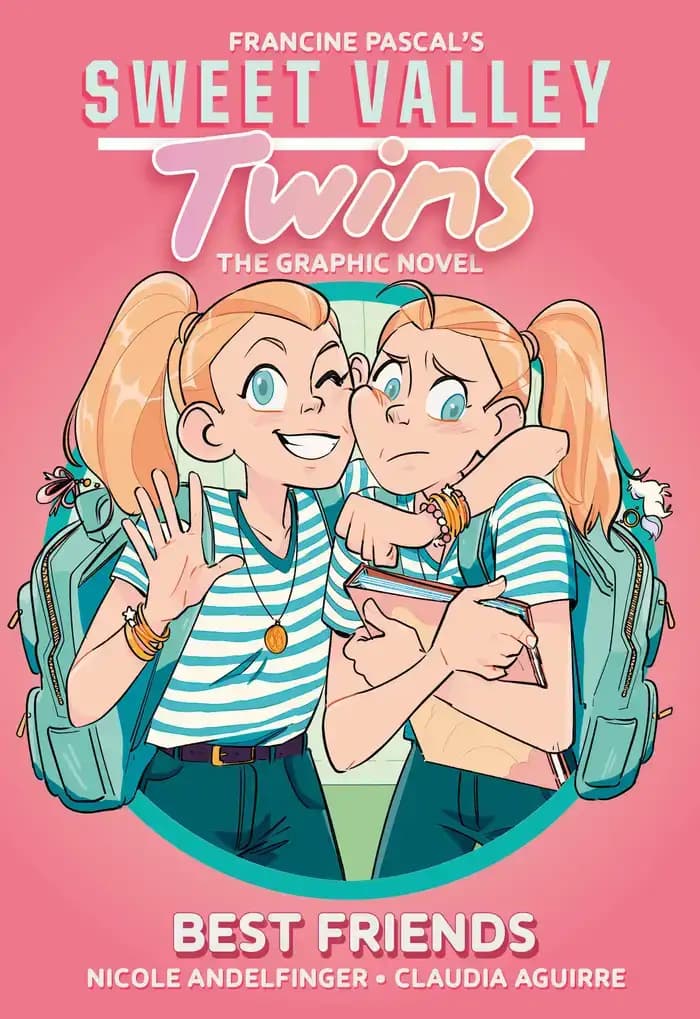
Sweet Valley Twins: Best Friends
#1 of 46 in Sweet Valley Twins Graphic Novels Series
illustrations by
on Goodreads (2,699)
What’s inside...
Jessica and Elizabeth are ready to take on middle school, but as they start exploring their individual interests, they realize they might not be as alike as they thought. Elizabeth is excited to start a school newspaper, while Jessica wants to join the exclusive Unicorn Club. As the twins navigate the challenges of middle school and finding their own identities, they must figure out if they can continue to support each other and remain close friends. Francine Pascal's 'Sweet Valley Twins' is reimagined in this new graphic novel adaptation with vibrant artwork by Claudia Aguirre, capturing the essence of middle-grade struggles with heart and humor.
Character compass
Elizabeth Wakefield
Jessica Wakefield
Amy Sutton
Lila Fowler
Discussion points
What do you think makes Jessica and Elizabeth's friendship so special? Can you relate to any of their experiences?
How do the twins handle disagreements and what can we learn from them?
What role do you think honesty plays in their relationship? Have you ever faced a similar situation?
How do you think the story would change if it was set in today's world?
What is your favorite part of the book and why?
Tip: Role play these questions
Encourage your child to compare and contrast their personal experiences with the twins' adventures, fostering deeper connections with the characters.
Discuss the moral dilemmas presented in the book and ask your child how they would have handled similar situations.
Highlight the importance of empathy by discussing how each character feels in different scenarios throughout the book.
Ask your child to imagine alternative endings or plot twists, which can help develop creative thinking.
Connect themes from the book to real-world scenarios to help your child apply lessons from the story to their own life.
Key lessons
Example Lesson: Understanding the value of friendship
Explanation: The story revolves around the adventures and challenges faced by the twins, highlighting how their friendship with each other and their friends helps them navigate difficult situations.
Real-World Application: Children can learn to value and nurture friendships, understanding that it can provide support and joy in their daily lives.
Example Lesson: Importance of empathy and compassion
Explanation: As the twins encounter various conflicts and misunderstandings among their friends, they learn to see situations from others' perspectives, fostering empathy and compassion.
Real-World Application: Through the twins' experiences, children can learn to empathize with peers and practice compassion, helping them build stronger relationships.
Example Lesson: Resolving conflicts through communication
Explanation: Throughout the book, the twins face numerous scenarios where they must talk through their problems and misunderstandings to find resolutions.
Real-World Application: This lesson encourages children to use communication as a tool to resolve conflicts in school and at home, promoting peaceful interactions.
Example Lesson: The value of honesty
Explanation: The protagonists learn the importance of being honest with each other and their friends, especially when facing moral dilemmas.
Real-World Application: Children can understand that honesty builds trust and integrity in relationships, helping them become more reliable and trustworthy individuals.
Example Lesson: Learning from mistakes
Explanation: As the story unfolds, the twins make mistakes and face the consequences, which teaches them important life lessons.
Real-World Application: This narrative can teach children that mistakes are opportunities for growth and learning, encouraging them to embrace challenges as part of personal development.