
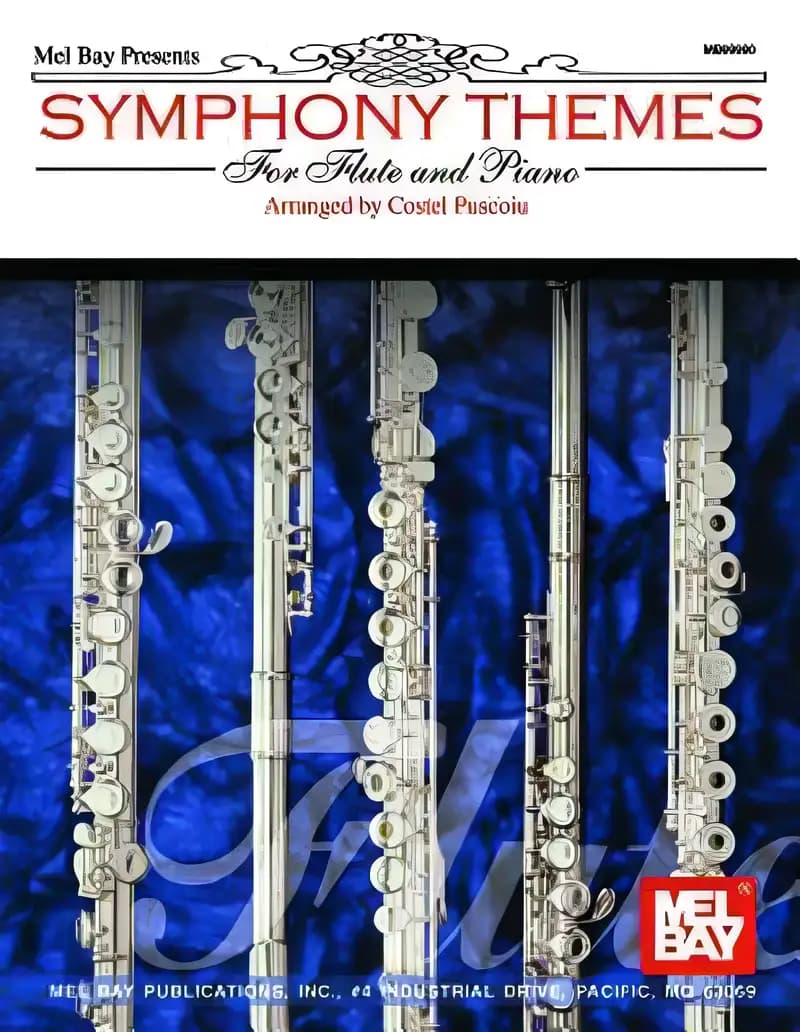
Symphony Themes for Flute and Piano
You Can Teach Yourself Series
What’s inside...
This collection of symphony themes contains the best known and beautiful melodies composed by Haydn, Mozart, Beethoven, Schubert, Schumann, Mendelssohn-Bartholdy, Berlioz, Franck, Brahms, Dvorak and Tchaikovsky. These themes have been arranged for the intermediate flutist with a separate 16 page pull-out for flute and piano accompaniment.
Series reading
Non-Sequential
Age
10-13
Length
56 pages
Text complexity
Discussion points
How do the different melodies in the book make you feel?
Which piece did you enjoy the most, and what did you imagine while listening to it?
Can you tell a story using one of the musical themes from the book?
What kind of emotions do the flute and piano express when they play together?
If you could create your own melody, what instruments would you choose and why?
Tip: Role play these questions
Play each musical theme from the book while discussing it, allowing the child to fully experience the sound before reflecting on it.
Encourage your child to close their eyes and visualize a scene or colors that they associate with the music they hear.
Use descriptive words to talk about the music (like 'soft,' 'loud,' 'quick,' 'slow') to help build their musical vocabulary.
After discussing a specific piece, try creating a simple melody together using objects at home to emulate piano and flute sounds.
Validate their feelings and interpretations of the music, showing them that their thoughts and emotions are important and respected.
Key lessons
Example Lesson: Appreciation of music
Explanation: Through the structured compositions in 'Symphony Themes for Flute and Piano', children are introduced to the depth and dynamics of symphonic music.
Real-World Application: Children can develop a deeper appreciation for music in general, fostering a lifelong love for various musical genres and possibly inspiring them to learn a musical instrument.
Example Lesson: Discipline and Practice
Explanation: Mastering the pieces in the book requires dedication and practice, reflecting the larger concept of practice leading to proficiency.
Real-World Application: This lesson translates to any skill children wish to master, emphasizing the importance of consistent effort and practice, whether in academics, sports, or arts.
Example Lesson: Cultural Awareness
Explanation: The book features diverse symphony themes from different cultures and eras, exposing children to a global perspective on music.
Real-World Application: This encourages open-mindedness and appreciation towards diverse cultural expressions and can ignite curiosity about world history and global cultures.
Example Lesson: Emotional Expression
Explanation: Music is a powerful form of emotional expression. By engaging with the symphonic themes, children learn to understand and express their emotions through the nuances of musical interpretation.
Real-World Application: This skill helps children in articulating their feelings more clearly and managing their emotions, contributing to better emotional intelligence.
Example Lesson: Creativity and Imagination
Explanation: Learning to play the diverse themes can spark creativity, as children imagine different settings and stories inspired by the music.
Real-World Application: This can enhance their creative thinking, which is crucial not only in artistic pursuits but also in problem-solving and innovation in daily tasks and future careers.