
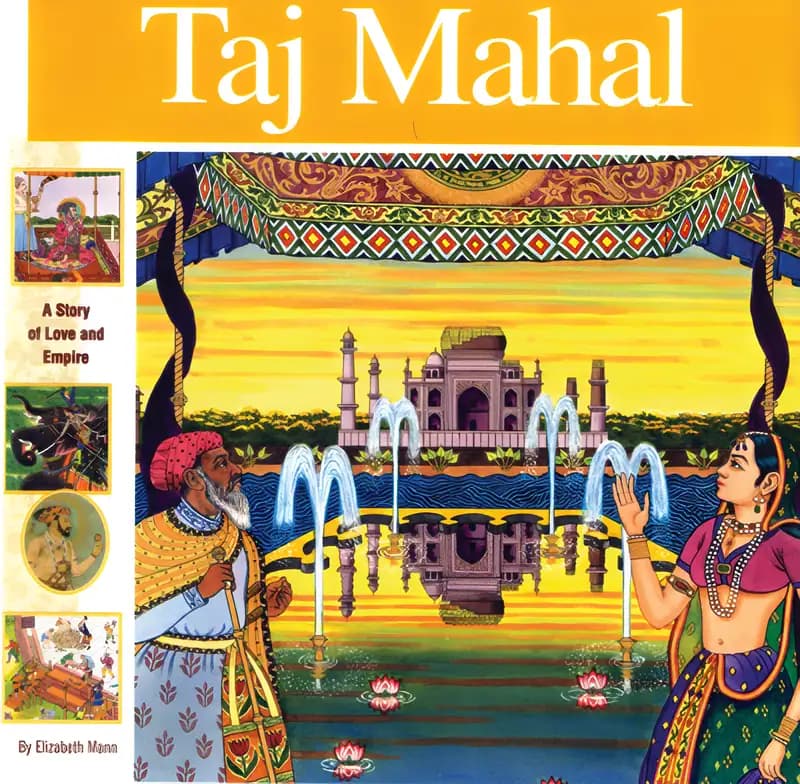
Taj Mahal: A Story of Love and Empire (Wonders of the World Book)
Wonders Of The World Book Series
What’s inside...
Beautifully illustrated story of the building of the Taj Mahal, one of the world's most famous buildings, and the Mughai dynasty in India, whose fifth emperor built it. The book also delves into the history of the Magnificent Mughals of India. Shah Jahan, ruler of India, murdered three of his brothers in his bloody rise to power. Yet when his beloved wife, Mumtaz Mahal, suddenly died, the grief-stricken emperor built the world's most beautiful tomb as a monument to her memory. Shah Jahan was the fifth emperor of the Mughal dynasty. The Mughals combined the brute force and fierce ambition of their legendary ancestor Genghis Khan with a delicate artistic sensitivity. Theirs was a world where even forts were architectural gems, where emperors had their life stories told in exquisite miniature paintings, and where each new ruler competed with the previous one by building a grander palace, fort, mosque and city. The Taj Mahal tells the story of this remarkable dynasty through its greatest artistic achievement. From the soaring domes, to the marble columns inlaid with precious gems, to the vast gardens, to the perfect symmetry of its design, the Taj Mahal expressed the power, grandeur, glory and beauty of the Mughal world.
Series reading
Non-Sequential
Age
9-13
Length
48 pages
Text complexity
Character compass
Emperor Shah Jahan
Mumtaz Mahal
Discussion points
What emotions did you feel when you learned about the love story behind the Taj Mahal?
How do you think architecture can tell a story or represent emotions like love?
What differences and similarities do you notice between your culture and the one you read about in the story?
Why do you think the Taj Mahal is considered a symbol of love worldwide?
How do you think the story of the Taj Mahal might inspire people today?
Tip: Role play these questions
Let your child first express their initial thoughts about the story before delving into deeper discussion.
Use the illustrations in the book to guide your conversation, asking your child what they observe and how it makes them feel.
Encourage your child to relate the story of the Taj Mahal to their personal experiences of love and kindness.
Discuss the historical and cultural context of the story to give your child a broader understanding of the world.
Celebrate the artistic and emotional expression found in the book, encouraging your child to express themselves creatively as well.
Key lessons
Example Lesson: Empathy and Understanding
Explanation: The book showcases the love Shah Jahan had for Mumtaz Mahal, inspiring empathy by illustrating deep emotional bonds.
Real-World Application: Children can learn to appreciate and understand the feelings of those around them, fostering better interpersonal relationships.
Example Lesson: Cultural Awareness
Explanation: By exploring the historical and cultural significance of the Taj Mahal, the book educates children about the rich heritage of India.
Real-World Application: This lesson encourages children to explore and respect diverse cultures, enhancing global awareness and tolerance.
Example Lesson: The Importance of Dedication
Explanation: The construction of the Taj Mahal, a task that required immense planning and perseverance, exemplifies dedication.
Real-World Application: Children can apply the principle of dedication to their personal goals, whether in academics, sports, or personal projects, understanding the value of commitment and hard work.
Example Lesson: Historical Knowledge
Explanation: The story provides historical insights into the Mughal Empire’s rule and architectural achievements, helping children understand historical timelines and events.
Real-World Application: This knowledge allows children to connect past events with the present, enhancing their comprehension of the world’s historical developments.
Example Lesson: Appreciation for Art and Architecture
Explanation: The description of the Taj Mahal’s intricate designs and architectural beauty helps children develop an appreciation for art and design.
Real-World Application: This can inspire creativity and interest in arts and crafts, and even architectural pursuits in their future educational choices.