
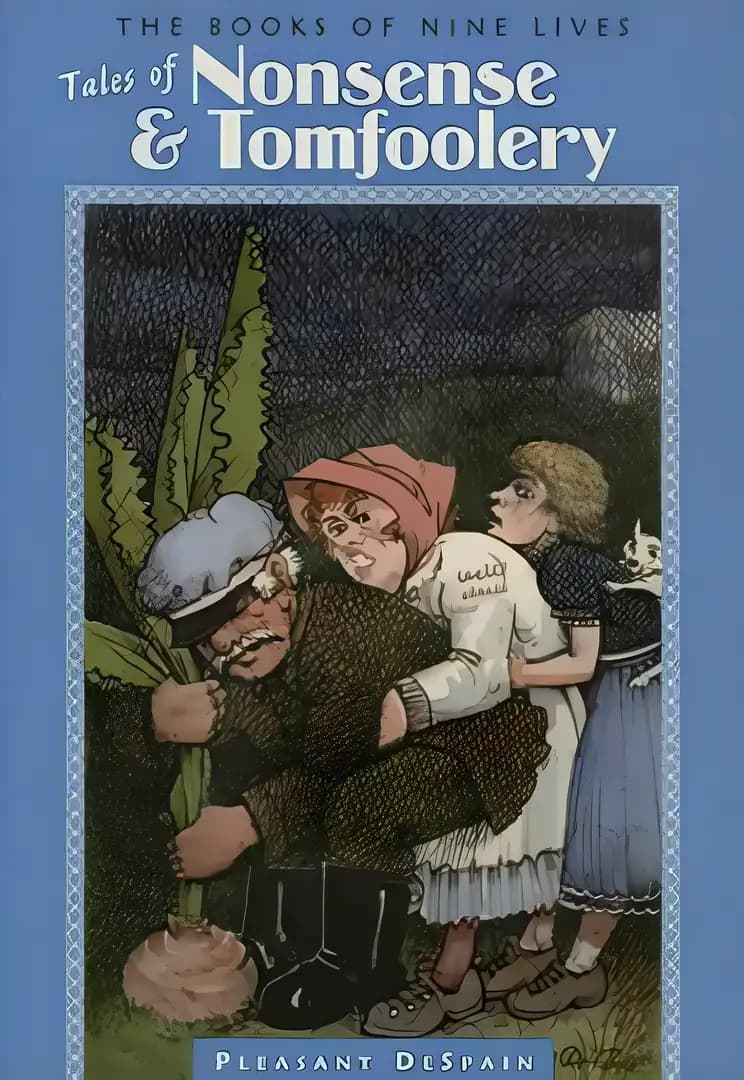
Tales of Nonsense and Tomfoolery (Books of Nine Lives)
Books of Nine Lives Series
illustrations by
What’s inside...
A collection of short folktales from the Books of Nine Lives series by award-winning author, Pleasant DeSpain. These stories feature foolish characters from various cultures, including 'The Silly Farmer' from Ethiopia, 'The Extraordinary Cat' from China, 'The Bear Who Said North' from Finland, and 'The Proud Fox' from the United States. Through these tales, readers learn the consequences of foolish actions and the importance of self-awareness and laughter.
Series reading
Non-Sequential
Age
8-11
Length
80 pages
Text complexity
Discussion points
What do you think is the silliest story in the book, and why did it make you laugh?
If you could be friends with one of the characters from the tales, who would it be and what would you do together?
How do you think the characters felt during their adventures? Can you think of a time when you felt the same way?
What lessons do you think these stories are trying to teach us about handling strange or silly situations?
If you could create your own nonsense story, what would it be about and which characters would you include?
Tip: Role play these questions
Encourage your child to use their imagination by asking them to think of alternative endings or additional silly scenarios for the stories. This not only enhances their creative thinking but also deepens their understanding and retention of the narratives. Use expressive reading techniques, such as different voices for different characters, to make the stories come alive and keep the reading sessions interactive and exciting. After reading, connect the themes of the stories to real-life situations or familiar experiences to help your child apply the morals and lessons in a practical context.
Key lessons
Example Lesson: Importance of honesty
Explanation: The stories in 'Tales of Nonsense and Tomfoolery' often revolve around characters who learn the value of being truthful, even in tricky situations.
Real-World Application: Children can apply this by being encouraged to always tell the truth to parents and teachers, even when they might be scared of the consequences.
Example Lesson: Creativity and imagination
Explanation: The book is filled with whimsical and imaginative tales that foster a child’s creativity and ability to think outside the box.
Real-World Application: In their everyday life, children can use creative thinking to solve problems or create art, stories, and games from their own imagination.
Example Lesson: Consequences of actions
Explanation: Several stories highlight how characters' decisions lead to certain outcomes, teaching children about cause and effect.
Real-World Application: Children learn to think before acting, understanding their actions impact others and themselves, whether it's sharing toys or completing homework.
Example Lesson: Resilience in the face of challenges
Explanation: Characters often encounter bizarre and challenging scenarios, but they find ways to persevere, demonstrating resilience.
Real-World Application: This lesson helps children understand that facing challenges is a part of life, and overcoming them is possible through perseverance and creative thinking.
Example Lesson: Empathy and kindness
Explanation: The interaction between characters in these fantastical stories often teaches the importance of being empathetic and kind to others.
Real-World Application: Children can apply this by showing kindness to classmates and family members, helping to build positive relationships.