
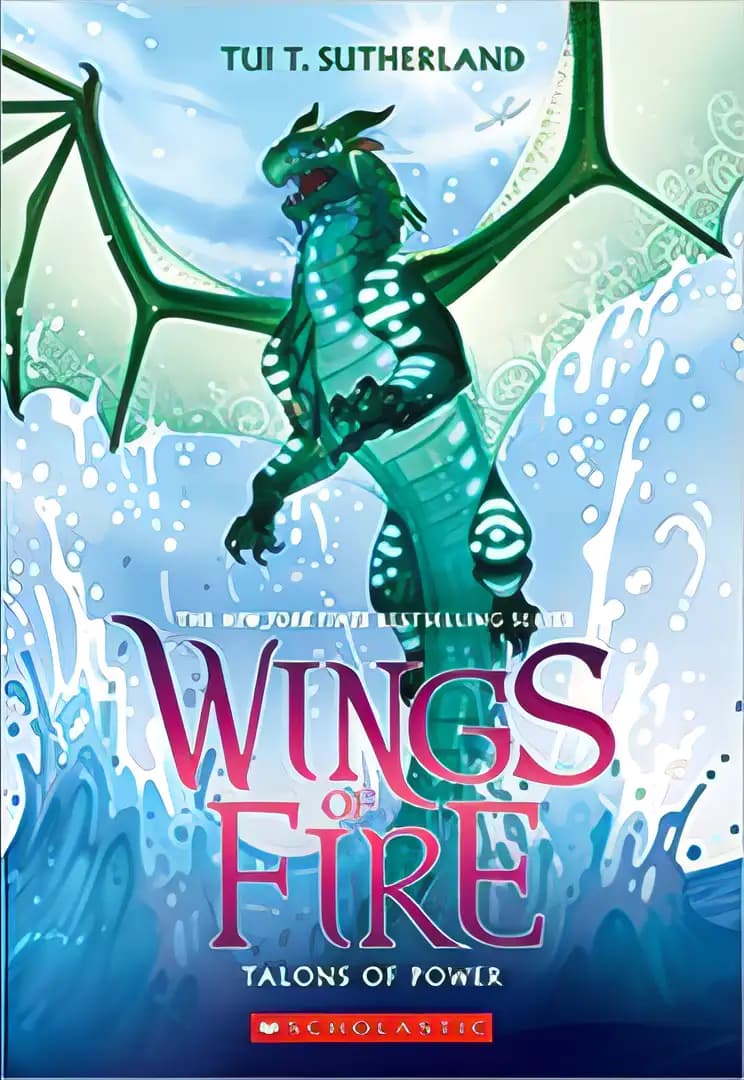
Talons of Power
#9 of 15 in The Wings of Fire Series
on Goodreads (24,010)
What’s inside...
The war is over, and the false prophecy has been fulfilled, but the dragonets still face enemies as a dark evil stirs from centuries of burial. Meanwhile, a young NightWing may have had the first true prophecy in generations, foretelling a cataclysm that could devastate Jade Mountain unless the lost city of night is found. In another tale within the Wings of Fire series, the ancient and sinister dragon Darkstalker has returned, forcing a dragon named Turtle to contemplate stepping out from the shadows to become the hero that is needed to stop the formidable foe.
Character compass
Turtle
Moonwatcher
Tsunami
Qibli
Anemone
Darkstalker
Discussion points
How do you think Turtle feels when he has to keep his powers a secret? Can you relate to keeping a secret?
What do you think about the way different dragon tribes interact? Does it remind you of how people treat each other based on their backgrounds?
If you had Turtle’s magical abilities, what would you do with them? Why?
The theme of power is central in this book. What do you think makes someone powerful? Is it always about physical strength?
How do the choices Turtle makes affect the other characters? What would you have done differently if you were in his place?
Tip: Role play these questions
Utilize open-ended questions that encourage your child to think deeply about the characters and plot, relating them back to their own experiences.
Encourage your child to explore the emotions and motives behind each character's actions, fostering empathy and understanding.
Discuss the book's setting and how it impacts the story. This can lead to a conversation about the importance of understanding and respecting different cultures.
Create parallels between the story and real-life situations to help your child apply the book's lessons in a broader context.
Use examples from the book to discuss the consequences of actions, and the importance of making thoughtful decisions.
Key lessons
Example Lesson: The importance of self-discovery
Explanation: In 'Talons of Power,' the protagonist Turtle grapples with his own identity and powers. His journey underscores the significance of understanding and accepting oneself.
Real-World Application: Children can apply this lesson by exploring their own interests and talents, thereby building confidence and self-awareness.
Example Lesson: The value of courage in the face of adversity
Explanation: Throughout the story, Turtle faces various challenges and learns to overcome them with bravery. This highlights how courage is crucial when confronting difficult situations.
Real-World Application: This teaches children to face their fears and challenges head-on, whether it’s trying out for a sports team, standing up to a bully, or dealing with academic pressures.
Example Lesson: Understanding the impact of choices
Explanation: Turtle's decisions throughout the book affect not only himself but also those around him. This demonstrates the ripple effect of one's choices.
Real-World Application: Children learn the significance of thinking before acting, understanding that their choices have consequences that extend beyond themselves.
Example Lesson: The strength found in teamwork
Explanation: As Turtle collaborates with other dragons to face threats, the narrative showcases how teamwork can lead to overcoming obstacles that seem insurmountable alone.
Real-World Application: This lesson encourages children to appreciate the power of working with others, promoting cooperation and collaboration in school projects or in sports.
Example Lesson: Respect for diversity
Explanation: The diverse abilities and backgrounds of the dragon tribes in 'Talons of Power' teach the value of respecting and celebrating differences.
Real-World Application: Children are encouraged to apply this understanding by embracing diversity among their peers, leading to more inclusive attitudes and behaviors.