
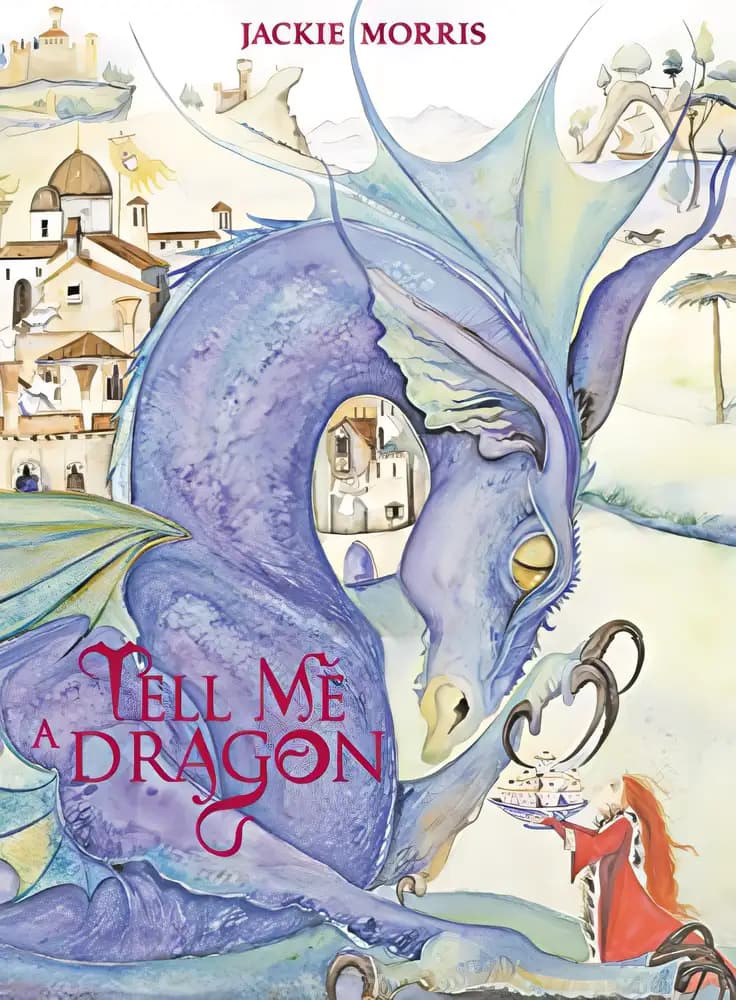
Tell Me a Dragon
What’s inside...
Dragons are a perennial favorite of most children, and this book honors the mythical creatures with words and pictures. Jackie Morris, known for the ravishing colors and sheer beauty of her art, offers young readers a gallery of dragons in every shape, size, and temperament imaginable. They range from a beast as big as a village to a tiny species with whisper-thin wings, from a snaggle-toothed monster to a sea-dragon that races dolphins on the waves. Tell Me a Dragon’s whimsical text and enchanting gallery show why these creatures are so popular and inspire animated discussion and dragon-based activities.
Age
3-7
Length
32 pages
Text complexity
Discussion points
If you could have a dragon of your own, what would it look like and what special abilities would it have?
How do you think the dragons in the book feel about their owners?
What do you think makes the relationship between a dragon and its owner special?
Which dragon from the book was your favorite and why?
How do you think having a dragon would change the daily life of its owner?
Tip: Role play these questions
Encourage your child to use their imagination by asking them to draw or describe their own dragon.
Discuss the various characteristics of the dragons in the book and how they reflect the personality or needs of their owners.
Relate the feelings of the dragons to real-life pet and owner relationships to make it more relatable.
Ask your child to pick their favorite dragon and discuss what specifically stands out about that dragon.
Use the discussion to explore themes of friendship and responsibility that come with caring for others, linking it back to the child’s experiences with pets or friends.
Key lessons
Example Lesson: Embracing Individuality
Explanation: In 'Tell Me a Dragon,' each character has a unique dragon, symbolizing the diversity and individuality of people. The story celebrates these differences in a whimsical and imaginative way.
Real-World Application: Children can learn to appreciate their own unique qualities and those of others around them, fostering a positive self-image and respect for diversity.
Example Lesson: Creativity and Imagination
Explanation: The book uses rich illustrations and descriptive language to portray various dragons, encouraging children to use their imagination to picture their own dragons.
Real-World Application: This can inspire children to engage in creative activities such as drawing, storytelling, or role-playing, enhancing their creative skills and imaginative thinking.
Example Lesson: Importance of Storytelling
Explanation: Each character in the book shares their own dragon story, highlighting the age-old art of storytelling. This emphasizes the significance and joy of sharing stories.
Real-World Application: Children can be encouraged to create and share their own stories, which can improve their language skills, and deepen family bonds when shared as bedtime stories or family time activities.
Example Lesson: Acceptance and Understanding
Explanation: The diversity of dragons in the book, all coexisting harmoniously, models acceptance and understanding of differences.
Real-World Application: This lesson can help children learn to be more accepting and understanding of the diverse world around them, leading to more harmonious interactions in school and other social settings.
Example Lesson: The Power of Visualization
Explanation: As characters describe their dragons in vivid detail, this illustrates the power of visualization in bringing ideas to life.
Real-World Application: Children can practice visualization as a tool to achieve goals and bring clarity to their dreams and aspirations, enhancing focus and motivation.