
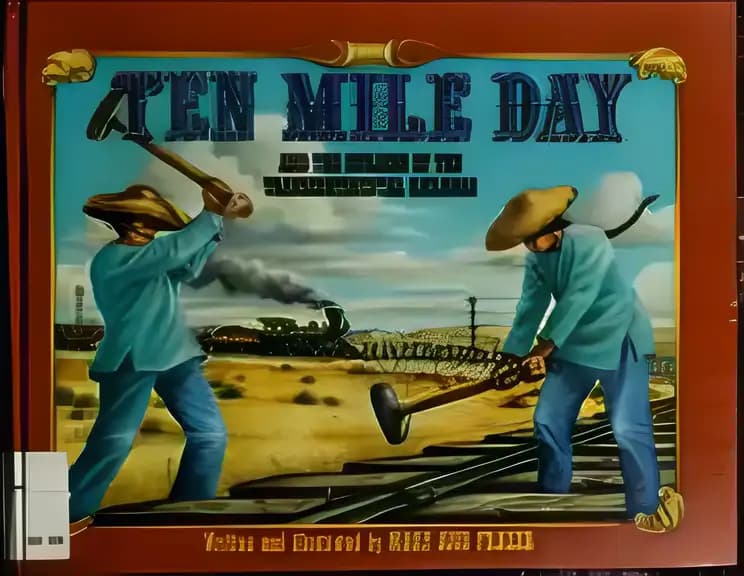
Ten Mile Day: And the Building of the Transcontinental Railroad
on Goodreads (77)
What’s inside...
On May 10, 1869, the final spike in North America's first transcontinental railroad was driven home at Promontory Summit, Utah. Illustrated with the author's carefully researched, evocative paintings, this book tells the story of that great American adventure when Charles Crocker staked $10,000 on the crews' ability to lay a world record ten miles of track in a single day, known as the Ten Mile Day.
Age
8-12
Length
40 pages
Text complexity
Discussion points
How do you think the workers felt while building the Transcontinental Railroad?
What challenges do you think they faced during the construction?
Why was the completion of the Transcontinental Railroad so important for America?
How do teamwork and perseverance show up in the story?
If you were a worker on the railroad, what job would you want to do and why?
Tip: Role play these questions
Set the scene by discussing the historical context of the 1860s and the significance of the railroad before reading.
Encourage your child to imagine themselves in the story, asking how they would feel and react in similar situations.
Discuss the various emotions and challenges depicted in the book, relating them to personal experiences of overcoming obstacles.
Highlight the themes of teamwork and perseverance, and relate them to everyday situations in your child’s life.
After reading, consider building a simple railroad model or drawing a map to visualize the great expanse the railroad covered.
Key lessons
Example Lesson: Perseverance and determination
Explanation: The story showcases the relentless efforts of the workers as they push through challenges to connect the American continent by rail.
Real-World Application: Children learn the value of persistence in achieving goals, whether in completing a difficult homework assignment or learning a new skill.
Example Lesson: Teamwork and collaboration
Explanation: Building the Transcontinental Railroad required the cooperation of many individuals, demonstrating the power of working together towards a common goal.
Real-World Application: This encourages children to appreciate the importance of teamwork in group projects at school or in sports.
Example Lesson: Innovation and problem-solving
Explanation: The book highlights the engineering challenges and innovative solutions employed during the construction of the railroad.
Real-World Application: Kids are inspired to think creatively and solve problems they encounter, be it in their studies or in everyday situations.
Example Lesson: Historical awareness
Explanation: Children gain insights into a pivotal event in American history, understanding the impact of the railroad on the development of the United States.
Real-World Application: This knowledge fosters a deeper appreciation and curiosity about history and its relevance to present-day America.
Example Lesson: Resilience in the face of adversity
Explanation: The narrative details the harsh conditions faced by the workers, emphasizing their resilience.
Real-World Application: It teaches children the importance of staying strong during tough times, whether dealing with personal challenges or broader difficulties.