
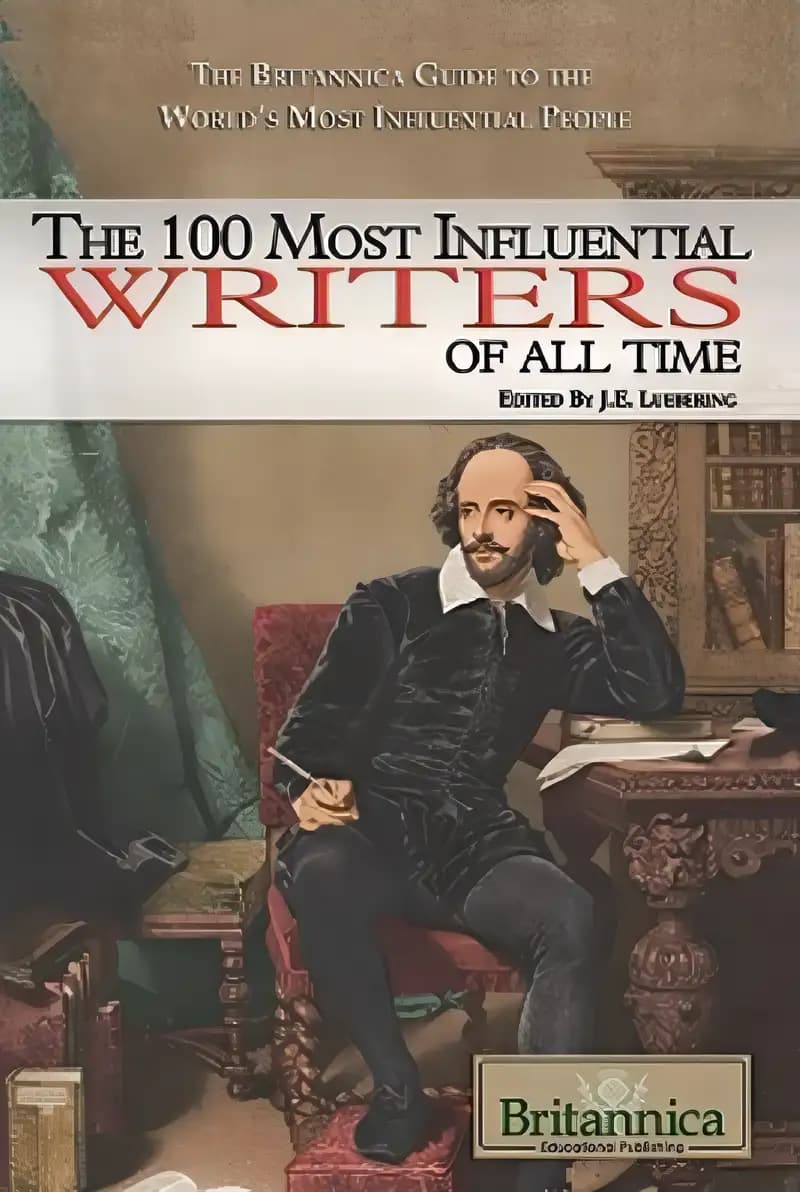
The 100 Most Influential Writers of All Time (The Britannica Guide to the World's Most Influential People)
The Britannica Guide To The World'S Most Influential People Series
on Goodreads (14)
What’s inside...
The book 'The 100 Most Influential Writers of All Time' by J. E. Luebering offers a comprehensive look at one hundred significant authors from various cultures, time periods, and genres in global literature. It delves into their lives, works, and enduring impacts, exploring the historical and personal contexts that shaped their writing. The book aims to deepen understanding of how these writers have influenced human thought and society through their storytelling, innovation, and exploration of universal themes. It is part of an 8-book series that provides concise, information-packed biographies of leading individuals across different disciplines, complete with indexes, visuals, and insights into their human nature.
Series reading
Non-Sequential
Age
14-17
Length
351 pages
Text complexity
Discussion points
Who is one writer from the book that you found interesting and why?
How do you think the work of these writers has shaped the world?
Can you think of any story or book by one of these writers that you would like to read?
What qualities do you think make a writer influential?
If you could meet any writer from this book, who would it be and what would you ask them?
Tip: Role play these questions
Before starting a session, skim through the book and pick a few writers you think your child might find intriguing. This pre-selection helps in focusing the discussion.
Encourage your child to express their thoughts and relate the influence of these writers to their own life or books they have read.
Use the discussion as an opportunity to introduce your child to new genres or works by these influential writers that they have not yet explored.
After discussing a writer, consider finding a movie or documentary about them or their work to watch together, reinforcing the learning and making the session interactive and fun.
Connect the themes or historical periods mentioned in the book to current events or popular culture to make the conversation more relevant and engaging for the child.
Key lessons
Example Lesson: The power of perseverance
Explanation: The book highlights writers who faced significant challenges yet continued to write and influence the world, such as Maya Angelou and her struggle against racial discrimination.
Real-World Application: Children can learn to persist in their endeavors, whether in their studies, hobbies, or relationships, despite difficulties.
Example Lesson: The importance of creativity
Explanation: Authors like Shakespeare and J.K. Rowling are celebrated for their unparalleled imaginative prowess, showing how creativity can shape cultures and societies.
Real-World Application: Encourages children to embrace their imagination in writing, art, or problem-solving, fostering innovative thinking that can be applied in various aspects of life.
Example Lesson: The value of expressing oneself
Explanation: Through the exploration of writers such as Virginia Woolf and George Orwell, the book demonstrates how writing can be a powerful tool for expressing thoughts and influencing change.
Real-World Application: Children can learn to articulate their feelings and opinions more effectively in their daily interactions and understand the impact of their voice.
Example Lesson: Understanding diverse perspectives
Explanation: The book covers writers from different eras and backgrounds, providing a panorama of cultural and historical contexts.
Real-World Application: Helps children appreciate diverse viewpoints and cultures, enhancing their empathy and social awareness in a globalized world.
Example Lesson: The importance of lifelong learning
Explanation: This book exemplifies how many influential writers were also voracious readers and learners themselves, continuously evolving in their craft.
Real-World Application: Children are motivated to engage in continuous learning and intellectual curiosity, understanding that education does not end in the classroom but is a lifelong journey.