
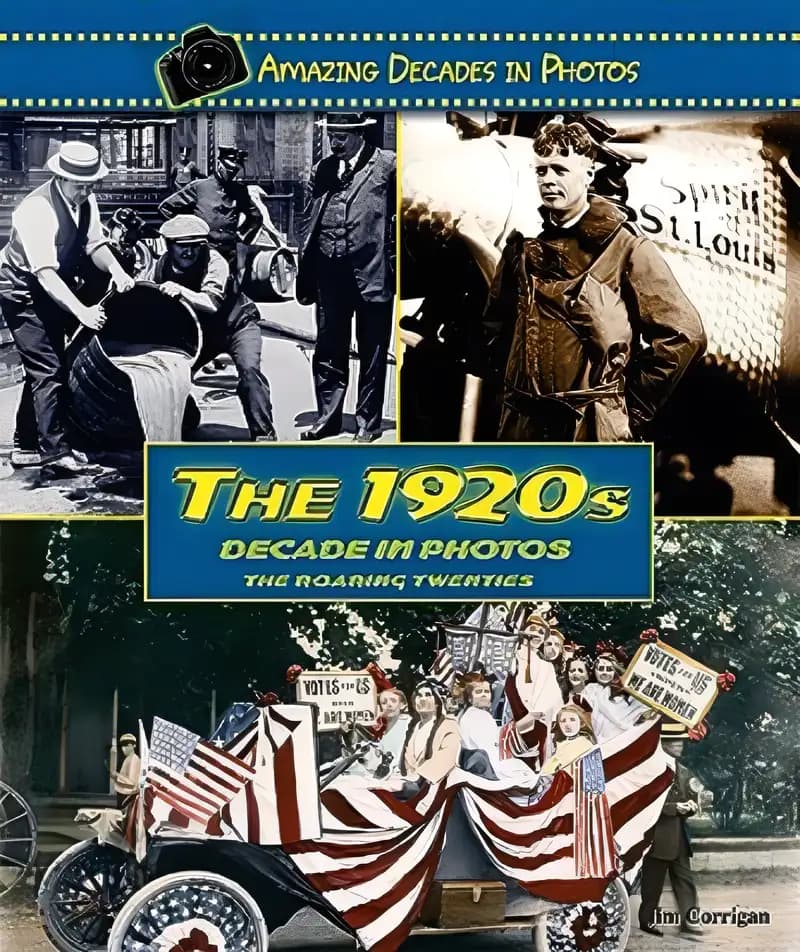
The 1920s Decade in Photos: The Roaring Twenties (Amazing Decades in Photos)
Amazing Decades In Photos Series
on Goodreads (22)
What’s inside...
This book provides middle school readers with an overview of the significant world, national, and cultural developments of the 1920s. The decade was marked by celebration as America emerged from World War I with a booming economy and growing cities. It was the era of Prohibition, jazz music, and flappers, as well as a time for both heroes like Charles Lindbergh and villains like Al Capone. As the decade concluded, the onset of the Great Depression and the rise of dictators like Adolf Hitler signaled significant global shifts. Heavily illustrated with photos, the book shows how in the 1920s America celebrated like never before. World War I was finally over and Americans eagerly looked ahead. Cities grew as the economy boomed. It was the era of Prohibition, when alcohol was illegal, but people drank liquor and listened to jazz music in secret nightclubs. Bold young women called 'flappers' led a culture of revelry. It was a time for heroes and villains. Pilot Charles 'Lucky Lindy' Lindbergh winged his way across the Atlantic. Meanwhile, Al Capone and his gang of mobsters ruled the streets of Chicago. As the decade ended, the world faced the Great Depression. Dictators such as Adolf Hitler began seizing power. Read about the The Roaring Twenties, a decade unlike any other.
Series reading
Non-Sequential
Age
10-17
Length
64 pages
Text complexity
Discussion points
What similarities and differences do you notice between life today and in the 1920s?
How do you think the changes from the 1920s have shaped our world?
What were some of the challenges people faced during the 1920s?
Which invention or trend from the 1920s do you find most interesting and why?
Tip: Role play these questions
Use the photos in the book as a visual prompt to help your child imagine living in the 1920s.
Encourage your child to think about how they would feel and what they would do if they lived in the Roaring Twenties.
Ask your child to think of questions they would ask someone from the 1920s, fostering a deeper connection and curiosity about the era.
Relate the themes from the book to your child's daily life to make the historical content more relevant and engaging.
Key lessons
Example Lesson: Understanding historical context
Explanation: This book captures the essence of the 1920s, offering insights into the social, cultural, and political happenings of the decade.
Real-World Application: Children can better understand the connections between past events and current societal structures, enhancing their ability to analyze and interpret changes over time.
Example Lesson: Importance of cultural expression
Explanation: The 1920s, often referred to as the Roaring Twenties, was a period rich in cultural dynamism, including jazz music, fashion, and art that reflected societal shifts.
Real-World Application: This encourages children to explore and appreciate diverse forms of cultural expression, promoting open-mindedness and creativity.
Example Lesson: Economic fluctuations and resilience
Explanation: The book discusses the economic prosperity of the era followed by the dramatic downturn of the Great Depression, highlighting how societies and individuals coped.
Real-World Application: Children learn about economic resilience and the importance of adaptability in times of financial uncertainty, preparing them for personal and collective economic challenges.
Example Lesson: Technological and societal progress
Explanation: The 1920s was an era of significant technological advances such as the automobile and the radio, which transformed everyday life.
Real-World Application: Encourages children to embrace technological changes and innovation, understanding its impact on improving life and offering new possibilities.
Example Lesson: Role of youth and change
Explanation: This book illustrates how young people in the 1920s played a pivotal role in shaping new cultural norms and fashions, driving social change.
Real-World Application: Inspires children to see themselves as active contributors to society, capable of leading change and influencing future cultural trends.