
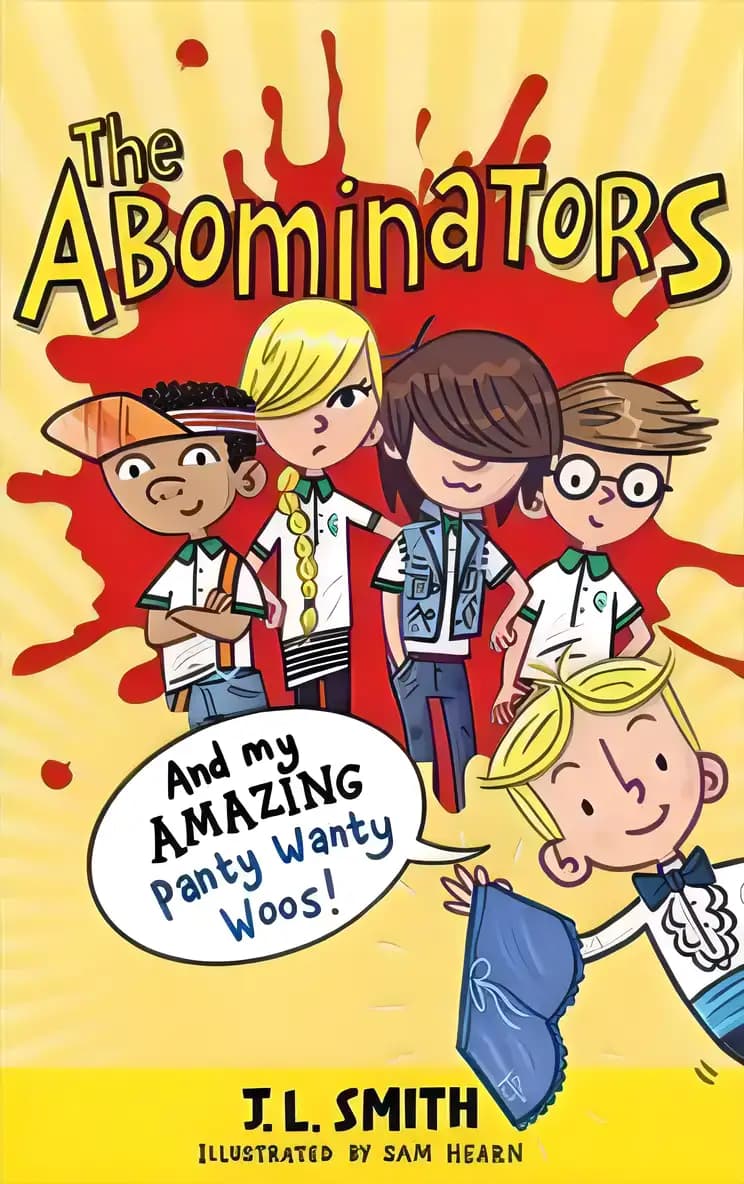
The Abominators
#1 in The Abominators Series
on Goodreads (30)
What’s inside...
Mucker, Boogster, Cheesy, and Bob, known as The Abominators, thrive on chaos, mayhem, and pranks like filling school toilets with strawberry jelly. They are not interested in befriending the eccentric new boy, Cecil Trumpington-Potts, who wears panty-wanty-woos. Despite their disinterest, Cecil is determined to win them over and become their friend.
Discussion points
What do you think motivated the characters to form their club, The Abominators?
How did the relationships between the characters change throughout the story?
Can you relate to any of the characters' feelings or actions? Why or why not?
What lesson do you think the author wanted us to learn from the story?
If you could add another character to The Abominators, who would they be and why?
Tip: Role play these questions
Show genuine interest in your child's responses to encourage deeper thought and reflection.
Relate the characters' experiences to real-life scenarios your child might face to make the discussion more relevant.
Discuss the characters' choices and ask your child what they might have done differently in similar situations.
Use the discussion to explore themes of friendship, loyalty, and creativity as presented in the book.
Encourage your child to imagine alternative endings or new adventures for the characters to foster creativity.
Key lessons
Example Lesson: The importance of friendship
Explanation: Throughout the book, the characters demonstrate strong bonds and support for each other, facing challenges together.
Real-World Application: Children learn the value of having supportive friends in real life, promoting teamwork and empathy among peers.
Example Lesson: Accepting differences
Explanation: The story showcases characters with diverse personalities and backgrounds, learning to appreciate each other's uniqueness.
Real-World Application: This encourages children to embrace diversity and be open-minded towards classmates and neighbors who may be different from them.
Example Lesson: Consequences of actions
Explanation: The characters in the book often face outcomes based on their decisions, teaching about responsibility and foresight.
Real-World Application: Kids are prompted to think about the potential outcomes of their actions, helping them make more responsible choices.
Example Lesson: Creative problem solving
Explanation: The group often gets into tricky situations but uses creative thinking and teamwork to find solutions.
Real-World Application: Children can learn to use creativity and collaboration to solve problems they encounter at school or home.