
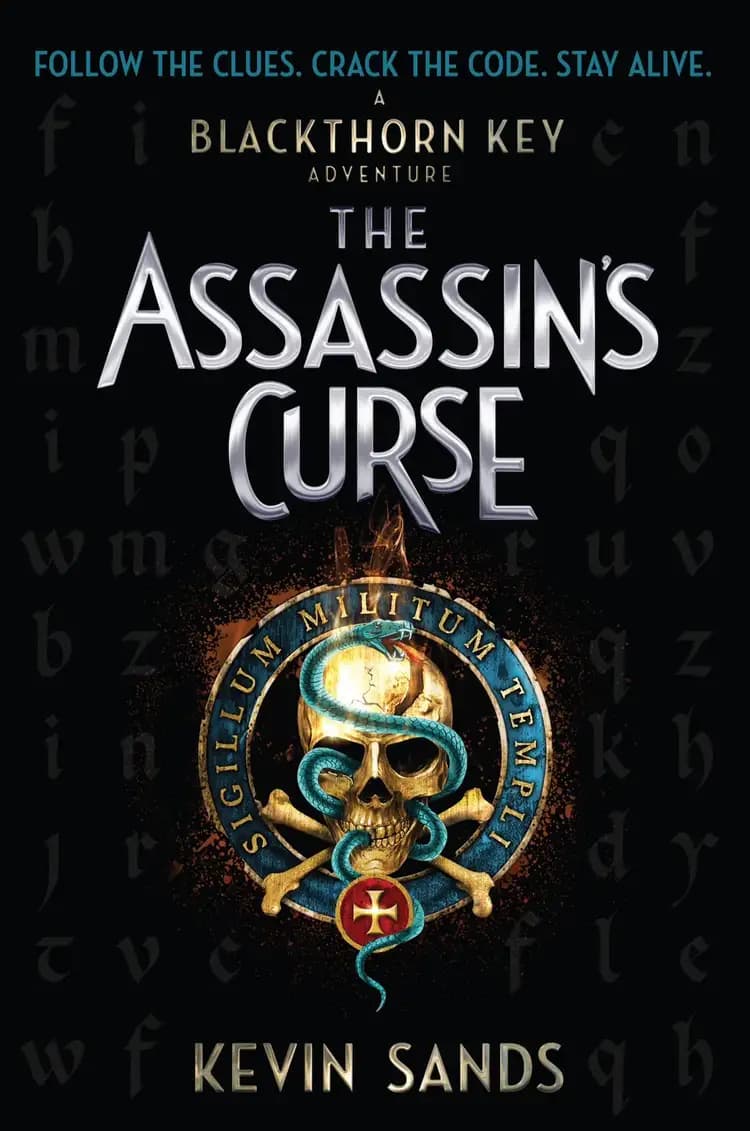
The Assassin's Curse: Blackthorn Key
#3 of 6 in The Blackthorn Key Series
on Goodreads (3,800)
What’s inside...
Christopher Rowe is back and there are more puzzles, riddles, and secrets to uncover in this third novel of the award-winning Blackthorn Key series. Wherever Christopher Rowe goes, adventure—and murder—follows. Even a chance to meet King Charles ends in a brush with an assassin. All that’s recovered from the killer is a coded message with an ominous sign-off: more attempts are coming. So when Christopher’s code-breaking discovers the attack’s true target, he and his friends are ordered to Paris to investigate a centuries-old curse on the French throne. And when they learn an ancient treasure is promised to any assassin who succeeds, they realize the entire royal family is at stake—as well as their own lives. In the third heart-pounding installment of the award-winning Blackthorn Key series, Christopher, Tom, and Sally face new codes, puzzles, and traps as they race to find the hidden treasure before someone else is murdered.
Character compass
Christopher Rowe
Sally
Tom Bailey
Discussion points
What do you think motivates Christopher's quest throughout the story?
How do friendships impact the decisions that Christopher and his friends make?
What are some ways that the characters show courage and resourcefulness?
How do the secret codes and riddles contribute to the story's suspense?
If you could ask the author one question about the book, what would it be?
Tip: Role play these questions
Encourage your child to place themselves in the protagonist's shoes, discussing how they might react in similar situations.
Discuss the historical elements in the book and how they might compare to today's world, helping to deepen the historical appreciation.
Use the mystery and adventure elements of the book to engage in prediction exercises, asking your child what they think might happen next and why.
Explore the moral decisions characters face, posing hypothetical scenarios that challenge your child to consider different perspectives.
Celebrate the successful solving of riddles and codes within the book together, making it a fun and interactive learning experience.
Key lessons
Example Lesson: The importance of perseverance
Explanation: The protagonist, Christopher Rowe, faces numerous challenges and obstacles throughout the book but consistently uses his intelligence and resilience to overcome them.
Real-World Application: Children can learn to persist through difficulties in their own lives, understanding that perseverance is key to overcoming obstacles.
Example Lesson: Value of friendship
Explanation: Christopher's strong friendship with Tom helps them face the dangers and mysteries in the story. Their teamwork and loyalty to each other are pivotal in navigating the challenges they encounter.
Real-World Application: Children can learn the importance of building and maintaining friendships, understanding that together, they can face challenges more effectively than alone.
Example Lesson: Critical thinking and problem-solving
Explanation: The book showcases various puzzles and codes that Christopher must solve to progress in his adventure, highlighting his logical reasoning and problem-solving skills.
Real-World Application: This encourages children to engage in problem-solving in real life, enhancing their cognitive abilities and encouraging them to approach problems logically.
Example Lesson: Courage to confront the unknown
Explanation: Christopher often encounters mysterious and potentially dangerous situations but faces them with bravery. His courage in the face of the unknown is a recurring theme.
Real-World Application: Children learn the value of facing fears and the unknown, understanding that courage isn’t the absence of fear, but the triumph over it.
Example Lesson: Responsibility for one’s actions
Explanation: Throughout the story, Christopher learns that his actions, whether good or bad, have consequences. He takes responsibility for his decisions and their outcomes.
Real-World Application: This teaches children the importance of accountability and that being responsible is a key part of growing up and making decisions.