
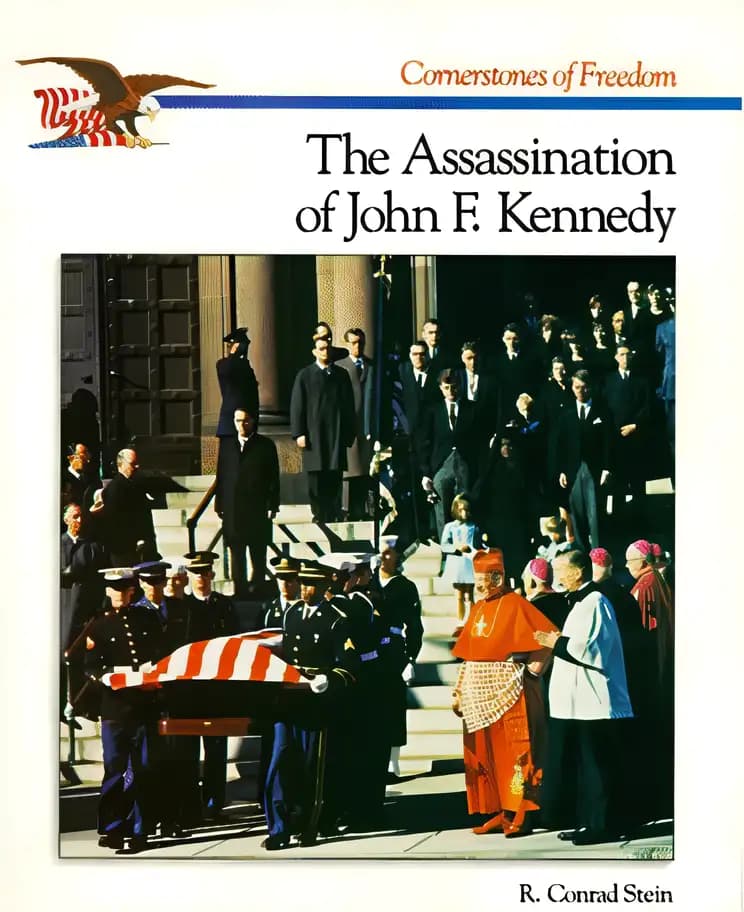
The Assassination of John F. Kennedy
on Goodreads (4)
What’s inside...
Describes the 1963 assassination of President John F. Kennedy, its aftermath, and the various theories connected with it.
Why read this book
- In-depth exploration of a pivotal historical event.
- Enhances understanding of American history and politics.
- Encourages critical thinking and historical inquiry.
- Written to engage and educate young readers.
Age
9-12
Length
32 pages
Text complexity
Discussion points
How do you think America changed after President Kennedy's assassination?
What qualities do you think make a good leader? Did President Kennedy have those qualities?
Why is it important to remember significant historical events like this one?
How do you feel about the way the author presented the events in the book?
What did you learn about how people react to unexpected and tragic events?
Tip: Role play these questions
Start the conversation by sharing your own knowledge of President Kennedy and the historical context of the 1960s.
Encourage your child to think critically about the sources of information used in the book and discuss the importance of reliable sources in learning history.
Use the discussion to connect the themes of leadership and resilience to your child's personal experiences or current events.
Ask open-ended questions that allow your child to express their thoughts and feelings about the book's subject matter.
Highlight the value of learning from history to understand the present and shape the future.
Key lessons
Example Lesson: Understanding historical events
Explanation: The book details the events leading up to, during, and after the assassination of John F. Kennedy, providing a factual historical context.
Real-World Application: Children can apply this knowledge to better understand significant historical events and their impact on current societal structures.
Example Lesson: Critical thinking
Explanation: As the book explores various theories and perspectives surrounding Kennedy's assassination, it encourages readers to analyze information critically.
Real-World Application: This skill can help children assess information from multiple sources, enhancing their decision-making and problem-solving skills in daily life.
Example Lesson: Empathy and understanding different viewpoints
Explanation: The narrative delves into the personal background and motives of Lee Harvey Oswald, offering a comprehensive view of the tragedy.
Real-World Application: Children learn to consider differing perspectives and develop empathy, aiding their social interactions and understanding of people's actions.
Example Lesson: Importance of civic engagement
Explanation: Kennedy’s presidency and his advocacy for civil rights and peace are highlighted, underscoring the importance of civic responsibility.
Real-World Application: Encourages children to be informed and involved in their communities, understanding the role of leadership and civic duties.