
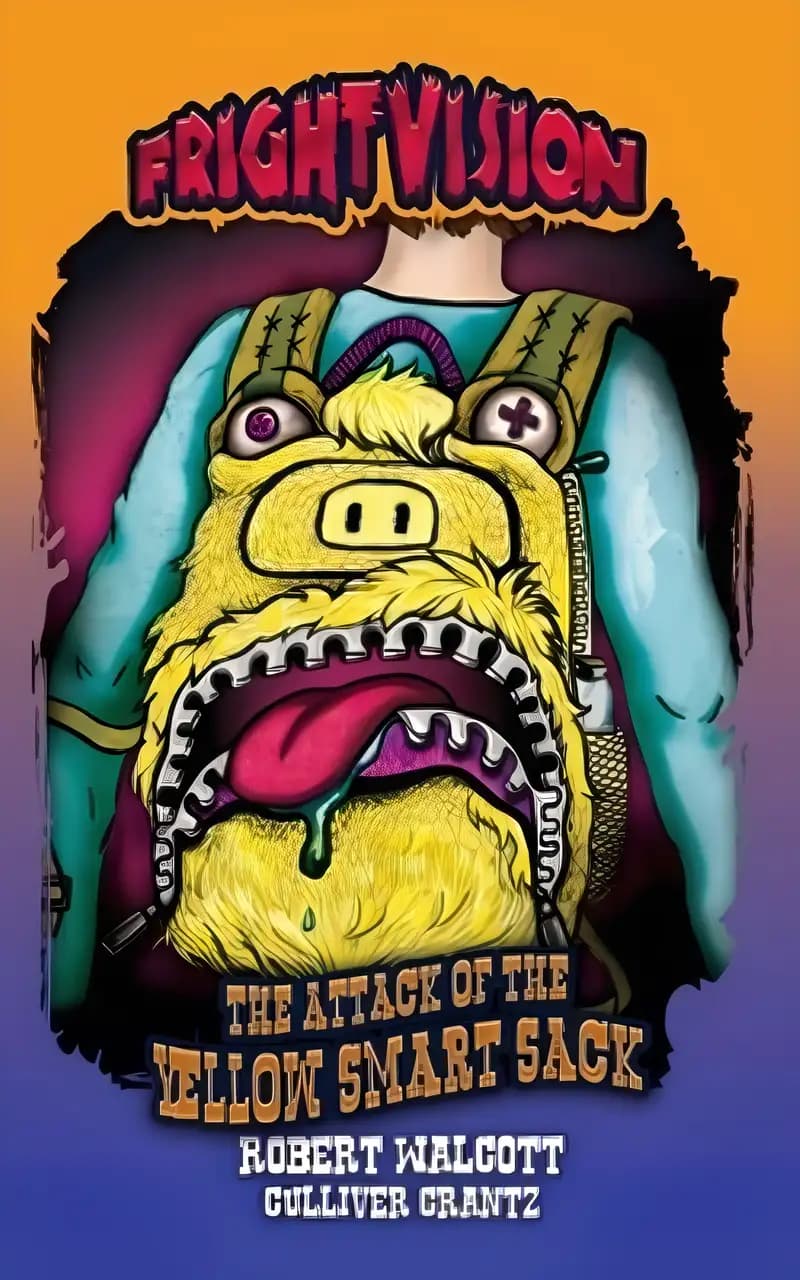
The Attack of the Yellow Smart Sack (FrightVision Book 6)
#6 of 12 in FrightVision Series
on Goodreads (14)
What’s inside...
Goosebumps meets Stranger Things in the spine-tingling sixth installment of the FrightVision series: The Attack of the Yellow Smart Sack. Lewis Izinger will do anything to get his hands on a Yellow Smart Sack. With its sleek design and futuristic features, it's the ultimate backpack status symbol at Cantaloupe Valley Middle School. But when Lewis finally gets his dream backpack, he realizes it's not just a bag - it's a living, breathing entity with a mind of its own. The Yellow Smart Sack demands constant attention, and Lewis soon learns it has a sinister hunger that can't be satiated. Can Lewis break free from the Yellow Smart Sack's grip before it consumes him completely? Or will he be forever enslaved by the backpack's dark power? Welcome to FrightVision: Your nightmare is ready. Let's begin! Don't miss a page: FrightVision continues with: Wishful Thinking, Framed for Life, #GraveyardChallenge, The Attack of the Yellow Smart Sack, The Cursed Coin 2, Broken Hearts, The Peephole, The Cursed Coin 3, and Comic Book Chaos!
Discussion points
How did the characters' reactions to the Yellow Smart Sack change throughout the story? What does that tell us about facing our fears?
What strategies did the characters use to deal with their fears? Can you think of a time when you used a similar strategy?
If you were a character in the book, how would you have handled the situation with the Yellow Smart Sack?
What do you think is the main message of this story? How can we apply this message in our daily lives?
In what ways did the characters grow from the beginning to the end of the book? How do you think facing challenges helps us grow?
Tip: Role play these questions
Encourage your child to express their thoughts and feelings about the book’s events, relating them to their own experiences.
Ask your child to imagine alternative endings or solutions to the challenges faced by the characters.
Discuss the character development in the story and connect it to real-life growth and changes they may experience.
Highlight the moral or lesson of the story, and ask your child how they can apply this lesson in their own life.
Use expressive reading techniques, such as different voices and animated expressions, to make the discussion more engaging and lively.
Key lessons
Example Lesson: Courage in Facing Fears
Explanation: In 'The Attack of the Yellow Smart Sack,' characters confront scary situations which teach them bravery.
Real-World Application: Children learn that facing fears, rather than avoiding them, builds confidence and resilience which can be applied in day-to-day challenges at school or in social settings.
Example Lesson: Problem-Solving Skills
Explanation: The protagonists in the story use clever thinking and teamwork to solve the mysteries they encounter.
Real-World Application: This encourages children to use logical thinking and collaboration to overcome obstacles in real life, be it in academic tasks or personal problems.
Example Lesson: Importance of Friendship
Explanation: Throughout the book, friendships provide support and help the characters to deal with their fears.
Real-World Application: This highlights to children how building and maintaining positive friendships can offer emotional support and help overcome difficult times.
Example Lesson: Creativity and Imagination
Explanation: The story's fantastical elements encourage readers to think outside the box and stretch their imagination.
Real-World Application: Fosters creativity in children which can be beneficial in creative subjects at school and in finding innovative solutions to everyday issues.
Example Lesson: Consequences of Actions
Explanation: Characters in the book face consequences based on their decisions, stressing the importance of thinking before acting.
Real-World Application: Teaches children that their choices have impacts, promoting responsibility and thoughtful decision-making in their daily interactions and choices.