
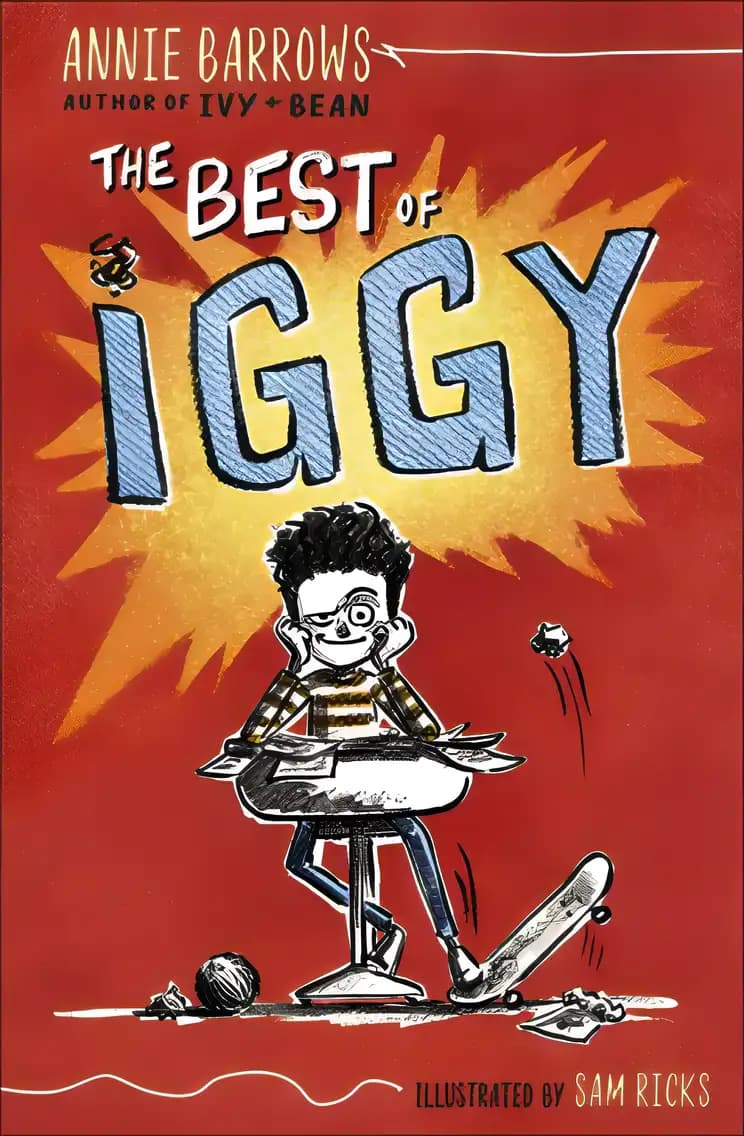
The Best of Iggy
#1 of 5 in Iggy Series
What’s inside...
From the best-selling author of 'Ivy + Bean', Annie Barrows introduces a new middle grade series featuring Iggy Frangi, a high-energy, lovable troublemaker. Iggy is known for his mischievous deeds, which can range up to 100 minor offenses, but he's not really a bad kid. Despite his unapologetic nature, there is one incident he deeply regrets which transformed from the best idea to the worst. This humorous book follows Iggy who, despite his antics, won't be playing the cello, thinking before acting, or learning any major lessons.
Character compass
Iggy Frangi
Discussion points
What do you think motivates Iggy's choices throughout the story?
How did Iggy's adventures make you feel and why?
What would you have done differently if you were in Iggy's shoes?
What did Iggy learn by the end of the book, and how has he changed?
Can you think of a time when you did something unexpected and learned something from it?
Tip: Role play these questions
Encourage your child to relate personal experiences to Iggy’s adventures, strengthening personal connections with the story.
Prompt your child to think critically about Iggy's decisions and explore alternative choices they might have made.
Discuss the emotions depicted in the book, asking your child to explain what cues led them to understand how Iggy felt in different scenarios.
Use predictive questioning by asking your child what they think will happen next after key events, enhancing their analytical skills.
Highlight the lessons Iggy learns and ask your child to reflect on similar lessons they've learned in their own life.
Key lessons
Example Lesson: Responsibility
Explanation: Iggy faces consequences for his mischievous actions, teaching children about accountability.
Real-World Application: Children learn the importance of taking responsibility for their actions in school and at home.
Example Lesson: Empathy
Explanation: Throughout the book, Iggy learns to understand and share the feelings of others, especially when his plans go awry.
Real-World Application: This can help children develop the ability to relate to their peers' emotions and become more compassionate friends.
Example Lesson: Creativity and Problem Solving
Explanation: Iggy often devises creative solutions to various predicaments, showing the value of thinking outside the box.
Real-World Application: Encourages children to apply imaginative thinking and problem-solving skills in their daily challenges.
Example Lesson: Learning from Mistakes
Explanation: Iggy's experiences highlight that mistakes are opportunities for learning rather than just failures.
Real-World Application: This teaches children to view their own mistakes as learning experiences, fostering a growth mindset.
Example Lesson: Friendship
Explanation: The story explores the dynamics of Iggy’s relationships, emphasizing the importance of friendship and cooperation.
Real-World Application: Children are encouraged to value and nurture their friendships through mutual respect and teamwork.