
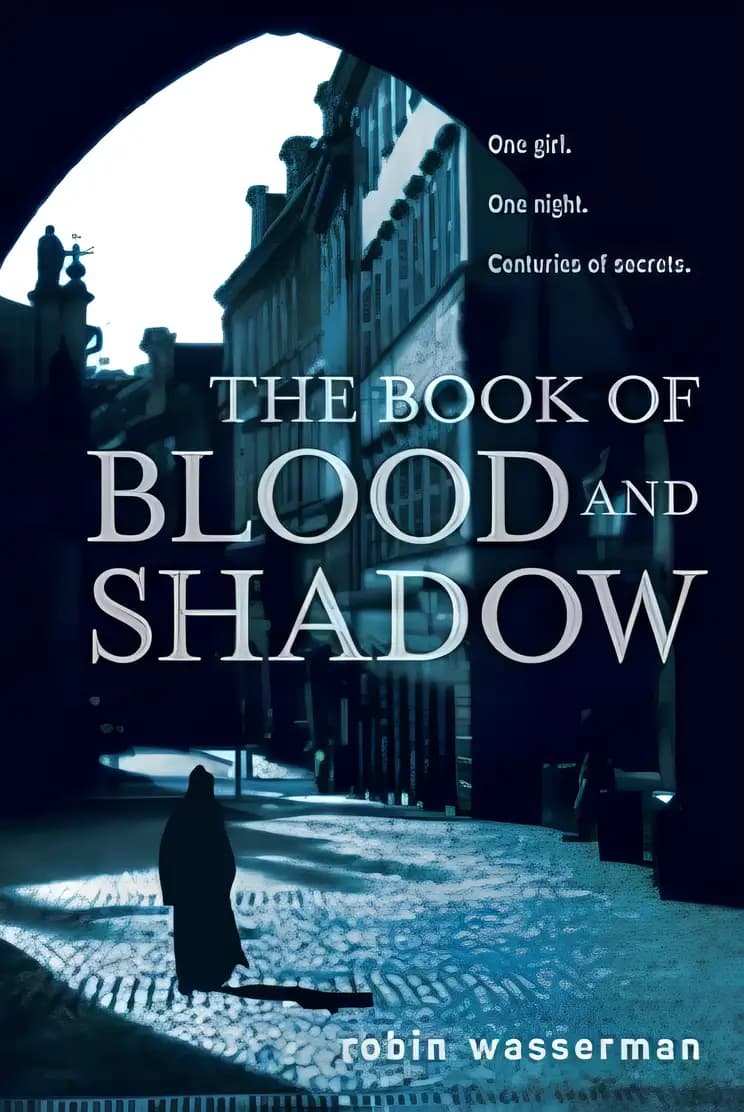
The Book of Blood and Shadow
on Goodreads (5,311)
What’s inside...
It was like a nightmare, but there was no waking up. When the night began, Nora had two best friends and an embarrassingly storybook one true love. When it ended, she had nothing but blood on her hands and an echoing scream that stopped only when the tranquilizers pierced her veins and left her in the merciful dark. But the next morning, it was all still true: Chris was dead. His girlfriend Adriane, Nora's best friend, was catatonic. And Max, Nora's sweet, smart, soft-spoken Prince Charming, was gone. He was also—according to the police, according to her parents, according to everyone—a murderer. Desperate to prove his innocence, Nora follows the trail of blood, no matter where it leads. It ultimately brings her to the ancient streets of Prague, where she is drawn into a dark web of secret societies and shadowy conspirators, all driven by a mad desire to possess something that might not even exist. For buried in a centuries-old manuscript is the secret to ultimate knowledge and communion with the divine; it is said that he who controls the Lumen Dei controls the world. Unbeknownst to her, Nora now holds the crucial key to unlocking its secrets. Her night of blood is just one piece in a puzzle that spans continents and centuries. Solving it may be the only way she can save her own life.
Age
12-15
Length
432 pages
Text complexity
Character compass
Nora Kane
Adriane
Eli
Max
Chris
Discussion points
How did the characters' journeys throughout the book change their perspective on trust and friendship?
What are some of the moral dilemmas that the characters face, and how do you think you would react in their situations?
The book blends real historical elements with fiction; how did this affect your understanding or interest in history?
How do the secrets and revelations in the story influence the way characters interact with each other?
What role do you think personal responsibility plays in the choices the characters make in their quest?
Tip: Role play these questions
Encourage your child to express their thoughts on the characters' decisions and the consequences they face. This can lead to discussions about values and ethics. Highlight connections between the historical elements and the fictional narrative to enhance their understanding of the content. Discussing the book’s complex themes like trust, betrayal, and the quest for truth can help deepen your child's critical thinking skills.
Key lessons
Example Lesson: The importance of trust and friendship
Explanation: Throughout the story, the characters face various challenges and betrayals that test their relationships. The protagonist learns to identify who she can truly rely on.
Real-World Application: Children can apply this by recognizing the value of honesty and support in their own friendships, learning to cultivate trust and handle conflicts with empathy.
Example Lesson: Resilience in the face of adversity
Explanation: As the protagonist embarks on an international journey uncovering ancient secrets, she faces physical and emotional hardships but continues to persist.
Real-World Application: This teaches children the importance of perseverance and staying determined despite difficulties, whether it’s during schoolwork, sports, or personal goals.
Example Lesson: Critical thinking and problem-solving
Explanation: The mystery at the core of the plot requires the characters to solve complex puzzles and decipher historical codes.
Real-World Application: Children learn to apply logical reasoning and analytical skills in challenging situations, which can be beneficial in academic subjects like math and science as well as in daily decision-making.