
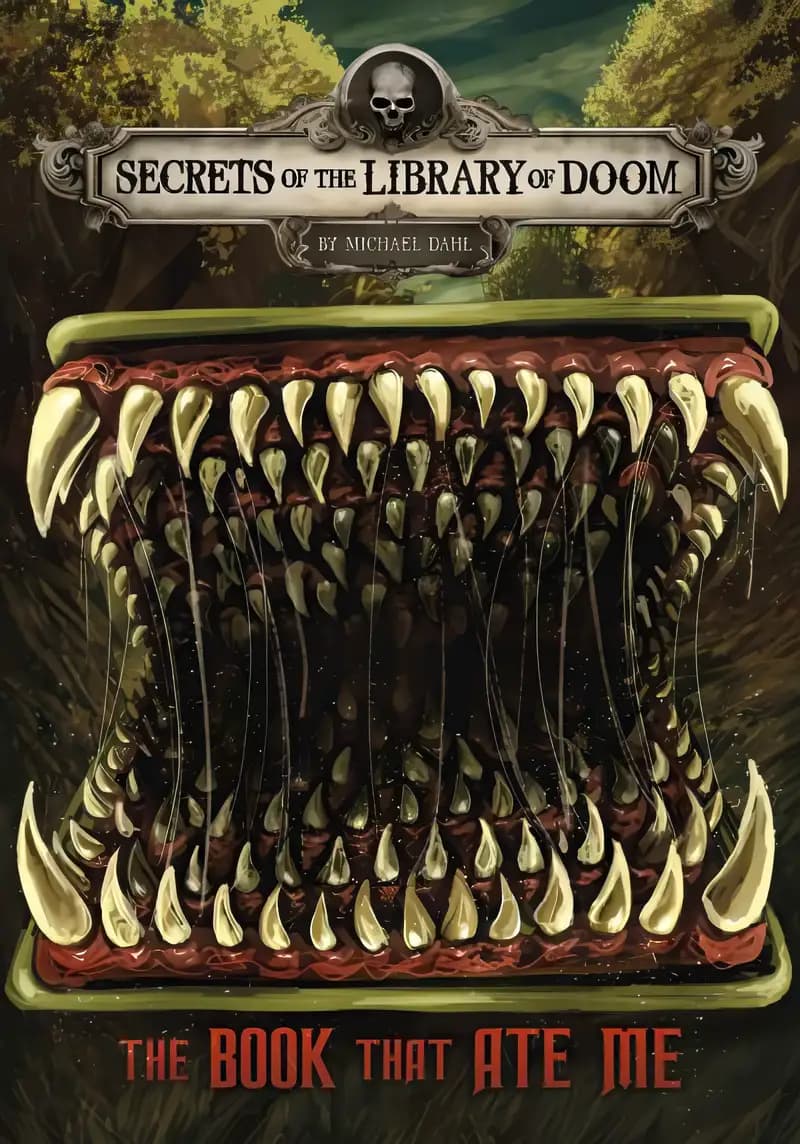
The Book that Ate Me
Secrets Of The Library Of Doom Series
on Goodreads (8)
What’s inside...
A boy is researching animals in the library when he encounters a lively and hungry book that gobbles him up. Teaming up with the powerful Librarian, the boy must escape the belly of the beastly book and uncover hidden dangers and dark mysteries in the SECRETS OF THE LIBRARY OF DOOM series by bestselling author Michael Dahl.
Series reading
Non-Sequential
Age
9-13
Length
40 pages
Text complexity
Discussion points
What would you do if a book started telling a story about you?
How did the main character feel when the book started changing? Can you relate to those feelings?
What do you think is the message of 'The Book that Ate Me'? Why do you think it's important?
Can you imagine creating a magical book? What kind of story would it tell?
How do you think the story would have ended if the main character had made different choices?
Tip: Role play these questions
Encourage your child to express their thoughts and feelings about the book, validating their responses to build confidence.
Ask your child to draw a scene from the book that particularly struck them, and discuss their artwork to delve deeper into their interpretation.
Relate themes from the book to real-life experiences to help your child connect with the story on a personal level.
Create a fun activity where your child imagines their own magical book, discussing what powers it would have and the adventures it could create.
After reading, ask your child to predict alternative endings for the book, encouraging creative thinking and storytelling skills.
Key lessons
Example Lesson: The importance of responsibility
Explanation: In 'The Book that Ate Me', the protagonist learns to take care of a magical book that starts creating chaos when neglected.
Real-World Application: Children can apply this lesson by understanding the importance of fulfilling their duties, such as doing homework on time or taking care of their possessions.
Example Lesson: Consequences of actions
Explanation: The story highlights how the protagonist's initial carelessness with the book leads to unforeseen problems, teaching that actions have consequences.
Real-World Application: This can help children think before they act and consider the potential results of their actions, fostering decision-making skills.
Example Lesson: The power of literacy
Explanation: As the protagonist learns to control the book through reading and understanding its contents, the story underscores the power and importance of literacy.
Real-World Application: Children are encouraged to develop their reading skills, which can help them gain control over many aspects of their lives and make informed decisions.
Example Lesson: Problem-solving
Explanation: The book presents various challenges to the protagonist, who must use creativity and critical thinking to solve them.
Real-World Application: This lesson can inspire children to approach problems in their everyday life with a calm and thoughtful mindset, enhancing their problem-solving capabilities.
Example Lesson: Resilience and perseverance
Explanation: Throughout the book, the protagonist faces setbacks but continues to strive for a solution, demonstrating resilience.
Real-World Application: Children learn the value of perseverance in face of difficulties, which can help them tackle challenges in school and personal life with determination.