
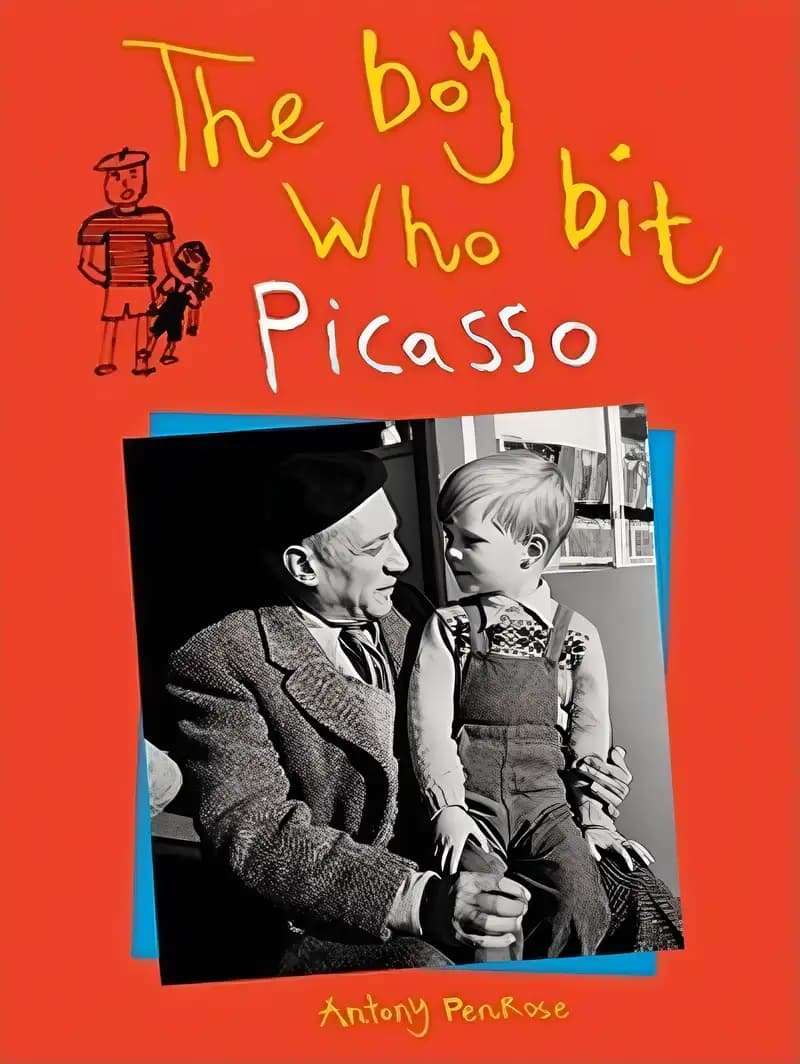
The Boy Who Bit Picasso
on Goodreads (173)
What’s inside...
Tony was a boy with a special friend, the world-famous artist Pablo Picasso. Tony and his parents entertained Picasso in England and visited him in France. As a child, Tony bit Picasso, who playfully bit him back. The book shares Tony's childhood memories and provides insights into Picasso's personal life, featuring over sixty-five illustrations including Picasso's artworks, photographs by Lee Miller, and drawings by children. It offers a unique perspective on Picasso's personality and creative breadth, making it a captivating read for those interested in art and Picasso's life.
Age
5-7
Length
48 pages
Text complexity
Character compass
Antony Penrose
Lee Miller
Roland Penrose
Picasso
Discussion points
How do you think the boy felt when he met Picasso? Can you imagine meeting someone famous?
What do you think about the boy biting Picasso? Was it a good or a bad decision?
Picasso could transform ordinary things into art. What ordinary things would you like to turn into art?
How do the colorful pictures in the book make you feel? Do they remind you of any emotions?
If you could create your own artwork inspired by the book, what would it look like?
Tip: Role play these questions
Start by asking your child to describe their favorite part of the book and why it stood out to them. This can lead into deeper discussions about the themes.
Encourage your child to relate personal experiences with those of the boy in the book. For instance, ask if they've ever felt nervous about meeting someone new, just like the boy felt about meeting Picasso.
Discuss the concept of art with your child. Ask them what they think makes something 'art' and explore their creative ideas.
Using the book’s illustrations, ask your child to point out which colors and shapes they find most interesting and why. This can deepen their appreciation for visual storytelling.
Create a mini art project inspired by the book. This could be drawing, painting, or even sculpting with clay. It’s a great way to engage their creativity and reinforce themes from the story.
Key lessons
Example Lesson: Embracing Creativity
Explanation: The book illustrates Picasso's unique artistic style and unconventional methods, showing children that creativity has no bounds.
Real-World Application: Children are encouraged to express themselves through art, crafts, or any form of creative expression, appreciating their uniqueness.
Example Lesson: The Value of Friendship
Explanation: The story highlights the friendship between Antony Penrose and Picasso, emphasizing the bond formed through mutual respect and shared interests.
Real-World Application: Children learn the importance of building positive relationships with others, showing kindness, and being open to learning from different perspectives.
Example Lesson: Cultural Appreciation
Explanation: Picasso’s influence from various cultures in his artwork is showcased, fostering an appreciation for cultural diversity.
Real-World Application: This encourages children to explore and respect diverse cultures, promoting inclusivity and broadening their worldviews.
Example Lesson: Overcoming Prejudices
Explanation: The story subtly touches on Picasso being misunderstood by some, yet still celebrated for his unique vision, teaching children the value of resilience and self-belief.
Real-World Application: Children can learn to stay true to their beliefs and values even when faced with criticism or misunderstanding.
Example Lesson: Imagination and Play
Explanation: Picasso's playful interaction with young Antony, like pretending Antony’s fingers are fish, showcases the power of imagination.
Real-World Application: This promotes imaginative play in children, which is crucial for cognitive development and problem-solving skills.