
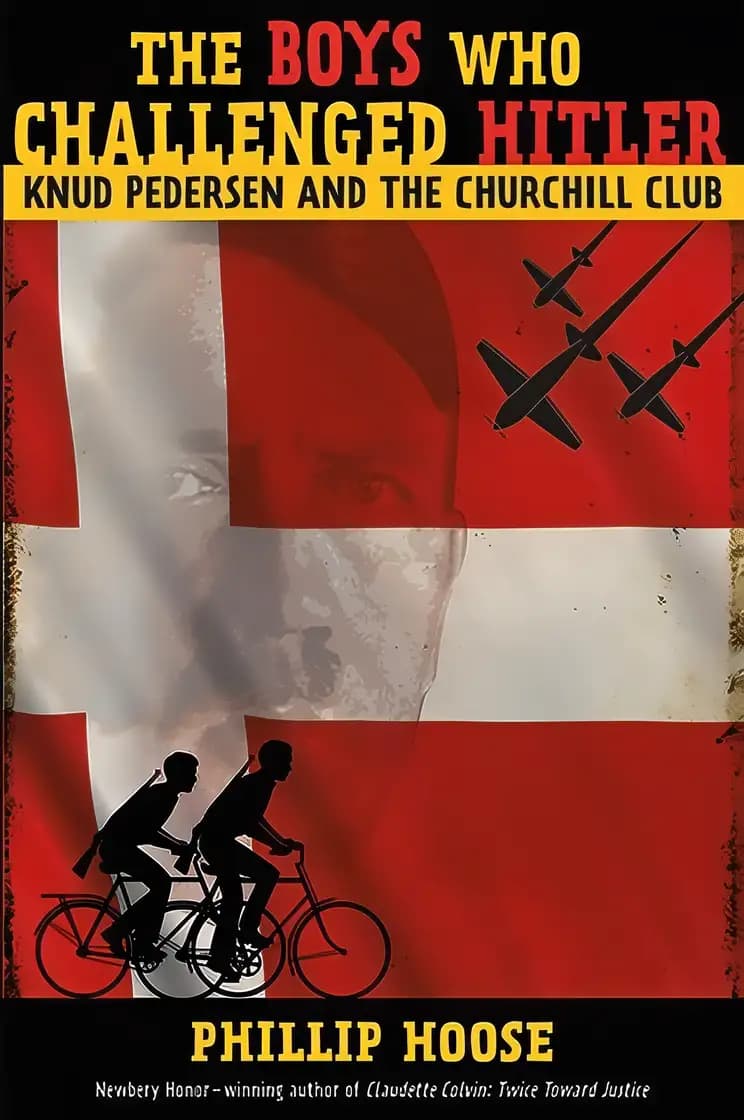
The Boys Who Challenged Hitler: Knud Pedersen and the Churchill Club
Bccb Blue Ribbon Nonfiction Book Award (Awards) Series
on Goodreads (6,100)
What’s inside...
At the outset of World War II, Denmark did not resist German occupation. Deeply ashamed of his nation's leaders, fifteen-year-old Knud Pedersen resolved with his brother and a handful of schoolmates to take action against the Nazis if the adults would not. Naming their secret club after the fiery British leader, the young patriots in the Churchill Club committed countless acts of sabotage, infuriating the Germans, who eventually had the boys tracked down and arrested. But their efforts were not in vain: the boys' exploits and eventual imprisonment helped spark a full-blown Danish resistance. Interweaving his own narrative with the recollections of Knud himself, here is Phillip Hoose's inspiring story of these young war heroes. This thoroughly-researched and documented book can be worked into multiple aspects of the common core curriculum. A Robert F. Sibert Informational Book Honor Winner
Series reading
Non-Sequential
Age
10-13
Length
198 pages
Text complexity
Character compass
Knud Pedersen
Helge Milo
Egil Harder
Mogens Fjellerup
Borge Olsen
Jens Pedersen
Discussion points
What motivated Knud Pedersen and the Churchill Club to resist the Nazis, and what would you do in a similar situation?
How did the actions of these young individuals impact their community and the world around them?
What are some ways that courage was demonstrated in the book? Can you think of a time when you had to be courageous?
What did you learn about leadership and teamwork from the Churchill Club’s experiences?
How do you think the story would have changed if it took place in today's world?
Tip: Role play these questions
Before discussing the book, provide a brief background on World War II and the resistance movements to set the context.
Encourage your child to express their feelings about the book and relate the characters' experiences to their own life.
Focus on the ethical decisions made by the characters. Ask your child what they would have done differently and why.
Highlight the themes of bravery and justice. Discuss why these values are important in both personal life and society.
After discussing, suggest role-playing a scene from the book. This can deepen understanding and make the conversation more engaging.
Key lessons
Example Lesson: Courage in the face of adversity
Explanation: The book depicts young Knud Pedersen and his friends as they stand up against the Nazi occupation in Denmark, demonstrating immense bravery.
Real-World Application: Children can learn to stand up for what is right, even in challenging situations, and speak out against injustice in their own lives.
Example Lesson: The importance of teamwork
Explanation: The Churchill Club members worked together to sabotage the Nazis, showing how collaboration and unity are crucial to overcoming obstacles.
Real-World Application: This encourages children to value teamwork in projects at school, sports, or in family activities, teaching them that collective efforts often yield better results.
Example Lesson: The impact of civic engagement
Explanation: The boys' actions in the book exemplify how young individuals can influence significant political and social change.
Real-World Application: It inspires children to become involved in community activities, understand the importance of civic responsibilities, and realize that their actions can contribute to societal improvement.
Example Lesson: Resilience during tough times
Explanation: Despite facing significant danger, the boys in the Churchill Club persist in their resistance, demonstrating resilience.
Real-World Application: This teaches children the value of perseverance in overcoming personal challenges, whether in their studies, relationships, or personal goals.
Example Lesson: Moral Integrity
Explanation: Knud and his friends stick to their moral convictions, choosing to resist the Nazis despite the risks involved.
Real-World Application: Children learn to develop and stand by their own values, even when faced with peer pressure or challenging circumstances.