
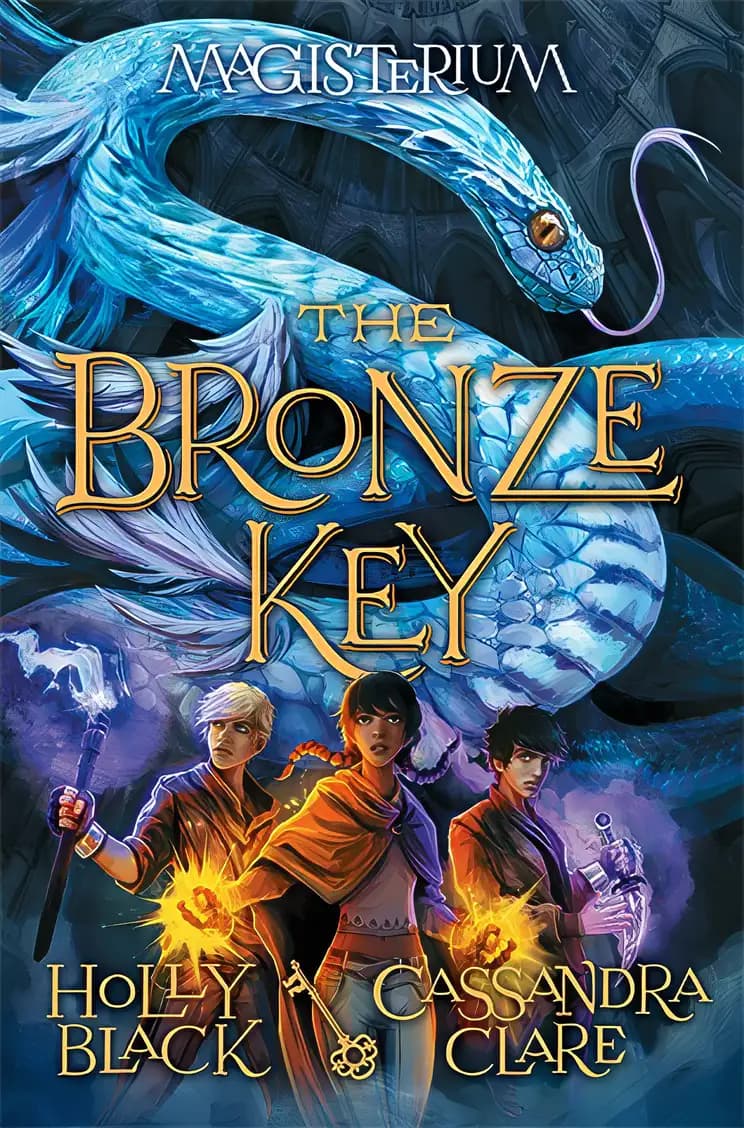
The Bronze Key: Magisterium
#3 of 5 in Magisterium Series
on Goodreads (27,553)
What’s inside...
Magic can save you. Magic can kill you. Students at the Magisterium are supposed to be safe. Under the watchful eyes of the mages, they are taught to use magic to bring order to a chaotic world. But now the chaos is fighting back. Call, Tamara, and Aaron should be worrying about things like pop quizzes and magic contests. Instead, after the shocking death of one of their classmates, they must track down a sinister killer… and risk their own lives in the process. As Call, Tamara, and Aaron discover, magic can only be as good as the person who wields it. In evil hands, it has the capacity to do immeasurable harm, unless it is stopped in time. In this striking third book of Magisterium, bestselling authors Holly Black and Cassandra Clare present us with a school where anything, good or evil, can happen, and the only way to unlock the truth is to risk everything to find it.
Character compass
Callum Hunt
Tamara Rajavi
Jasper Dewinter
Aaron Stewart
Master Rufus
Alex Strike
Discussion points
What do you think Callum learned about trust and friendship in 'The Bronze Key'? How can you apply this to your own friendships?
How would you describe the magical world in 'The Bronze Key'? What elements of the Magisterium world do you find most exciting or unique?
The characters faced several challenges in the book. Can you recall a time when you faced a challenge and how you handled it?
What role do you think secrets play in the story? Are there times when it’s okay to keep a secret, and times when it’s not?
If you had magical powers like the characters, how would you use them? Would you change anything in your everyday life?
Tip: Role play these questions
Encourage your child to imagine themselves in the magical settings. Ask them to describe it in detail, fostering a deeper connection with the book’s environment.
Discuss the moral dilemmas characters face to guide your child through complex themes of right and wrong, emphasizing critical thinking.
Connect scenarios from the book to real-life situations your child might encounter to enhance their empathy and decision-making skills.
Utilize the book’s theme of friendship to discuss your child's personal relationships and feelings, reinforcing the importance of trust and companionship.
Celebrate your child’s responses to foster a positive reading environment, making them feel confident in their interpretations and ideas.
Key lessons
Example Lesson: Friendship and trust
Explanation: Throughout 'The Bronze Key', the characters demonstrate the importance of building trust and loyal friendships. The protagonists face numerous challenges that they overcome by relying on each other and showing true camaraderie.
Real-World Application: Children can learn to value and nurture their friendships, understanding that trust is foundational in any relationship. They will also understand the significance of teamwork and cooperation in achieving common goals.
Example Lesson: Responsibility and Leadership
Explanation: As the young characters take on significant responsibilities, they learn lessons about leadership, including the importance of making hard decisions for the greater good.
Real-World Application: This teaches children the importance of taking responsibility in their actions and being thoughtful leaders, even in minor day-to-day activities or group settings like school projects or family tasks.
Example Lesson: Dealing with Loss
Explanation: The book deals subtly with themes of loss and grief as characters cope with the death of close ones. It portrays how individuals process grief differently and the importance of support during tough times.
Real-World Application: Children can learn to understand and respect different expressions of grief and find constructive ways to cope with loss and sorrow in their own lives.
Example Lesson: Courage in the face of adversity
Explanation: Characters in 'The Bronze Key' often face dangerous and fearful situations, yet they continue to fight against the odds. This highlights the virtue of courage.
Real-World Application: Children learn that being brave doesn’t mean not feeling afraid, but rather facing fears and standing up for what is right despite potential risks.
Example Lesson: Ethics and choice-making
Explanation: The book presents various moral dilemmas, pushing characters to choose between easy options and what is morally right, illustrating the complexity of ethical decision-making.
Real-World Application: This lesson emphasizes to children the importance of considering the consequences of their actions and making ethical choices that reflect their values and integrity.