
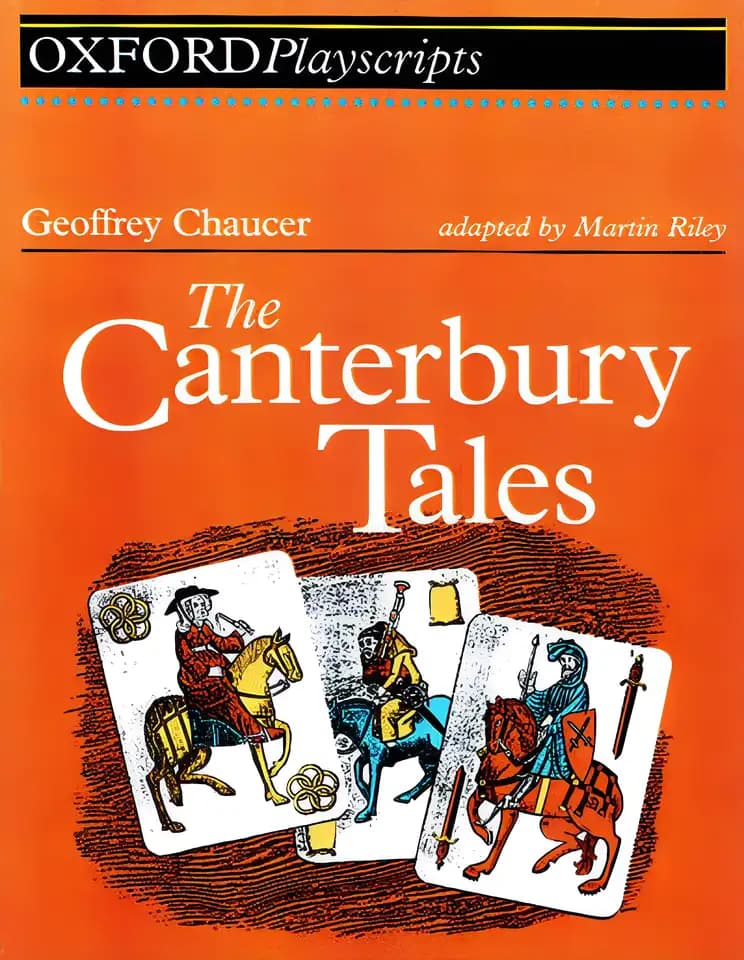
The Canterbury Tales (Oxford Playscripts)
Oxford Playscripts Series
on Goodreads (233,245)
What’s inside...
Martin Riley's adaptation of Chaucer's Canterbury Tales presents five principal characters and includes background notes, research, and presentation activities relating to the society of the time. Mike Poulton's two-part adaptation echoes the varied narrative voices of Chaucer's work, featuring both well-known and lesser-known characters, each tale reflecting a unique style such as heroic verse for the Knight's Tale and vernacular rhymes for the Miller's Tale. Two-part adaptation of Geoffrey Chaucer’s tales by Tony award winner adaptor Mike Poulton. All the famous characters are here as well as many less well-known but equally full of life. Each of the stories has its own style—heroic verse for the Knight’s Tale, vernacular rhymes for the Miller’s Tale etc.—echoing the many narrative voices employed by Chaucer himself.
Series reading
Non-Sequential
Age
12-15
Length
112 pages
Text complexity
Character compass
Harry Bailey (The Host)
The Wife Of Bath
The Pardoner
The Miller
The Knight
Discussion points
How do the different characters' stories in 'The Canterbury Tales' reflect their personalities and social positions?
Which tale did you find most intriguing and why?
Do you think the lessons in these tales are still relevant today? Can you think of any examples?
How do the pilgrims’ interactions on their journey to Canterbury mirror how people interact in society today?
What do you think Chaucer is trying to communicate about human nature through these tales?
Tip: Role play these questions
Before reading each tale, provide a brief overview of the character who tells it. This sets a context that can help your child understand the story better.
Encourage your child to imagine and describe what might happen next after each tale ends. This fosters creative thinking and engagement with the text.
After reading a story, ask your child to relate the tale’s moral to real-life situations, enhancing their ability to apply what they read to everyday life.
Discuss the historical context of the Canterbury Tales to help your child understand the different societal norms and values from the period, enhancing their comprehension of the book's themes.
Invite your child to pick their favorite character and explain why, helping them to articulate their thoughts and feelings about what they’ve read.
Key lessons
Example Lesson: The importance of honesty
Explanation: In 'The Nun's Priest's Tale,' the rooster Chanticleer is deceived by a fox, illustrating the consequences of naivety and the value of being truthful and wary of flattery.
Real-World Application: Children learn the significance of honesty and the risks associated with deceit, helping them navigate social interactions and build trustworthy relationships.
Example Lesson: The value of humility
Explanation: In 'The Tale of Melibee,' Melibee learns to forgive and seek peace after consulting with his wife, demonstrating strength in humility over revenge.
Real-World Application: This teaches children the power of forgiveness and the importance of considering advice from others, promoting empathy and conflict resolution in their daily interactions.
Example Lesson: Consequences of greed
Explanation: ‘The Pardoner’s Tale' showcases how greed leads to the downfall of three rioters, highlighting the destructive nature of avarice.
Real-World Application: By understanding this lesson, children can cultivate a sense of contentment and the importance of valuing relationships over material gains.
Example Lesson: Social responsibility
Explanation: Throughout the tales, characters often face choices that impact others, underscoring the importance of thinking about the community's welfare.
Real-World Application: Children are encouraged to consider how their actions affect others, fostering a sense of responsibility and community involvement.
Example Lesson: The strength of perseverance
Explanation: In 'The Clerk’s Tale,' Griselda faces numerous trials with patience and fortitude, illustrating the virtue of perseverance in adversity.
Real-World Application: This lesson helps children understand the value of enduring challenges with grace, equipping them with the resilience needed for personal and academic hurdles.