
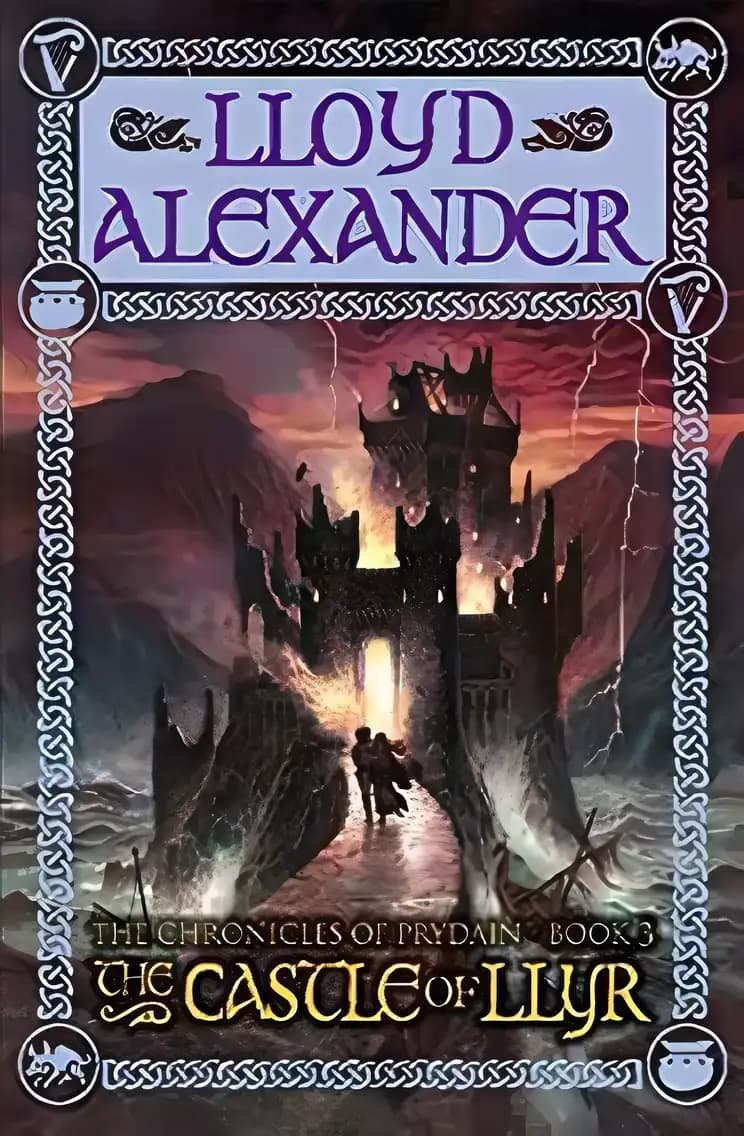
The Castle of Llyr
#3 of 5 in The Chronicles of Prydain Series
on Goodreads (38,903)
What’s inside...
In 'The Castle of Llyr', the third book of The Chronicles of Prydain series by Lloyd Alexander, the story follows the adventures of Taran, the Assistant Pig-Keeper, and his friends as they embark on a quest to protect Princess Eilonwy, a friend and one of the main characters. Eilonwy is sent to the Isle of Mona to learn how to be a proper lady, but her magical heritage as a descendant of the enchantress Llyr puts her in danger. The evil sorcerer Achren seeks to use Eilonwy's powers for her own nefarious purposes. Taran, along with the bard Fflewddur Fflam, the loyal creature Gurgi, and the prince of Mona, Rhun, must navigate various challenges and confront Achren to save Eilonwy. Throughout the journey, Taran learns valuable lessons about heroism, friendship, and self-discovery.
Character compass
Gurgi
Princess Eilonwy
Taran
Fflewddur Fflam
Discussion points
How do you think Taran's responsibilities at Caer Dallben shape his character?
What qualities make Eilonwy a strong and memorable character?
How do the themes of friendship and loyalty appear throughout the story?
In what ways do the characters in the book demonstrate courage?
How does the setting of the Llyr castle add to the overall mystery of the story?
Tip: Role play these questions
Encourage your child to think deeply about the character's motivations and how their decisions impact the story. Use examples from the book to illustrate points and relate them to real-life scenarios that your child might face. Discuss the historical and mythical elements in the story to enhance understanding of the setting and plot. Reinforce the values of perseverance and teamwork displayed by the characters. Share your own interpretations and encourage your child to express their thoughts freely, fostering an open and engaging dialogue.
Key lessons
Example Lesson: The importance of courage and bravery
Explanation: In 'The Castle of Llyr', the characters often face dangerous situations that require bravery to overcome obstacles and achieve their goals.
Real-World Application: Children can apply this lesson by learning to face their own fears and challenges with courage, whether it's trying out for a sports team, standing up against bullying, or speaking in front of a class.
Example Lesson: The value of friendship and loyalty
Explanation: Throughout the story, the bonds of friendship and loyalty among the characters play a crucial role in navigating through tough times and solving problems together.
Real-World Application: This teaches children the importance of supporting their friends and being dependable, which can be applied in their daily interactions at school and within their community.
Example Lesson: The significance of wisdom and making thoughtful decisions
Explanation: Characters in the book often engage in problem-solving and critical thinking, which ultimately lead them to make wise choices.
Real-World Application: Children can learn to think situations through before acting and consider the consequences of their decisions, helping them make better choices in their own lives.
Example Lesson: Resilience in the face of adversity
Explanation: The characters encounter various setbacks throughout the story, but their resilience helps them to keep going and persevere.
Real-World Application: This lesson encourages children to not give up when facing their own difficulties, be it in academics, sports, or personal relationships, and strive to overcome them.
Example Lesson: Respect for diversity and differences
Explanation: The story features a range of characters from different backgrounds and with different abilities, highlighting the strength that comes from diversity.
Real-World Application: Children are encouraged to embrace and respect differences in others around them, enhancing social harmony and collaborative opportunities.