
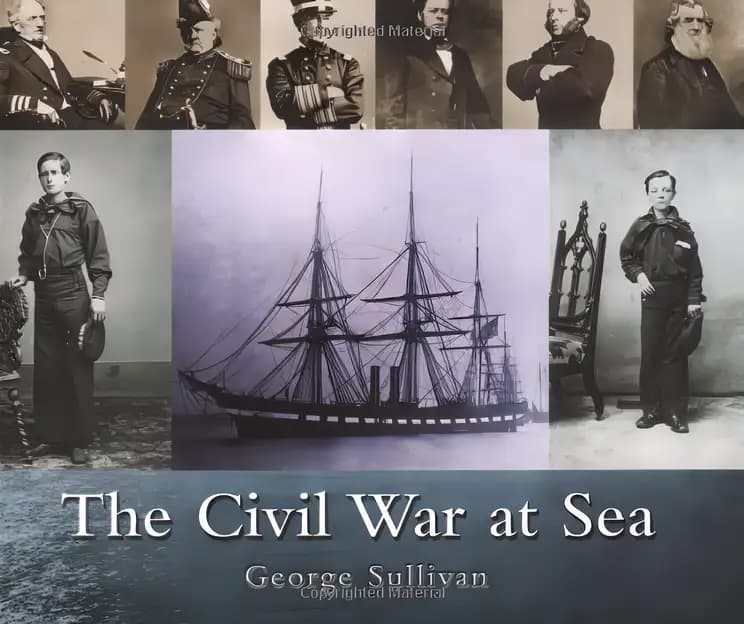
The Civil War at Sea
World Almanac Library of the Civil War Series
on Goodreads (3)
What’s inside...
Text and rare photographs offer a portrait of the naval operations of the Civil War, including the build-up of the Union and Confederate navies, the Union's blockade of Southern ports, and important naval battles. Accompanied by first-hand accounts and vintage photographs, an enthralling book brings to life the famous battles at sea during the Civil War by detailing the development of ships from the first iron-clad battleships to river runners.
Series reading
Non-Sequential
Age
9-12
Length
80 pages
Text complexity
Discussion points
What do you think life was like for sailors during the Civil War?
How do you think the technology of the ships influenced the outcome of the war?
What role did the sea play in the strategies used by both sides during the Civil War?
Why do you think controlling the sea was important during the Civil War?
How do you feel about the challenges faced by the crew members on these ships?
Tip: Role play these questions
Before starting the book, take a moment to discuss what your child already knows about the Civil War, setting the stage for new information.
While reading, pause at engaging moments or illustrations to ask your child how they might feel in similar circumstances faced by historical figures.
Use maps and visuals to help your child understand the geographic and strategic importance of sea battles during the Civil War.
Encourage your child to think about how communication and technology during the Civil War era differ markedly from today’s world, enhancing their appreciation for historical context.
After reading, co-create a brief timeline or a mind map with your child to help them organize and review what they’ve learned about the Civil War at sea.
Key lessons
Example Lesson: Resilience in adversity
Explanation: The book showcases various historical naval battles and the challenging conditions faced by soldiers during the Civil War. It portrays how individuals and crews overcame fear and hardship.
Real-World Application: Children can learn to face their own challenges, whether it's dealing with school pressure or personal obstacles, with determination and courage.
Example Lesson: Importance of strategy and critical thinking
Explanation: Strategic maneuvers and decisions played a crucial role in the outcomes of sea battles. The book details how leaders analyzed situations and made tactical choices under pressure.
Real-World Application: This can encourage children to think critically and plan ahead in their own lives, such as when playing sports, managing tasks, or solving academic problems.
Example Lesson: Teamwork and cooperation
Explanation: Crew members had to work in sync to operate the massive warships and to execute naval strategies effectively. The narrative highlights how essential collaboration was to their success.
Real-World Application: Children can apply the idea of teamwork to group projects in school or while participating in team sports, understanding the value of working together towards a common goal.
Example Lesson: Understanding historical impacts
Explanation: The book explains the broader implications of the Civil War at sea on American history, including economic and geopolitical effects.
Real-World Application: This lesson can help children understand how historical events shape the modern world, enhancing their comprehension of history and its relevance to current events.
Example Lesson: Ethics in conflict
Explanation: Through accounts of the war, the book delves into the ethical dilemmas faced by individuals, exploring themes of loyalty, duty, and moral choices in times of war.
Real-World Application: This can prompt discussions with children about right and wrong and encourage them to consider ethical dimensions in their daily interactions and decisions.