
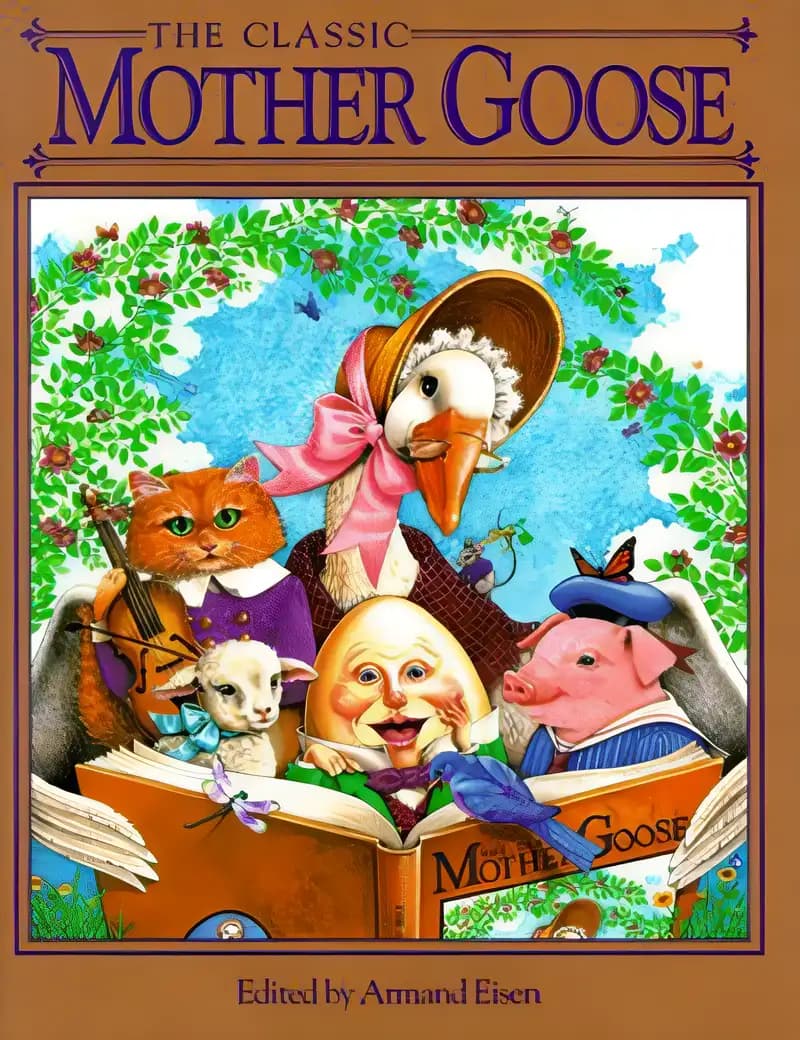
The Classic Mother Goose
on Goodreads (12)
What’s inside...
Contains more than fifty nursery rhymes, including such favorites as 'Peter Piper,' 'Mary had a little lamb,' 'Jack and Jill,' and 'Little Boy Blue.'. This beautiful book offers dozens of children's favorite rhymes with lovely full-color illustrations in the largest format book of Mother Goose available, bringing the nursery rhyme characters gloriously to life.
Age
3-7
Length
56 pages
Text complexity
Discussion points
What do you think is the main lesson from your favorite rhyme in 'The Classic Mother Goose'?
How did the characters in the rhymes make you feel?
Which rhyme did you find the most interesting and why?
If you could create your own nursery rhyme, what would it be about?
Can you think of a different ending to any of the rhymes we read? What would it be?
Tip: Role play these questions
Encourage your child to pick their favorite rhyme and act it out. This can help deepen their connection to the material.
Use the rhymes as an opportunity to discuss rhyming words and basic phonics, fostering literacy skills.
Ask your child to draw a scene from one of the rhymes. This can help with comprehension and creative expression.
Try to relate the morals or lessons from the rhymes to real-life situations your child might encounter, enhancing their understanding of the rhyme’s significance.
Key lessons
Example Lesson: Importance of Sharing
Explanation: In numerous Mother Goose rhymes, characters often share with others, teaching the value of generosity.
Real-World Application: Children can apply this lesson by sharing toys and snacks with their peers, fostering a sense of community and friendship.
Example Lesson: Consequences of Actions
Explanation: Rhymes like 'Little Jack Horner' and 'Simple Simon' show characters experiencing outcomes based on their actions, emphasizing the concept of cause and effect.
Real-World Application: This teaches children to think about the consequences before acting, which is a valuable skill in decision-making and responsibility.
Example Lesson: Learning Through Curiosity
Explanation: Curiosity-driven stories in the book, such as 'Old Mother Hubbard', encourage exploration and learning.
Real-World Application: Children are inspired to explore the world around them and ask questions, enhancing their cognitive development and understanding.
Example Lesson: Respecting Differences
Explanation: Many rhymes include a variety of characters from diverse backgrounds, promoting inclusivity and acceptance.
Real-World Application: This helps children appreciate diversity in their classroom and community, encouraging respect and empathy towards others.
Example Lesson: Value of Perseverance
Explanation: Rhymes like 'Humpty Dumpty' teach about trying again despite setbacks, illustrating the importance of persistence.
Real-World Application: Children learn to keep trying even when faced with challenges, building resilience and a strong character.