
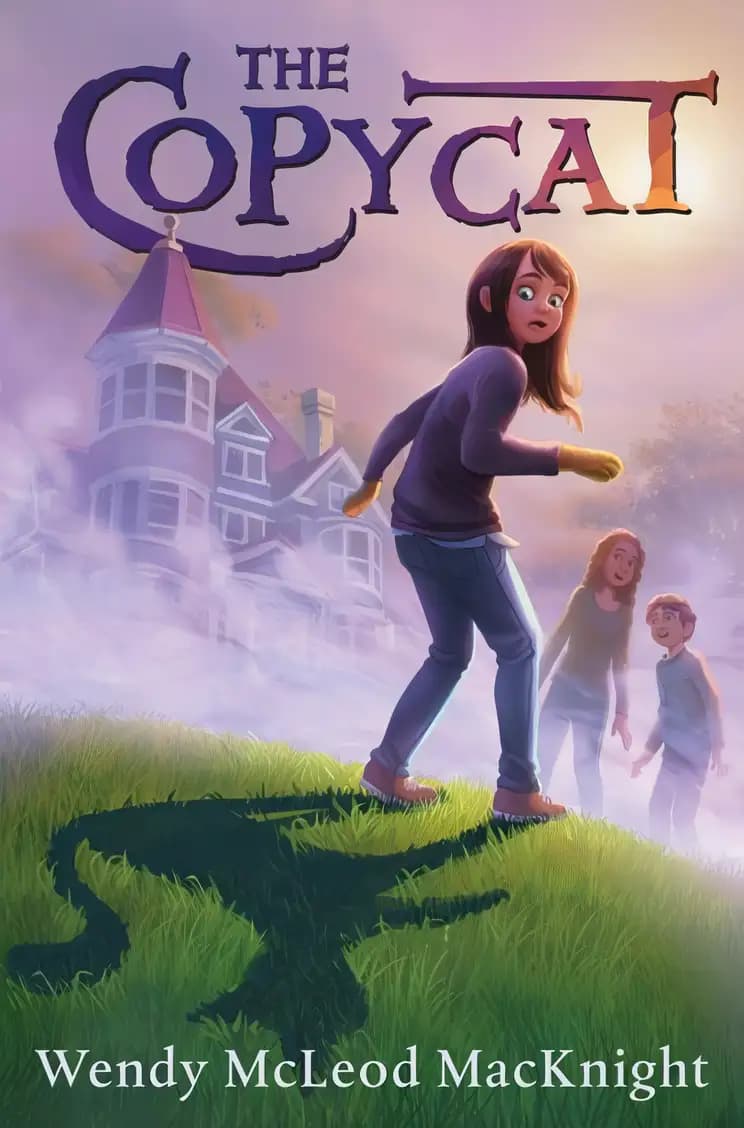
The Copycat
on Goodreads (131)
What’s inside...
The Copycat by Wendy McLeod MacKnight is a heartwarming middle-school novel that follows Ali, a girl who has moved frequently and struggled to fit in. When Ali and her family settle into her great-grandmother's quirky home in Saint John, New Brunswick, she inherits the Sloane family powers, allowing her to change her appearance into any living thing. As Ali navigates the challenges of being the new kid at school with these unpredictable powers, she learns the importance of friendship, family, and being true to oneself. With the support of her new friends and a touch of magic, Ali gains the confidence to embrace her unique abilities and survive middle school.
Age
8-12
Length
432 pages
Text complexity
Character compass
Ali Sloane
Discussion points
What did you think about Jax's decision to copy everything Viola did? How would you feel if someone copied you?
Why do you think Viola was upset when Jax copied her? Can you think of a time you felt the same way?
How did Jax and Viola's friendship change by the end of the story? What do you think helped them to understand each other better?
What would you have done if you were Viola? How would you handle a situation where a friend copied you?
Tip: Role play these questions
Start the conversation by sharing a personal story about a time you felt copied or imitated, making it relatable for your child. Express interest in their thoughts and feelings as they respond to the questions, and encourage them to think of alternative ways to handle similar situations. Highlight the importance of understanding and respecting each other's feelings, as demonstrated by Viola and Jax in the story.
Key lessons
Example Lesson: The importance of originality
Explanation: In 'The Copycat', the protagonist Ali struggles with his ability to literally copy others, eventually realizing that his own original ideas are valuable.
Real-World Application: Children can learn to appreciate and trust their unique ideas and abilities, promoting self-confidence and creativity in school projects or personal hobbies.
Example Lesson: Understanding empathy
Explanation: Ali’s journey teaches him to understand and feel the emotions of others when he copies them, leading to deeper personal connections.
Real-World Application: This story encourages children to consider others' feelings and perspectives, helping them build stronger, empathetic relationships with family and peers.
Example Lesson: The consequences of dishonesty
Explanation: Ali faces challenges when he uses his copying ability dishonestly, ultimately learning that honesty is the best policy.
Real-World Application: Children are reminded of the importance of honesty and the negative repercussions of deceit, both at home and in school.
Example Lesson: Valuing teamwork
Explanation: The book highlights collaborations between characters to solve problems, emphasizing that teamwork often leads to better solutions.
Real-World Application: This can inspire children to participate actively in group activities and appreciate different viewpoints, enhancing cooperative skills.
Example Lesson: Acceptance of differences
Explanation: Ali’s unique ability at first makes him feel like an outsider, but he and his friends learn to accept and celebrate each other's differences.
Real-World Application: Teaches children to embrace diverse abilities and backgrounds, fostering an inclusive environment in school and other social settings.