
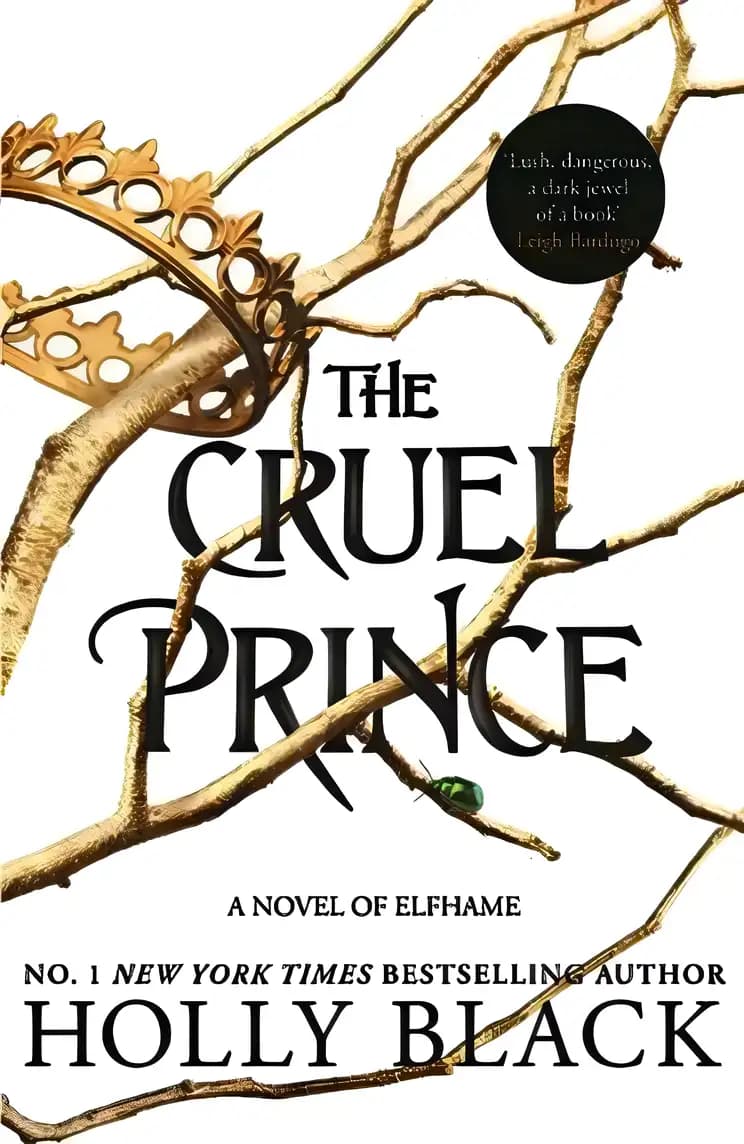
The Cruel Prince
#1 of 3 in The Folk of the Air Series
on Goodreads (1,516)
What’s inside...
The Cruel Prince follows Jude, a mortal girl living in the treacherous High Court of Faerie. Despite her mortality, Jude wants to belong in this dangerous realm. When a violent incident gives her the chance to seize power, she must decide how far she's willing to go to earn her place and protect her family. Jude was seven when her parents were murdered and she and her two sisters were stolen away to live in the treacherous High Court of Faerie. Ten years later, Jude wants nothing more than to belong there, despite her mortality. But many of the fey despise humans. Especially Prince Cardan, the youngest and wickedest son of the High King. To win a place at the Court, she must defy him–and face the consequences. As Jude becomes more deeply embroiled in palace intrigues and deceptions, she discovers her own capacity for trickery and bloodshed. But as betrayal threatens to drown the Courts of Faerie in violence, Jude will need to risk her life in a dangerous alliance to save her sisters, and Faerie itself.
Character compass
Jude Duarte
Vivienne Duarte
Oak Tree
Taryn Duarte
Oriana
Prince Dain Greenbriar
Madoc
Locke
Prince Balekin Greenbriar
Nicasia
Cardan Greenbriar
Vivienne
Discussion points
How do you think Jude felt when she was taken to the Faerie world? Can you relate to her feelings of being an outsider?
What do you think about the decisions Jude makes throughout the story? Do you think they were right or wrong, and why?
The book shows different forms of power and control. What are some ways characters in the book use power, and how do they affect others?
How does the relationship between Jude and her siblings evolve? What do you think are the most important qualities in a sibling or a friend?
What lessons do you think this story teaches about trust and betrayal?
Tip: Role play these questions
Encourage empathy by asking your child to consider how they would feel in Jude's situations, fostering a deeper connection to the character's experiences.
Help your child analyze characters' decisions and actions by discussing their possible motivations and consequences, promoting critical thinking.
Discuss the implications of power dynamics within the story, and relate them to real-world scenarios to enhance understanding of the theme.
Explore themes of family and friendship by reflecting on Jude's interactions with her siblings, drawing parallels to your child's own relationships.
Use the theme of trust and betrayal to initiate conversations about honesty and integrity in personal relationships.
Key lessons
Example Lesson: Understanding power dynamics
Explanation: In 'The Cruel Prince', the complex interplay between different characters highlights the nuances of power and influence.
Real-World Application: Children can learn the importance of recognizing and navigating social hierarchies in school or in group settings.
Example Lesson: Resilience in adversity
Explanation: The protagonist's perseverance in the face of danger and manipulation exemplifies resilience.
Real-World Application: This can encourage children to remain steadfast and resourceful when facing personal challenges.
Example Lesson: The impact of deceit
Explanation: The storyline reveals the consequences of deception and the importance of honesty.
Real-World Application: Children can understand the value of truthfulness and the repercussions of dishonesty in their interactions.
Example Lesson: Strategic thinking
Explanation: Characters in the book often engage in strategic planning to achieve their goals, showing the importance of critical thinking and strategy.
Real-World Application: Kids can apply strategic thinking to solve problems effectively, whether in academic tasks or personal dilemmas.
Example Lesson: Empathy and understanding
Explanation: Through character interactions and conflicts, the narrative explores themes of empathy and understanding others’ perspectives.
Real-World Application: This can help children appreciate diverse viewpoints and cultivate empathy in their daily dealings with peers.