
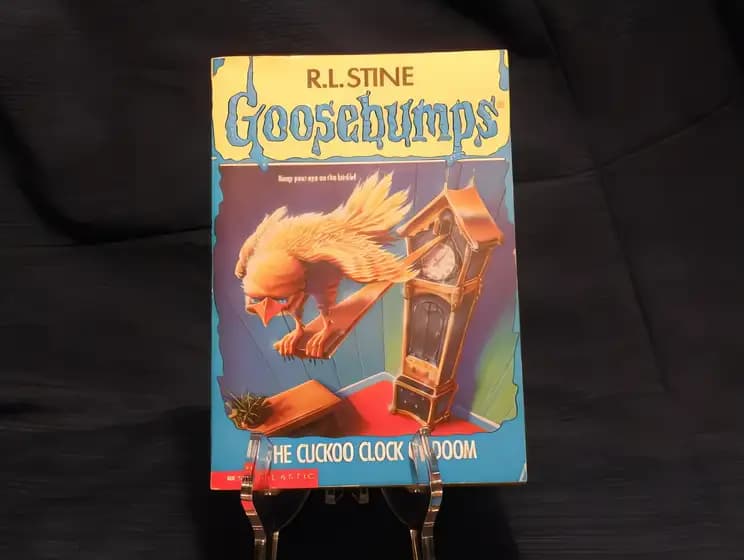
The Cuckoo Clock of Doom
#28 of 55 in Goosebumps Series
on Goodreads (8,685)
What’s inside...
When his father brings home an antique cuckoo clock, Michael is cautioned not to touch it, but he turns back the hands and suddenly he is getting younger by the minute -- a year younger to be exact.
Character compass
Michael Webster
Mr. Webster
Tara Webster
Mona
Kevin Flowers
Discussion points
How do you think Michael felt when he traveled back in time? What would you do in his place?
Why do you think Michael wanted to change something from the past? Have you ever wished to change something that already happened?
What lessons do you think Michael learned from his experiences with the cuckoo clock?
If you had a magical clock, what day would you revisit and why?
How did Michael's relationship with his sister change throughout the book? How do you deal with conflicts with your siblings or friends?
Tip: Role play these questions
Start by recounting a personal story where you wished to change the past, tying it to Michael’s experiences to make the conversation relatable.
Encourage your child to think critically by asking them what alternative solutions Michael could have considered instead of using the clock.
Discuss the importance of facing consequences and learning from mistakes, drawing parallels to everyday situations your child might encounter.
Utilize the book’s theme of time travel to ask your child about their most treasured and least favorite memories, fostering a deeper personal connection.
After discussing the book, extend the conversation to cover personal responsibility and the impact of one’s actions on others, highlighting key moments from Michael's story.
Key lessons
Example Lesson: Understanding the consequences of actions
Explanation: In the story, the protagonist, Michael, tampers with a cuckoo clock which leads to unforeseen changes in his life and family. This demonstrates how tampering with things without understanding can lead to complications.
Real-World Application: This teaches children to think about the consequences before acting and encourages responsible behavior.
Example Lesson: The importance of family
Explanation: As Michael's actions begin to affect his family members, he sees the value of each family member and strives to fix his mistakes to restore his family.
Real-World Application: Children learn to appreciate their family members and understand the role each member plays in their well-being.
Example Lesson: Dealing with mistakes
Explanation: Michael’s journey shows his struggle to correct a mistake he made, teaching that it's important to address and rectify mistakes rather than ignore them.
Real-World Application: This reinforces the idea that everyone makes mistakes and encourages children to take proactive steps to correct them.
Example Lesson: Resilience in problem-solving
Explanation: The protagonist faces multiple challenges due to his initial mistake, and his determination to restore his life displays resilience.
Real-World Application: Children learn that facing problems with courage and determination is essential in overcoming adverse situations.