
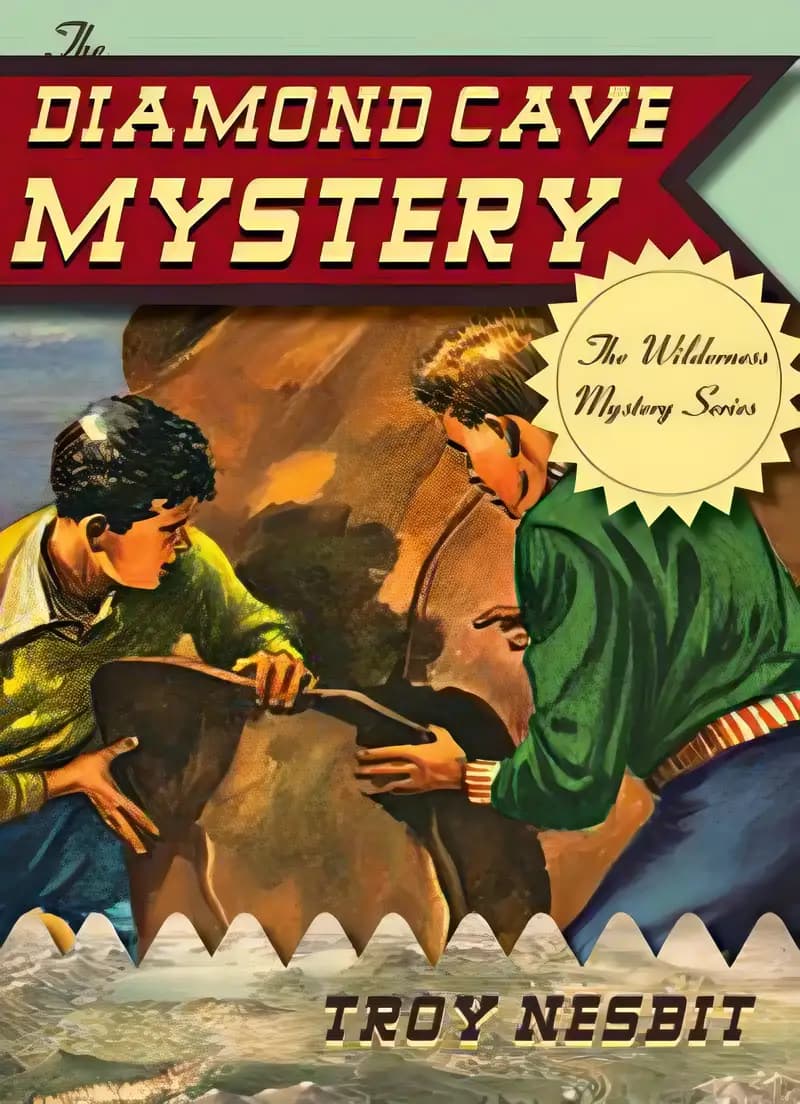
The Diamond Cave Mystery (The Wilderness Mystery Series)
Wilderness Mystery Series
on Goodreads (54)
What’s inside...
Chuck Bennett discovers an old family Bible revealing that a man from Missouri cached his diamonds in the Carlsbad Caverns, New Mexico. The news attracts so-called descendants of the man, eager to claim the treasure. Chuck and his friend thwart their attempts and use their discovery wisely. The Wilderness Mystery Series, written by Franklin Folsom under the pen name Troy Nesbit, explores natural phenomena and historical traces with progressive views on women, Native Americans, and environmental conservation.
Series reading
Non-Sequential
Age
8-12
Length
288 pages
Text complexity
Discussion points
What do you think motivated the characters to explore the Diamond Cave?
How did the characters work together to solve the mystery?
What would you have done differently if you were in the characters' shoes?
How do you think the cave’s mystery affected the surrounding community?
What lessons did the characters learn throughout their adventure?
Tip: Role play these questions
Encourage your child to describe their favorite part of the book and why it stands out to them.
Ask your child how they felt during the suspenseful parts of the story and explore those emotions.
Relate the teamwork shown in the story to real-life scenarios, asking your child about times they have had to work with others to solve a problem.
Discuss the moral decisions characters made and ask your child what they would have done in the same situations.
Highlight the importance of curiosity and perseverance shown in the book, tying them into everyday learning opportunities.
Key lessons
Example Lesson: Teamwork and collaboration
Explanation: In 'The Diamond Cave Mystery', the characters work together to solve the mystery of the hidden cave, demonstrating the importance of teamwork.
Real-World Application: Children can apply this lesson by working cooperatively in group projects at school or during team sports, learning to value each other's input and collaborate effectively.
Example Lesson: Critical thinking and problem-solving
Explanation: The protagonists use their wit and critical thinking skills to piece together clues throughout the story.
Real-World Application: This lesson encourages children to assess situations and think logically to solve problems, whether in academic challenges or everyday decisions.
Example Lesson: Courage and bravery
Explanation: Facing unknown dangers in the wilderness, the characters show courage which helps them overcome fears and obstacles.
Real-World Application: Children learn to face their own fears and challenges boldly, whether it’s trying new activities, standing up for themselves, or dealing with difficult situations at school.
Example Lesson: Respect for nature
Explanation: The story's setting in a natural environment highlights the importance of nature and promotes environmental stewardship.
Real-World Application: This teaches children to appreciate and care for the environment, encouraging activities like recycling, conserving water, or participating in community clean-up days.
Example Lesson: Persistence
Explanation: The young detectives persist in their quest despite setbacks, embodying determination.
Real-World Application: This lesson shows children the value of perseverance in achieving goals, whether in completing a difficult homework assignment, learning a new skill, or improving in a sport.