
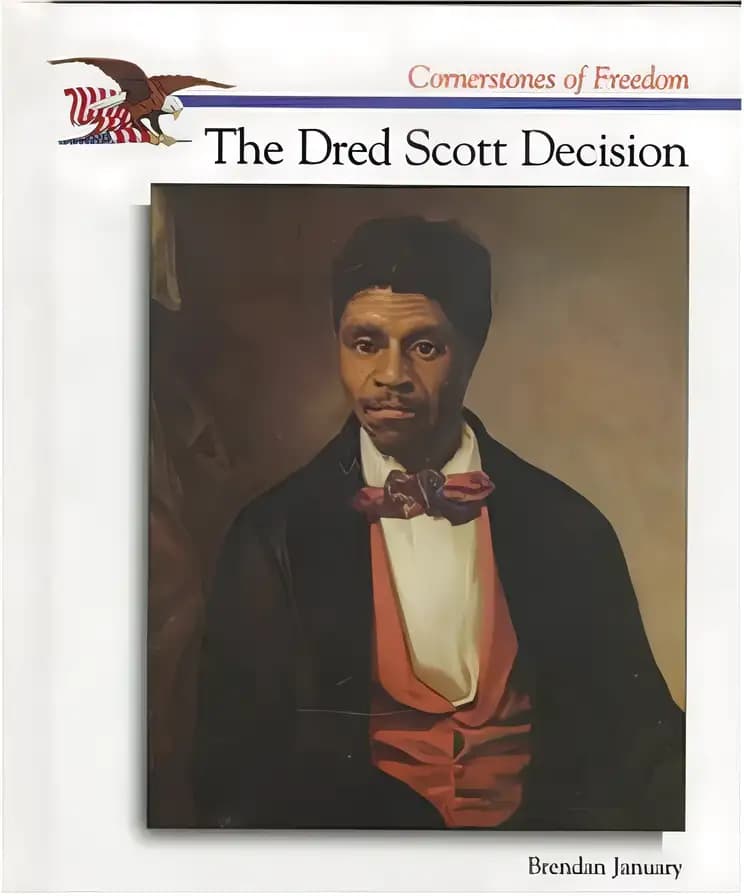
The Dred Scott Decision
on Goodreads (5)
What’s inside...
Places the events relating to the 1857 Supreme Court decision regarding rights of slaves into the larger context of the conflict about slavery among the states.
Why read this book
- Explores pivotal historical event through engaging narrative.
- Enhances understanding of American history and civil rights.
- Encourages critical thinking and empathy.
- Suitable for middle school educational curriculum.
Age
8-10
Length
2 pages
Text complexity
Character compass
Dred Scott
Discussion points
Why do you think the Dred Scott decision was significant in American history?
How do you think Dred Scott and his family felt during the trial?
What do you think could have been done differently by the people during that time to avoid such a decision?
How do you think this decision affected the fight against slavery?
What can we learn from this event that can be applied to today's society?
Tip: Role play these questions
Start by providing a brief overview of the Dred Scott Decision to ensure your child understands the context of the discussion.
Encourage your child to express their feelings and thoughts about the decision and its impacts, validating their feelings to foster a safe space for discussion.
Link the discussion to current events or social justice issues to make the conversation more relevant to your child's world.
Ask your child what they would have done differently if they were a character in the story, to develop critical thinking and empathy.
End the discussion by emphasizing the importance of learning from history to create a more just and equitable society.
Key lessons
Example Lesson: Understanding the impact of historical decisions
Explanation: The book explores the repercussions of the Dred Scott Decision on American history, demonstrating how one legal ruling can influence an entire country.
Real-World Application: Children can apply this lesson by recognizing the importance of critical thinking and decision-making in their daily interactions and understanding the long-term impact of their choices.
Example Lesson: Empathy and racial equality
Explanation: Through the personal journey of Dred Scott, the book portrays the struggles for freedom and equality faced by African Americans.
Real-World Application: This can help children develop empathy towards others who are different from them and foster a sense of fairness and justice in their everyday dealings with peers.
Example Lesson: Resilience in adversity
Explanation: Dred Scott's persistent fight for his freedom, despite numerous setbacks, serves as a powerful example of resilience.
Real-World Application: Children can learn to maintain perseverance and a positive attitude when facing their own challenges, whether in school or in personal relationships.
Example Lesson: Historical awareness and learning from the past
Explanation: The book details pivotal moments in U.S. history, encouraging a deeper understanding of past events.
Real-World Application: This lesson can encourage children to explore and learn more about history, leading to better informed future generations who understand the significance of historical events.
Example Lesson: Critical thinking about laws and ethics
Explanation: It critically analyzes the moral and ethical implications of the Dred Scott Decision.
Real-World Application: Children are encouraged to think critically about the rules and laws around them and consider their fairness and moral rightness, helping them to develop into thoughtful and engaged citizens.