
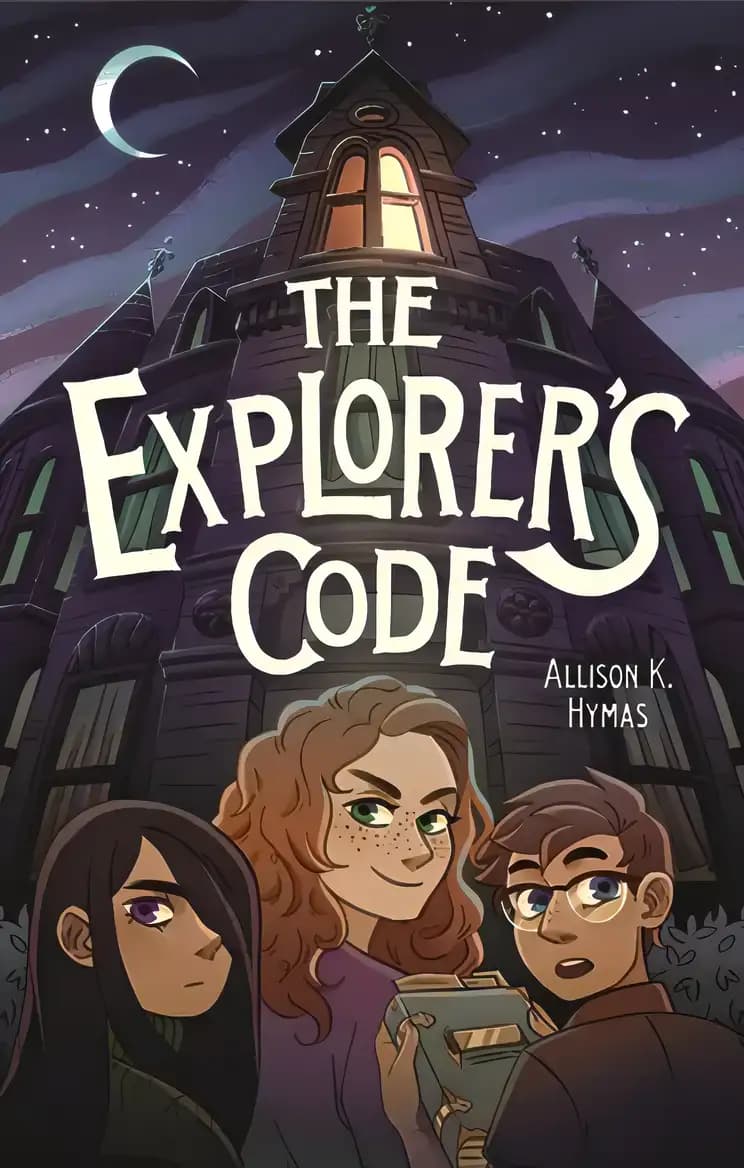
The Explorer's Code
#1 in The Explorer Academy Series
on Goodreads (231)
What’s inside...
Three kids, Charlie, Anna, and Emily, find themselves at the mysterious Idlewood Manor, each drawn there for different reasons. Charlie, a math whiz, discovers strange numbers on the walls after winning a puzzle contest. Anna, his restless sister, uncovers a hidden floor in the house, and Emily is on a secret mission with her parents. Together, they uncover clues related to the manor's mysterious past and a famous female explorer who left behind a secret treasure. As they solve Idlewood’s puzzles, they must also contend with adults who are after the treasure. The children must work together to solve the mysteries before it's too late. 'The Explorer's Code' by Allison K. Hymas is a thrilling middle-grade novel that will engage readers with its real ciphers, puzzles, riddles, and codes.
Discussion points
What would you do if you found a mysterious map like the characters in the book? What would be the first place you'd explore?
How did the characters change throughout their adventure? What challenges did they face and how did they overcome them?
Why do you think teamwork was important for the characters in 'The Explorer's Code'? Can you think of a time when teamwork helped you?
What was the most surprising part of the story for you? Why do you think the author chose to include that twist?
If you could ask any character in the book a question, who and what would you ask? Why?
Tip: Role play these questions
Prompt your child to imagine themselves in the story, asking how they would feel or react in similar situations to deepen their connection with the narrative.
Encourage your child to describe their favorite part of the book or a character they felt connected to. This can lead to deeper discussions about personal values and choices.
Discuss the problem-solving techniques used by the characters. Relate those strategies to real-life scenarios that your child might face to enhance their critical thinking skills.
If your child is intrigued by the mystery and adventure in the book, consider planning a simple treasure hunt at home to bring the story to life and make the reading experience interactive.
Key lessons
Example Lesson: Teamwork and collaboration
Explanation: In 'The Explorer’s Code', the protagonists must work together to solve puzzles and uncover secrets. Their success is predicated on their ability to communicate and cooperate effectively.
Real-World Application: Children can learn the importance of working with others, whether in school projects or in group activities, emphasizing that collective effort often leads to success.
Example Lesson: Problem-solving skills
Explanation: Throughout the book, characters are faced with challenges and mysteries that they need to think critically and creatively to solve.
Real-World Application: This encourages children to approach their real-life problems with a strategic mindset, improving their decision-making skills and encouraging them to think outside the box.
Example Lesson: Resilience in the face of adversity
Explanation: Characters in the book often encounter setbacks in their quest, yet they persist and persevere until they reach their goals.
Real-World Application: This teaches children the value of persistence and resilience, helping them understand that facing challenges is a part of life and overcoming them is within their capability.
Example Lesson: Ethics and integrity
Explanation: The young explorers in the story often grapple with decisions that test their morals, highlighting the importance of honesty and ethical behavior.
Real-World Application: This can help children understand the consequences of their choices and instill a sense of morality that aids in discerning right from wrong in their everyday interactions.
Example Lesson: Curiosity and the joy of learning
Explanation: The book’s narrative is driven by a quest for knowledge, celebrating the thrill of discovery and learning.
Real-World Application: Fostering a love for learning in children can lead to a lifelong passion for education, encouraging them to explore new subjects and engage deeply with their studies.