
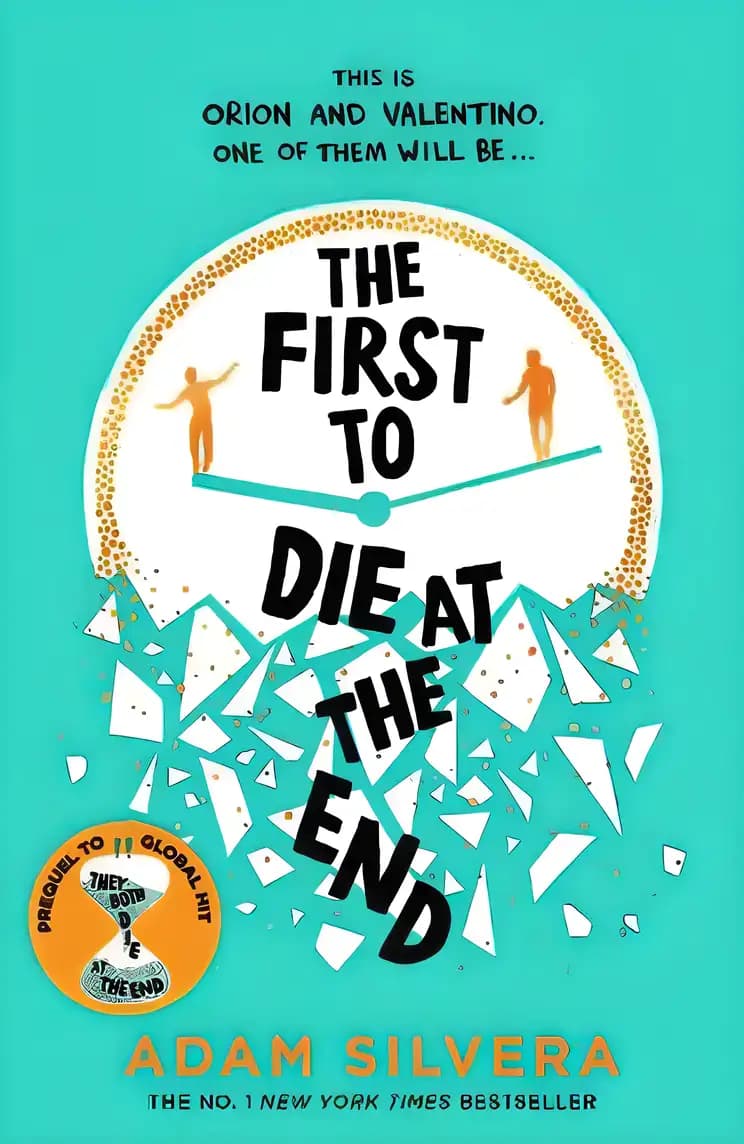
The First to Die at the End: Exclusive Foiled Jacket Edition
Death-Cast Series
on Goodreads (105,349)
What’s inside...
In an alternate reality, Death-Cast can predict the exact day a person will die. Two teenagers, Orion and Valentino, meet the night before Death-Cast goes live. Despite Orion's heart condition and Valentino's promising future, they connect instantly in Times Square. When their End Day calls go out, their lives are forever changed—one receives a call, while the other doesn't. They decide to spend their last day together, experiencing a life-changing adventure. Throughout the story, which is a prequel to 'They Both Die at the End,' the narrative explores themes of living life to the fullest and the impact of human connections.
Series reading
Non-Sequential
Age
14-17
Length
576 pages
Text complexity
Character compass
Orion Pagan
Valentino Prince
Discussion points
How did the knowledge of their limited time affect the characters' decisions and relationships?
What emotions did you feel while reading about the characters' journeys, and why?
If you knew your time was limited, what would you do differently or appreciate more?
How do the themes of friendship and bravery show up in the story, and what can we learn from them?
What choices did the characters make that you agree or disagree with, and what would you have done differently?
Tip: Role play these questions
Prior to discussing the book, read it yourself so you can share your perspectives and relate to your child’s thoughts.
Encourage your child to express their feelings about the book’s events and characters, and validate their emotions as part of the conversation.
Discuss the moral dilemmas faced by the characters to help your child develop empathy and ethical thinking.
Use examples from the book to have a broader conversation about life, mortality, and making the most of every day.
Ask open-ended questions to foster critical thinking and to encourage your child to explore the themes of the book more deeply.
Key lessons
Example Lesson: Valuing the present moment
Explanation: The narrative revolves around characters who know their lives will soon end, prompting them to cherish every moment.
Real-World Application: Children can learn to appreciate their daily experiences and the people around them, fostering a deeper sense of gratitude and presence.
Example Lesson: Coping with fear and uncertainty
Explanation: As characters confront their impending deaths, they navigate their fears in various ways, showcasing resilience and courage.
Real-World Application: This lesson can help children understand that fear is a natural emotion, and that facing it bravely can lead to personal growth and strength.
Example Lesson: The importance of forming meaningful relationships
Explanation: The book highlights the relationships the characters forge when faced with life’s finite nature, illustrating the comfort and joy relationships bring.
Real-World Application: Children can learn the significance of building strong, supportive ties with family and friends, which can provide emotional support and enrich their lives.
Example Lesson: Ethical decision-making
Explanation: Characters in the story make critical choices under pressure, reflecting on what is truly important.
Real-World Application: This can encourage children to think critically about the consequences of their actions and to make thoughtful, ethical decisions.
Example Lesson: Accepting the inevitable with grace
Explanation: The characters' journeys underscore accepting life’s outcomes, including its end, with dignity and peace.
Real-World Application: Children can learn the value of acceptance in facing the unavoidable aspects of life, promoting emotional resilience and peace of mind.