
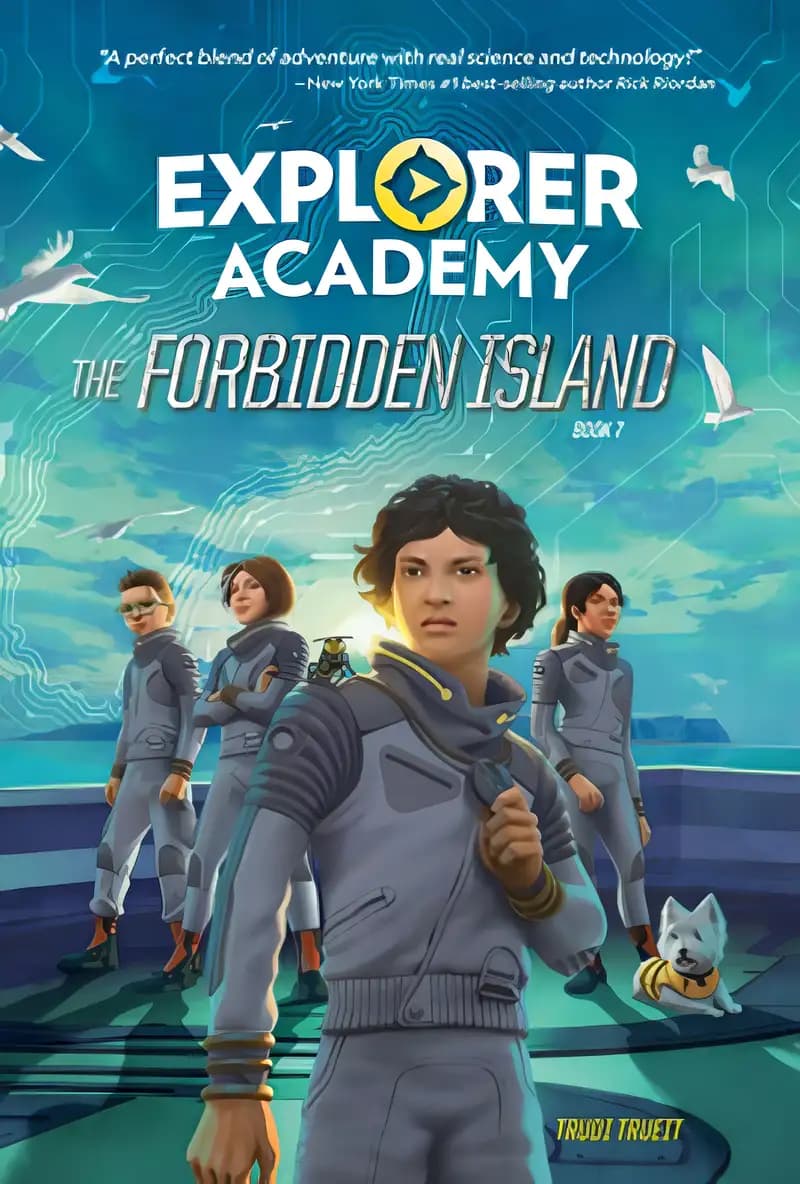
The Forbidden Island
#7 of 7 in Explorer Academy Series
on Goodreads (505)
What’s inside...
Amid assignments that take the Explorer Academy recruits from the iceberg-filled waters of Antarctica to the bone-dry deserts of Argentina, Cruz Coronado is scrambling to complete the last piece of the cipher. With Nebula agents and the elusive explorer spy still out there, his opportunity to recover his mother's world-changing formula is slipping away. But as Cruz has learned from his time aboard Orion, true explorers must never give up. Even after completing dozens of high-risk missions and traveling to all seven continents, Cruz could never prepare himself for one ultimate surprise. A heart-pounding final showdown changes the life of Cruz Coronado forever in the seventh and final book in this thrilling fact-based fiction series. Explorer Academy features a gripping fact-based fiction plot that inspires curiosity with new technology and innovations; amazing inventions and gadgets; a cast of diverse, relatable characters; secret clues, codes, and ciphers to track down within the text; vibrant illustrations; elements of STEAM; and National Geographic explorer profiles in the 'Truth Behind' section.
Character compass
Cruz Coronado
Bryndis Sigurdsdottir
Sailor York
Lani Toia
Emmett Liu
Marisol Coronado
Discussion points
What would you do if you found yourself on a mysterious island like the characters in the book?
How did the characters' actions help them overcome challenges on the island?
What lessons did the characters learn about trust and teamwork?
Can you think of a time when you had to work with others to solve a problem? How does it compare to the characters' experiences?
What do you think the island represents in the story?
Tip: Role play these questions
Encourage your child to imagine themselves in the setting of the story and consider what decisions they would make. Asking open-ended questions can help draw connections between their own experiences and those of the characters, fostering a deeper understanding of the book’s themes of adventure, cooperation, and resilience.
Key lessons
Example Lesson: The importance of teamwork
Explanation: In 'The Forbidden Island,' the characters must collaborate to solve puzzles and overcome challenges. Their success is hinged on their ability to work together and utilize each person's unique strengths.
Real-World Application: Children learn that cooperation and collaboration are essential skills in school projects and family activities, fostering a spirit of support and collective problem-solving.
Example Lesson: Courage in facing the unknown
Explanation: The protagonist shows bravery when exploring unknown territories of the island despite fears and uncertainties. This highlights the value of courage in the face of new or intimidating situations.
Real-World Application: This can inspire children to face new experiences, such as moving to a new school or trying out a new hobby, with courage and optimism.
Example Lesson: Respect for nature
Explanation: Throughout their adventure, the characters learn to navigate the island’s environment respectfully, understanding the impact of their actions on the ecosystem.
Real-World Application: This lesson teaches children the importance of environmental conservation and encourages them to practice sustainability in everyday activities like recycling and conserving water.
Example Lesson: Problem-solving skills
Explanation: The book showcases various problem-solving scenarios where the characters have to think critically and creatively to advance in their quest.
Real-World Application: Children are encouraged to apply critical thinking and problem-solving skills in real-life challenges, enhancing their decision-making process and creativity.
Example Lesson: Perseverance in the face of adversity
Explanation: The characters encounter numerous setbacks on their journey, but their determination never wavers. This perseverance ultimately leads to their success.
Real-World Application: This can motivate children to persist through their personal challenges, whether they are academic struggles or learning a new skill, underscoring the virtue of persistence.