
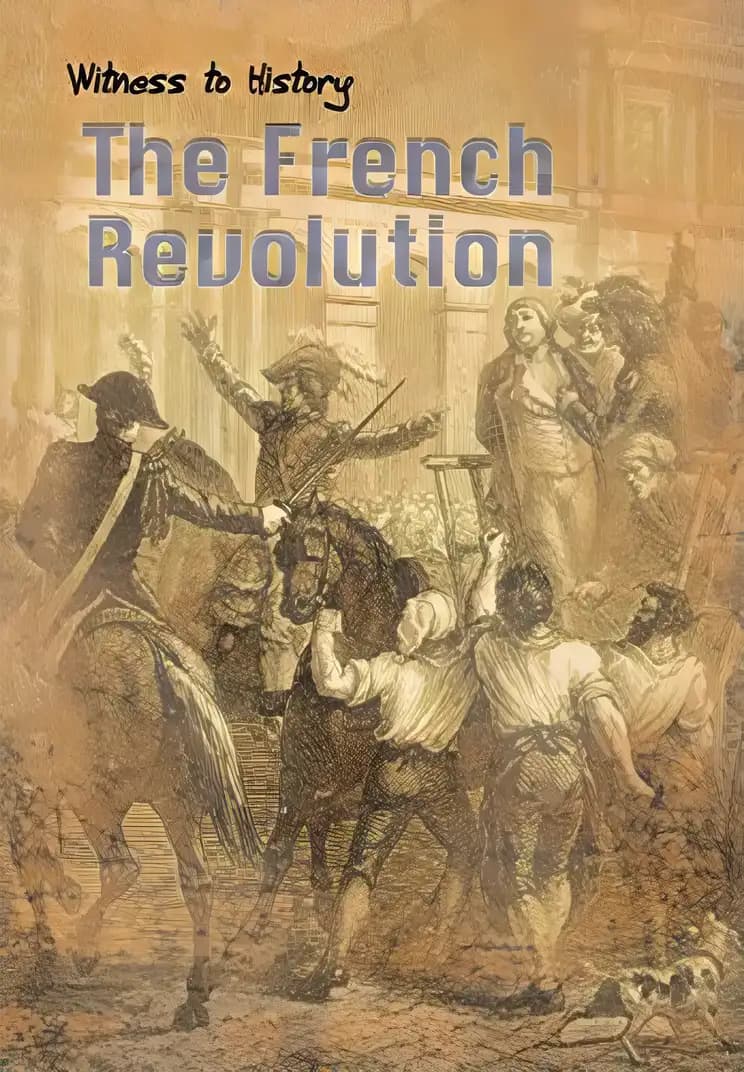
The French Revolution
Cornerstones of freedom Series
on Goodreads (23)
What’s inside...
The book 'The French Revolution' by Sean Connolly presents an in-depth analysis of the events, causes, and impacts of the French Revolution from 1789 to 1799. It explores the financial crisis, social inequalities, and Enlightenment ideas that led to the revolution, as well as major events like the storming of the Bastille and the Reign of Terror. The book discusses key figures such as Louis XVI, Marie Antoinette, and Napoleon Bonaparte, and examines the global influence of the revolution on monarchy, secularism, and revolutionary ideals. It concludes with the establishment of the Consulate and Napoleon's ascent to power. Additionally, it provides a vivid portrayal of what it was like to be part of the nobility, witness executions, and experience the tumultuous period through the eyes of various historical figures such as radicals, the mayor of Paris, and Louis XVI's priest during these transformative times.
Series reading
Non-Sequential
Age
10-11
Length
56 pages
Text complexity
Discussion points
What do you think inspired the people of France to start the French Revolution?
How do you believe the lives of ordinary people changed after the revolution?
Can you think of any other events in history where people fought for their rights like in the French Revolution?
What role did leaders play during the French Revolution? Do you think having strong leaders is important during such times?
If you were living during the French Revolution, what would you have done?
Tip: Role play these questions
Encourage your child to imagine living during the French Revolution, which can help personalize the historical events.
Draw parallels between the French Revolution and current events to make the discussion more relevant.
Ask your child to think about what fairness and equality mean to them, and relate those concepts to the themes of the book.
Use storytelling techniques to recount small anecdotes from the revolution to make the historical events more vivid and engaging.
Key lessons
Example Lesson: The importance of equality
Explanation: The book 'The French Revolution' by Sean Connolly discusses the struggles and conflicts that arose from inequalities in French society, inspiring readers to value fairness and justice.
Real-World Application: Children can apply this lesson by practicing inclusivity and fairness in their interactions with others, ensuring everyone is treated equally regardless of differences.
Example Lesson: Understanding historical impacts
Explanation: This book provides insights into how historical events like the French Revolution have shaped modern democratic principles and societal structures.
Real-World Application: Kids can learn to connect past events with current global situations, enhancing their understanding and appreciation of history in shaping today's world.
Example Lesson: The power of collective action
Explanation: Through the narrative of the French Revolution, children see how people coming together can enact significant change and challenge injustices.
Real-World Application: This can encourage children to participate in community activities or group projects, understanding their collective efforts can lead to positive changes.
Example Lesson: Critical thinking about governance
Explanation: Sean Connolly's book delves into the complexities of governance and revolution, prompting discussions about leadership and governance.
Real-World Application: Children can use this knowledge to analyze and discuss leadership qualities and government policies critically, both in historical contexts and contemporary settings.
Example Lesson: Resilience in the face of adversity
Explanation: The characters in 'The French Revolution' demonstrate resilience amidst turbulent times, providing a model of endurance and courage.
Real-World Application: This lesson can help children develop a resilient mindset to overcome personal challenges and adversities they face in life.