
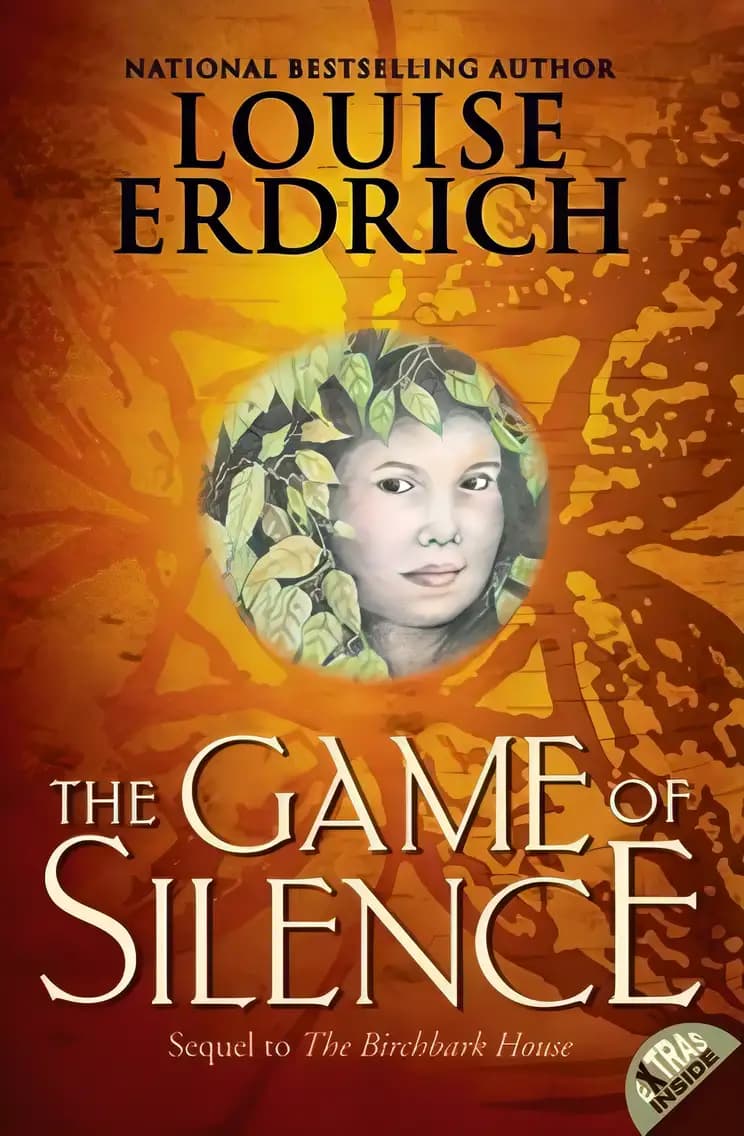
The Game of Silence: Birchbark House
#2 of 5 in Birchbark House Series
on Goodreads (2,282)
What’s inside...
Winner of the Scott O'Dell Award for Historical Fiction, The Game of Silence is the second novel in the Birchbark House series by Louise Erdrich. Set in 1850, the story follows Omakayas, or Little Frog, an Ojibwe girl living on an island in Lake Superior. Her peaceful life is disrupted when mysterious visitors inform her people that they must move west due to the demands of white settlers. As Omakayas grapples with the potential loss of her home and way of life, she learns the value of her heritage and the strength of her community. The novel, rich in historical and cultural detail, offers a compelling look at the impact of colonization on Native American families.
Character compass
Omakayas
Pinch
Angeline
Deydey
Old Tallow
Yellow Kettle
Nokomis
Discussion points
How do the changes brought by the outsiders affect Omakayas and her community? What would you do in her place?
Omakayas shows great courage and resilience throughout the story. Can you think of a time when you had to be brave? How did it make you feel?
The book portrays various aspects of Native American culture and traditions. What did you find most interesting or surprising?
The theme of community is strong in the book. Why is it important to have a supportive community? How does your community support you?
Silence plays a significant role in the story. What do you think 'The Game of Silence' symbolizes? How do you use silence in your own life?
Tip: Role play these questions
Encourage your child to express their feelings about the book’s events, especially how they relate to the characters’ emotions.
Use the cultural aspects in the story as a learning point. Research more about Native American history together, making the reading experience both educational and engaging.
Discuss the moral choices characters make in the book. Ask your child what they would do in similar situations, promoting a deeper understanding of ethics and personal values.
Highlight the importance of community as depicted in the book. Share personal family stories that echo this theme to strengthen the bond and relate the message personally.
After reading, let your child reflect on the story through drawing or writing their own short story, encouraging creative expression linked to the theme of the book.
Key lessons
Example Lesson: Resilience in the face of change
Explanation: The protagonist, Omakayas, and her community face forced displacement but strive to maintain their way of life.
Real-World Application: Children can learn to adapt positively to changes and challenges in their own lives, maintaining their core values and spirit.
Example Lesson: Importance of community and belonging
Explanation: Omakayas and her family rely on their community for support and survival, highlighting the importance of collective strength.
Real-World Application: This lesson encourages children to value their communities, fostering a sense of belonging and contributing positively to group settings like school or sports teams.
Example Lesson: Respect for nature and environment
Explanation: The book portrays the deep connection the Native American characters have with their land and resources, showing reverence and sustainable practices.
Real-World Application: Children can be encouraged to engage in environmental conservation activities such as recycling, planting trees, or caring for wildlife.
Example Lesson: Understanding and appreciating cultural heritage
Explanation: Through the experiences of Omakayas and her family, readers gain insights into the rich cultural practices and traditions of the Ojibwe people.
Real-World Application: This can inspire children to explore and appreciate their own heritage and learn about different cultures, promoting diversity and inclusion.
Example Lesson: Empathy and kindness
Explanation: Omakayas shows empathy by caring for her younger sibling and understanding the emotions of those around her.
Real-World Application: Children can learn to be more empathetic and kind towards others, understanding different perspectives and offering support where needed in their daily interactions.