
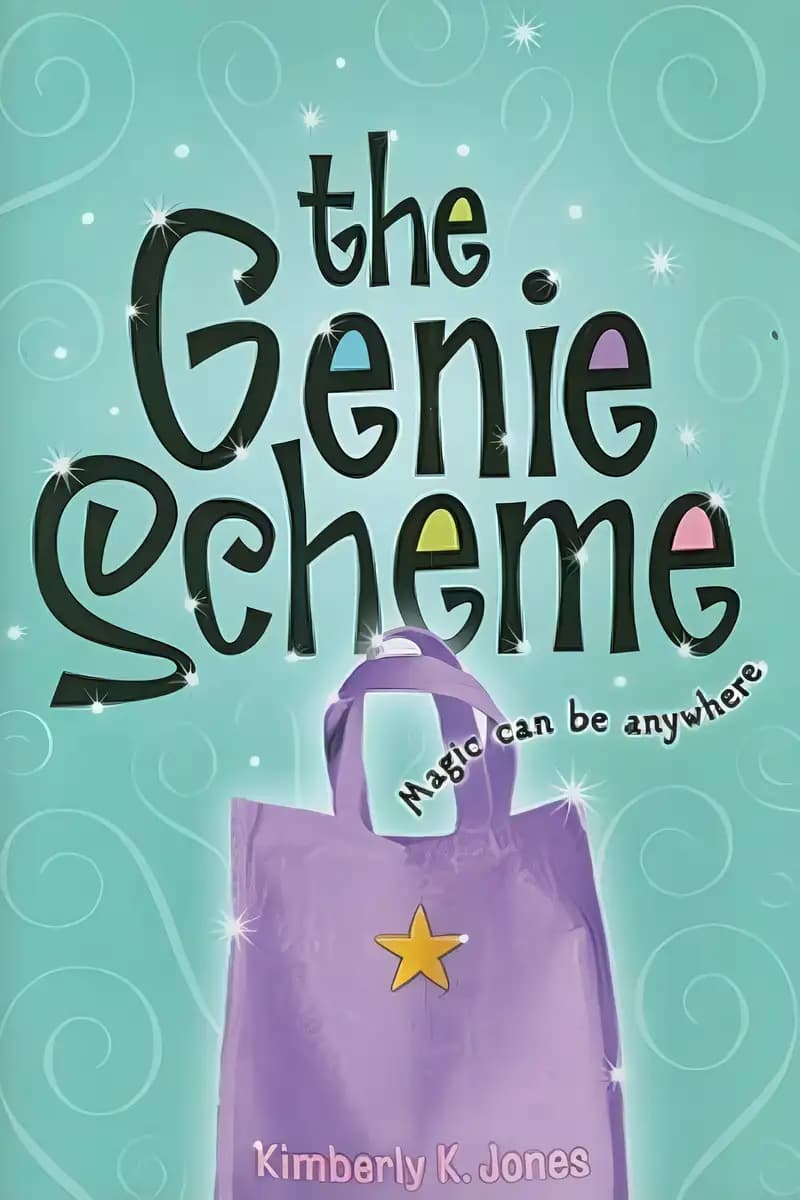
The Genie Scheme
on Goodreads (150)
What’s inside...
When twelve-year-old Janna, who lives in a small house with her single mother, helps a homeless woman who turns out to be a genie, she discovers how interconnected the world really is. Initially thrilled to have unlimited wishes, Janna soon learns that each wish comes with consequences as everything she desires is taken from someone else. As she navigates the complexities of her new power, she comes to understand the limits of genie wattage and the true impact of her wishes. With warmth and humor, the story explores the importance of being mindful of our desires and their effects on others.
Age
8-12
Length
179 pages
Text complexity
Character compass
Janna
Janna'S New Best Friend
Janna'S Mother
Genie
Discussion points
What would you do if you had three wishes like Jax in the story? Why?
How do the characters in the book show courage and teamwork?
What lessons do you think Jax learned about friendship by the end of the book?
How do Jax's feelings change throughout the story, and what causes these changes?
If you could change one part of the story, what would it be and why?
Tip: Role play these questions
Start by asking your child to summarize the book in their own words, which can help gauge their understanding and recall.
Relate the themes of the book to your child’s own experiences, such as discussing times when they had to make difficult choices or work with others to solve a problem.
Encourage your child to think creatively by asking them to imagine their own ending or what they would wish for, similar to the characters in the book.
Praise your child for their thoughts and input to foster a positive and open environment for discussion.
Ask follow-up questions based on your child’s responses to encourage deeper thinking and connection to the themes discussed.
Key lessons
Example Lesson: The importance of honesty
Explanation: In 'The Genie Scheme,' characters learn key lessons when dishonesty leads to complicated situations, showing the consequences of not being truthful.
Real-World Application: Children can learn to value transparency and truthfulness in their interactions at home, in school, and with friends.
Example Lesson: Understanding the impact of choices
Explanation: Throughout the book, the protagonist's choices greatly affect the storyline, emphasizing how decisions can have far-reaching consequences.
Real-World Application: This teaches children to consider the potential outcomes before making decisions, fostering a sense of responsibility.
Example Lesson: Empathy and considering others' feelings
Explanation: Characters in the book often encounter situations that require them to consider other people's emotions and perspectives, promoting empathy.
Real-World Application: Children can apply this lesson by recognizing and respecting the feelings and viewpoints of others in real-life social interactions.
Example Lesson: Teamwork and cooperation
Explanation: The book showcases characters working together to solve problems, highlighting the benefits of collaborative effort.
Real-World Application: This encourages children to participate effectively in group tasks whether in academic projects or during play.
Example Lesson: The value of perseverance
Explanation: As the characters face challenges, their persistent efforts to overcome obstacles underscore the importance of not giving up easily.
Real-World Application: Kids can be inspired to persist in their personal challenges, whether finishing a difficult homework assignment or mastering a new skill.