
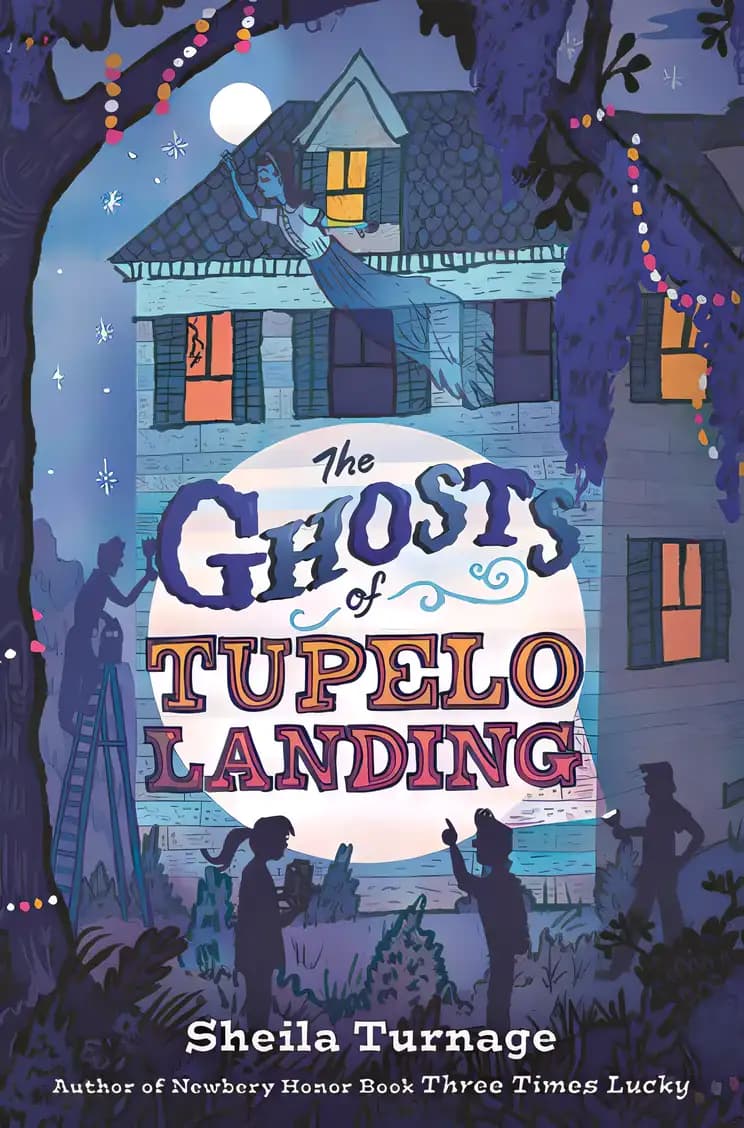
The Ghosts of Tupelo Landing
#2 of 4 in Mo & Dale Mysteries Series
on Goodreads (6,820)
What’s inside...
The eagerly anticipated followup to the Newbery honor winner and New York Times bestseller, Three Times Lucky. Small towns have rules, and one of them is to stay true to oneself, no matter how many murders one solves. When Miss Lana accidentally bids on an old inn at the Tupelo auction and becomes its owner, she and the Desperado Detective Agency (Mo and Dale) uncover a hidden ghost. Tasked with identifying the ghost for extra credit in their history assignment, Mo and Dale realize the inn isn't the only haunted thing in Tupelo Landing - people can be haunted by their past too. As they unravel the mysteries of the ghost and the town's residents, they uncover many surprising truths. This laugh-out-loud, ghostly Southern mystery can be enjoyed by newcomers and returning fans of Mo and Dale alike.
Character compass
Moses 'Mo' Lobeau
Dale Earnhardt Johnson Iii
Miss Lana
Colonel
Discussion points
What do you think the ghosts in Tupelo Landing represent in the story?
How do the main characters change from the beginning to the end of the book?
What would you do if you were in Mo's shoes and encountered a ghost?
Which part of the story did you find the most surprising or exciting?
How do you think the setting of Tupelo Landing impacts the story?
Tip: Role play these questions
Encourage your child to express their feelings about the characters' decisions and actions, fostering empathy and understanding.
Compare and contrast your child’s thoughts about ghosts before and after reading the book to explore changes in perception.
Link discussions to personal experiences where possible to make the conversation more relatable and engaging.
Use the backdrop of Tupelo Landing to discuss the importance of setting in storytelling and how it can influence the mood and plot of a story.
Key lessons
Example Lesson: The importance of community and teamwork
Explanation: In 'The Ghosts of Tupelo Landing,' the main characters, Mo and Dale, work together with other community members to solve a mystery. This collaborative effort shows the strength and success that comes from working together.
Real-World Application: Children can learn to value teamwork in group projects at school or in sports, understanding that everyone has a unique contribution that can lead to a successful outcome.
Example Lesson: Curiosity and critical thinking
Explanation: Throughout the book, Mo and Dale exhibit curiosity and critical thinking as they gather clues and solve the ghostly mystery. This highlights the importance of asking questions and thinking deeply about problems.
Real-World Application: Kids are encouraged to be inquisitive and apply problem-solving skills in their daily interactions and learning. This could be during a science project, figuring out a math problem, or even resolving a conflict with a friend.
Example Lesson: Resilience in facing fears
Explanation: The characters confront and overcome their fears of ghosts as they progress in their adventure, demonstrating resilience.
Real-World Application: Children can learn to face their own fears, whether it's trying out for a new sport, speaking in front of class, or sleeping alone in the dark. The book teaches that fears can be managed and overcome through courage.
Example Lesson: Understanding and accepting differences
Explanation: As the characters uncover more about the ghost's story, they learn to understand and empathize with experiences different from their own.
Real-World Application: This lesson helps children see the value in diversity and the importance of understanding people who might seem different. It could help them in being more inclusive and compassionate with their classmates and others.