
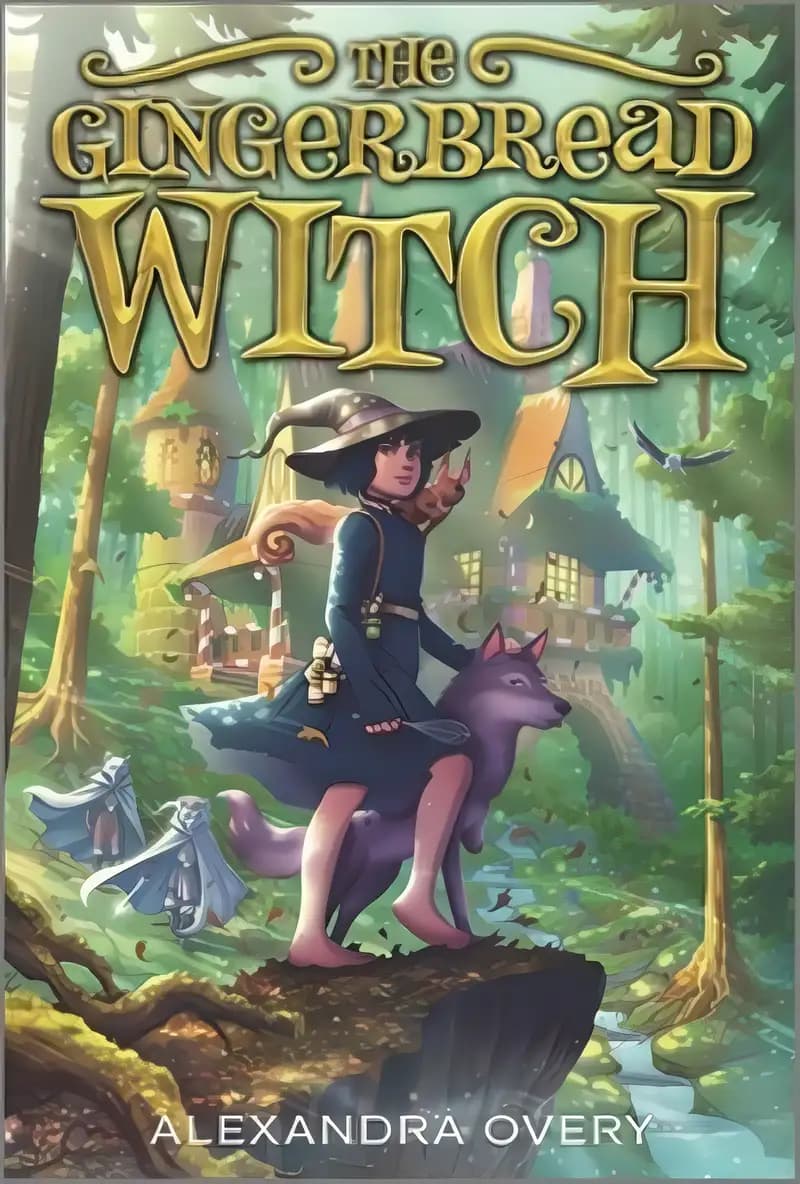
The Gingerbread Witch
#1 of 2 in The Gingerbread Witch Series
on Goodreads (352)
What’s inside...
Maud has grown up in a gingerbread house, dreaming of becoming a witch like her guardian, Mother Agatha. However, her life takes a dramatic turn when witch hunters, Hansel and Gretel, shove Agatha into the oven. Maud must venture into the perilous Shadelands forest to retrieve the First Witch's spellbook in order to save Agatha and the rest of her gingerbread family. As she faces witch hunters and others who seek the spellbook for their own purposes, Maud races against time to rescue the only mother she has ever known.
Character compass
Maude
The Witch
Discussion points
Why do you think the Gingerbread Witch behaves the way she does? What could be her reasons?
If you could talk to any character in the book, who would it be and what would you say?
How would you feel if you were in the same situation as the main characters?
What are some ways the characters in the story show courage or kindness?
Can you think of a different ending for the story? What would you change?
Tip: Role play these questions
Encourage empathy by asking your child how they would feel in the characters' situations, helping them relate personally to the story.
Foster creativity by having your child imagine alternative endings or plot twists, enhancing their engagement with the narrative.
Promote critical thinking by discussing the characters' decisions and exploring different choices they could have made.
Highlight the morals or lessons of the story, and relate them to real-life scenarios your child might encounter.
Use expressive reading techniques, such as different voices for each character, to make the storytelling more dynamic and captivating.
Key lessons
Example Lesson: Empathy and Understanding
Explanation: In 'The Gingerbread Witch', the main character, a young witch, learns to understand and empathize with the different creatures she meets.
Real-World Application: Children can apply this lesson by learning to appreciate the feelings and perspectives of others, aiding in their social interactions and emotional intelligence.
Example Lesson: Courage and Resilience
Explanation: Throughout her journey, the young witch faces various challenges and shows bravery and resilience in overcoming them.
Real-World Application: This teaches children the importance of facing difficulties head-on and not giving up, equipping them to handle personal challenges.
Example Lesson: Importance of Teamwork
Explanation: The witch collaborates with others to solve problems that she couldn't have solved alone, highlighting the value of working together.
Real-World Application: Children learn that teamwork can be effective in accomplishing tasks and solving conflicts, which is a crucial skill in school projects and peer relationships.
Example Lesson: Creativity and Innovation
Explanation: The young witch uses creative solutions to navigate obstacles, showing that thinking outside the box can be beneficial.
Real-World Application: Encourages children to use their imagination and creativity in problem-solving, which can enhance their cognitive development and adaptability.
Example Lesson: Taking Responsibility
Explanation: The protagonist takes responsibility for her actions and their consequences, a key theme in the book.
Real-World Application: This can help children understand the impact of their actions and encourage them to take responsibility in their daily lives.