
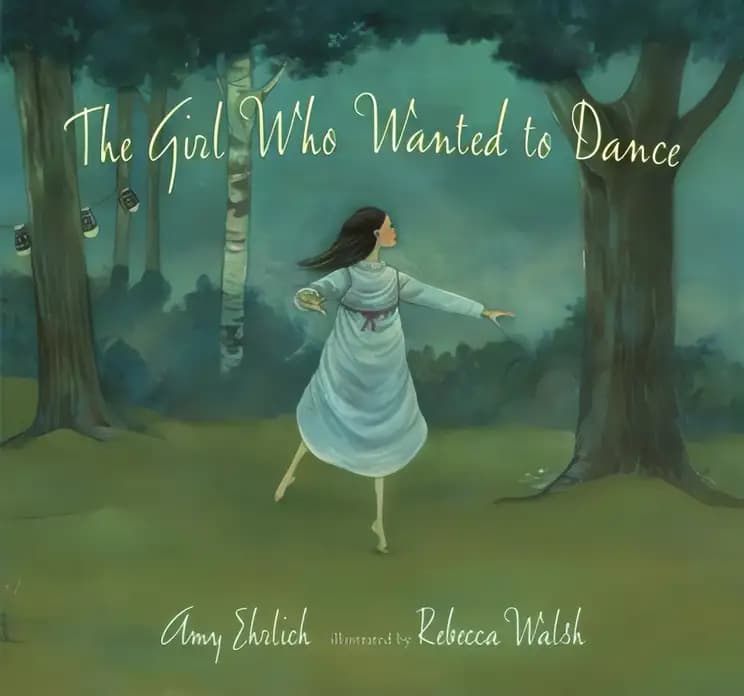
The Girl Who Wanted to Dance
What’s inside...
The call to self expression haunts a delicate, poignant tale about family and art, love and longing — and the ineffable tie between parent and child. Clara lives with her father and grandmother in a little village. More than anything, Clara loves to dance, but her father has had too much sadness in his life to abide dancing. When Clara sees a troupe of dancers performing in the village one June day, she is enchanted enough to follow their wagons deep into the forest — and what she finds there changes her life forever. This bewitching fairy tale by master storyteller Amy Ehrlich, tenderly illustrated by Rebecca Walsh, honors the call to the artistic life and acknowledges with compassion the pain of those left behind.
Age
6-9
Length
40 pages
Text complexity
Character compass
Hannah
Father
Discussion points
How do you think Clara felt when she was watching the dancers on stage?
Why do you think dancing was so important to Clara?
What does this story teach us about following our dreams?
How do the colors and illustrations in the book make you feel?
Can you think of a time when you wanted something as much as Clara wanted to dance?
Tip: Role play these questions
Encourage your child to express their feelings about the story by relating to Clara’s emotions and experiences.
Discuss the importance of perseverance and how Clara’s determination helped her achieve her dream.
Use the illustrations in the book to guide the conversation, asking your child to describe what they see and how it relates to the story.
Connect the story to your child’s life by asking them about their own dreams and discussing steps they can take to achieve them.
Reinforce the message of the book by participating in a dance-related activity together, such as a dance class or just dancing around at home.
Key lessons
Example Lesson: Pursuing passion
Explanation: The protagonist's unwavering desire to dance despite challenges shows her passion.
Real-World Application: Children learn to identify and pursue what they love, fostering determination and self-confidence.
Example Lesson: Resilience and perseverance
Explanation: The girl's efforts to overcome obstacles to dance illustrates resilience.
Real-World Application: Teaches children to face setbacks with a positive attitude and not give up on their goals.
Example Lesson: Importance of family support
Explanation: The support from her family plays a crucial role in her journey to dance.
Real-World Application: Encourages children to appreciate and seek support from family, enhancing familial bonds.
Example Lesson: Expressing oneself
Explanation: Dancing becomes a form of self-expression for the girl.
Real-World Application: Children learn the value of expressing their feelings and thoughts creatively.
Example Lesson: Empathy and understanding
Explanation: The story portrays characters showing understanding towards the girl's dreams.
Real-World Application: Promotes empathy by teaching children to be supportive and understanding of others' aspirations.