
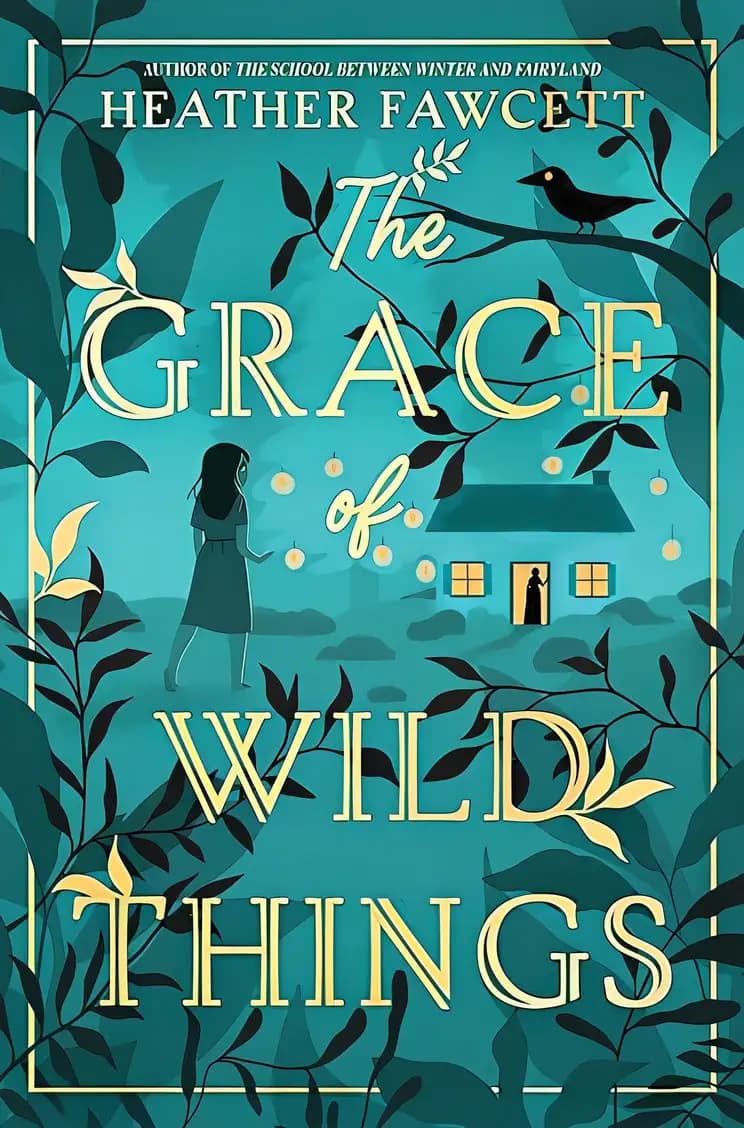
The Grace of Wild Things
on Goodreads (4,371)
What’s inside...
An inventive and fantastical reimagining of Anne of Green Gables—with magic and witches!—that explores found family, loss, and the power of a girl's imagination, from the acclaimed author of The Language of Ghosts and The School Between Winter and Fairyland. Perfect for readers who loved The Girl Who Drank the Moon and Serafina and the Black Cloak. Grace has never been good at anything except magic—not that anyone believes her. While other children are adopted from the orphanage, nobody wants Grace. So she decides to make a home for herself by running away and offering herself as an apprentice to the witch in the nearby woods. After all, who better to teach Grace to use her magic? Surely the witch can’t be that bad. But the witch is that bad—she steals souls for spells and gobbles up hearts. So Grace offers a deal: if she can learn all 100½ spells in the witch’s grimoire, the witch will make Grace her apprentice. But if Grace fails, the witch can take her magic. The witch agrees, and soon an unexpected bond develops between them. But the spells are much harder than Grace expected, and when a monster from the witch’s past threatens the home Grace has built, she may have to sacrifice more than her magic to save it.
Age
10-13
Length
368 pages
Text complexity
Character compass
Grace
Ms. Wick
Miss Pendergill
Discussion points
What do you think the wild things teach us about bravery and kindness?
How do you feel about the way the characters interact with the wild creatures?
What do you think the forest symbolizes in the story?
How would you handle a situation like the one [main character] faced in the story?
What’s one thing you learned from the book that you would like to apply in your own life?
Tip: Role play these questions
Encourage your child to relate their own experiences to those of the characters, fostering a deeper personal connection to the story.
Ask your child to imagine alternative endings for the book and discuss how different outcomes might change the story’s message.
Discuss the emotional journey of the characters, emphasizing empathy and understanding.
Help your child identify the various themes within the book by pointing out specific parts of the text and asking them to explain their significance.
Encourage your child to draw or write about their favorite scene, deepening their engagement and comprehension.
Key lessons
Example Lesson: Empathy and understanding
Explanation: The protagonist, Wren, shows empathy by understanding and caring for the creatures in the wild, despite their differences.
Real-World Application: Children learn the value of putting themselves in others' shoes, nurturing a caring attitude towards people who are different from themselves.
Example Lesson: Courage in adversity
Explanation: Wren faces various challenges in the wild yet demonstrates bravery and resilience, ultimately overcoming her fears.
Real-World Application: This encourages children to face difficult situations with courage and not to be deterred by fear, promoting resilience in their own lives.
Example Lesson: The importance of conservation
Explanation: The story highlights the need to preserve natural habitats through Wren’s adventures in the forest and her interaction with its inhabitants.
Real-World Application: Children are taught to appreciate and protect the environment, fostering a sense of responsibility towards ecological conservation.
Example Lesson: Friendship and trust
Explanation: Wren builds lasting friendships with the creatures, showcasing the significance of trust and loyalty.
Real-World Application: This imparts the importance of building and maintaining trustful relationships, teaching children the foundational values of friendship.