
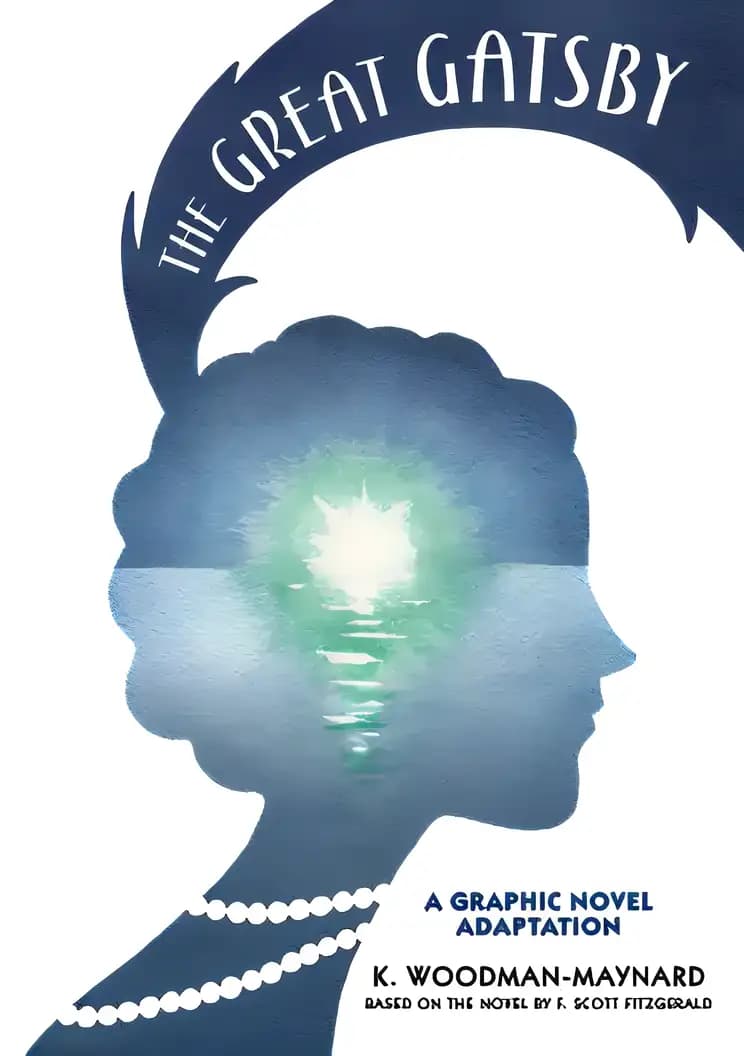
The Great Gatsby: A Graphic Novel Adaptation
What’s inside...
A sumptuously illustrated adaptation casts the powerful imagery of F. Scott Fitzgerald's great American novel in a vivid new format. From the green light across the bay to the billboard with spectacled eyes, F. Scott Fitzgerald's 1925 American masterpiece roars to life in Katharine Woodman-Maynard's exquisite graphic novel—among the first adaptations of the book in this genre. Painted in lush watercolors, the inventive interpretation emphasizes both the extravagance and mystery of the characters, as well as the fluidity of Nick Carraway's unreliable narration. Excerpts from the original text wend through the illustrations, and imagery and metaphors are taken to literal, and often whimsical, extremes, such as when a beautiful partygoer blooms into an orchid and Daisy Buchanan pushes Gatsby across the sky on a cloud. This faithful yet modern adaptation will appeal to fans with deep knowledge of the classic, while the graphic novel format makes it an ideal teaching tool to engage students. With its timeless critique of class, power, and obsession, The Great Gatsby: A Graphic Novel Adaptation captures the energy of an era and the enduring resonance of one of the world's most beloved books.
Age
14-17
Length
240 pages
Text complexity
Character compass
Jay Gatsby
Nick Carraway
Tom Buchanan
Myrtle Wilson
Jordan Baker
Daisy Buchanan
George Wilson
Discussion points
How do the vibrant illustrations in the graphic novel help convey the emotions and experiences of the characters compared to just text?
What do you think are the main desires and motivations of the characters in the story?
How does the setting of the 1920s influence the actions and choices of the characters in the novel?
What lessons can we learn about the consequences of our choices from the characters in the story?
How do the relationships in the book change and develop throughout the story? What do you think causes these changes?
Tip: Role play these questions
Encourage your child to express their thoughts and feelings about the story and its characters, highlighting the emotional and moral intricacies. Discuss the historical context of the 1920s, and how the distinct social and cultural settings impact the narrative and character development. Connect the themes of ambition, love, and morality to personal experiences or current events to make the conversation more relatable. Ask your child to imagine alternative scenarios within the story and how they would change the outcomes, fostering critical thinking and creativity.
Key lessons
Example Lesson: The consequences of materialism
Explanation: The story illustrates how Gatsby's pursuit of wealth to win over Daisy leads to his own downfall, showing the emptiness that often accompanies materialistic desires.
Real-World Application: Children can learn the importance of valuing personal relationships and intrinsic happiness over material goods.
Example Lesson: The impact of social class on personal relationships
Explanation: The novel portrays conflicts and barriers that arise from differences in social class, as seen in Gatsby and Daisy's complicated relationship.
Real-World Application: This can teach children to recognize and respect diversity in social backgrounds and encourage inclusivity in their interactions.
Example Lesson: The illusion of the American Dream
Explanation: Gatsby's life story reveals the disillusionment with the American Dream, where despite his success and wealth, he remains unfulfilled and isolated.
Real-World Application: Children can understand that success is not solely measured by wealth or status but by personal fulfillment and ethical integrity.
Example Lesson: The importance of honesty
Explanation: Throughout the novel, deceit by various characters leads to misunderstandings and tragedies, highlighting the value of truth.
Real-World Application: This lesson helps children grasp the significance of honesty in building trust and maintaining healthy relationships.
Example Lesson: The power of resilience
Explanation: Despite his past failures and constant setbacks, Gatsby remains determined to achieve his goals, demonstrating resilience.
Real-World Application: Kids can learn to stay determined and resilient in the face of challenges and setbacks in their lives.