
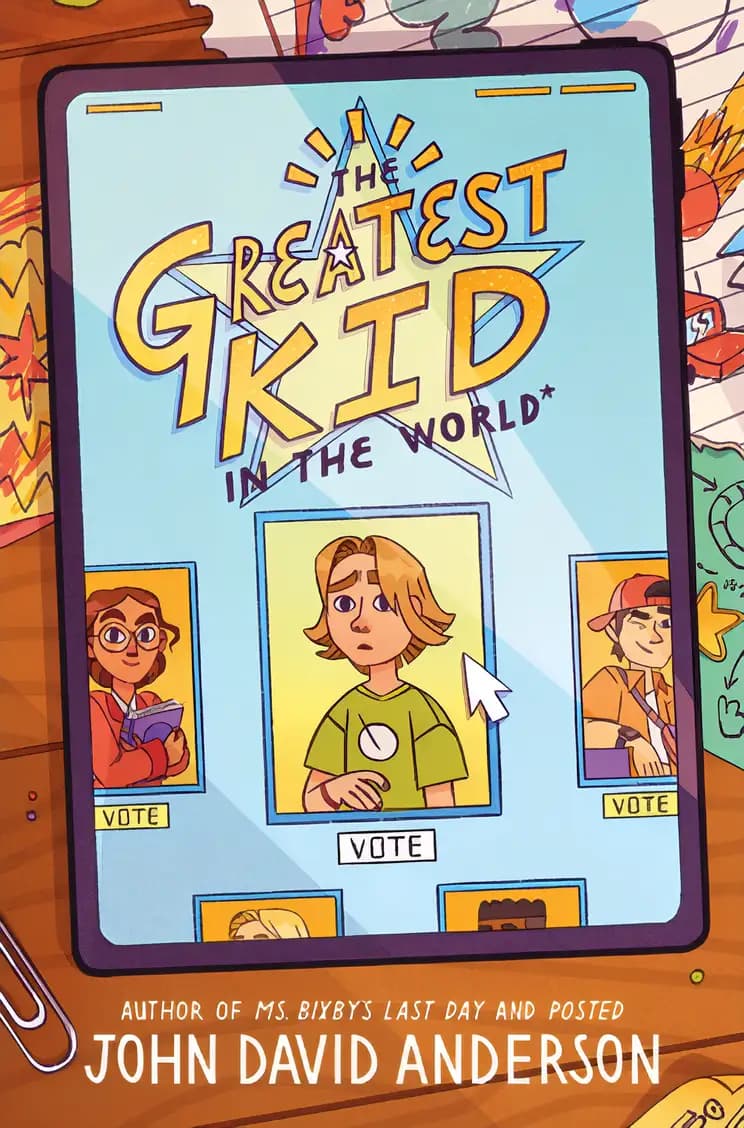
The Greatest Kid in the World
on Goodreads (188)
What’s inside...
From the beloved author of Posted comes the story of Zeke Stahls — a thoroughly average twelve-year-old who somehow finds himself in a competition to be named the World's Greatest Kid. Zeke Stahls is not the best kid in the world. Some days he struggles just to be good. He'd rather be pulling pranks than doing extra credit, and he's too busy performing experiments on his little brother, Nate, or tormenting his older sister, Jackie, to volunteer for charity. Which is why Zeke and his entire family are shocked when they receive word that he has been selected as a contestant in an online competition to find the World's Greatest Kid. Zeke has no idea how he was chosen for this, and he knows that measuring up to the other nominees--a saintly lineup of selfless, charming and talented do-gooders with photogenic smiles and hearts of gold--is hopeless. Still, with a $10,000 cash prize on the line, and Zeke's mom struggling to hold the family together on her single-parent salary, he decides to give it his best shot. As Zeke concocts various plots to show the world just how “great” he is, however, he finds himself wondering what that word even means, and who gets to decide. And what kind of kid he wants--and needs--to be.
Age
8-12
Length
368 pages
Text complexity
Discussion points
Why do you think the character is called 'The Greatest Kid in the World'? What qualities make someone great in your eyes?
How did the character overcome challenges in the story? Can you think of a time when you faced a challenge and how you dealt with it?
What did the character learn by the end of the book? What have you learned from this story?
How did the character’s friendships influence their journey? Why do you think friendships are important?
If you could give the character one piece of advice, what would it be and why?
Tip: Role play these questions
Encourage your child to express their thoughts and feelings about the story. Active listening shows that their opinions are valued.
Relate the themes of the book to your child’s experiences. This connection helps deepen their understanding and empathy.
Ask follow-up questions based on your child's responses to encourage deeper thinking and exploration of the book's themes.
Praise your child for their insights and contributions to the discussion. Positive reinforcement can boost their confidence and eagerness to share.
After discussing the book, consider engaging in an activity related to its theme, like drawing a picture of 'The Greatest Kid' from their perspective.
Key lessons
Example Lesson: Self-esteem building
Explanation: The protagonist demonstrates resilience and confidence in tackling everyday challenges, showing young readers the importance of believing in oneself.
Real-World Application: Children can apply this by embracing their unique qualities and facing challenges with optimism, enhancing their self-esteem.
Example Lesson: Empathy and kindness
Explanation: Throughout the story, the protagonist helps friends in need, teaching the importance of understanding and supporting others.
Real-World Application: Children learn to be considerate and supportive, fostering stronger relationships with peers and family.
Example Lesson: Importance of honesty
Explanation: The protagonist faces consequences for being untruthful but learns to value honesty, highlighting its significance.
Real-World Application: Children can practice being honest in their daily interactions, understanding that honesty builds trust and integrity.
Example Lesson: Perseverance
Explanation: The protagonist encounters setbacks but continues to strive towards goals, illustrating the value of perseverance.
Real-World Application: This teaches children to not give up easily, encouraging them to keep trying despite difficulties, which is crucial for their personal and academic growth.