
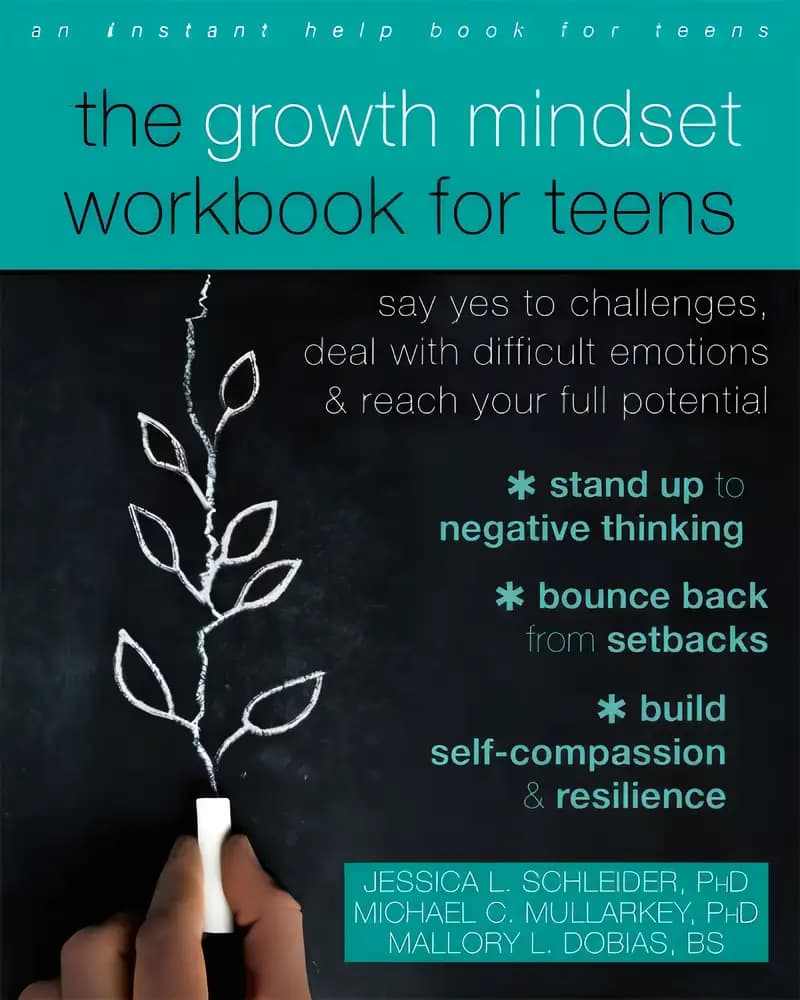
The Growth Mindset Workbook for Teens: Say Yes to Challenges, Deal with Difficult Emotions, and Reach Your Full Potential
Once/Now/Then/After Series
illustrations by
on Goodreads (11)
What’s inside...
Learn how changing your mindset can change your life! Do you ever give up when things are difficult? Sometimes we all say things like, 'I'm bad at math, so there's no point in studying' or 'I can't change—so why bother trying.' This is called having a fixed mindset. When you have a fixed mindset, you take failure as evidence that you're not good at something. On the other hand, a growth mindset is a way of viewing yourself and the world that says, 'I may not know how to do this now, but with effort, I can learn.' People with a growth mindset believe they can learn from challenges and setbacks—that they have constant potential for growth, change, and improvement. So, how can you develop a growth mindset? Written by experts in growth mindset and neuroscience, this easy-to-use workbook will show you how to change the way you think, so you can change your life. You'll learn powerful, proven-effective skills for coping with difficult feelings—including sadness, worry, and anger. And, most importantly, you'll find the tools you need to transform a fixed mindset into a growth mindset, make change happen, and reach your highest aspirations. If you want to go from 'No, I can't do it,' to 'Yes, bring it on!' this workbook will show you how to build a growth mindset and boost your confidence, so you can be your very best. Look out, world!
Series reading
Non-Sequential
Age
12-13
Length
160 pages
Text complexity
Discussion points
What is one challenge you faced recently and how did you handle it?
Can you think of a time when you had to deal with a difficult emotion? What did you learn from that experience?
How do you feel about trying new things that might be difficult?
What does 'reaching your full potential' mean to you?
Who is someone you admire for their ability to embrace challenges?
Tip: Role play these questions
Use active listening when your child speaks, showing genuine interest and avoid interrupting.
Encourage your child to express their thoughts and feelings without judgment or immediate solutions.
Relate the discussions to real-life situations or examples to make the conversation more relevant.
Praise your child for their openness and willingness to explore difficult topics.
Create a regular 'discussion time' that allows space for these kinds of conversations, ensuring it's a safe and open environment.
Key lessons
Example Lesson: Embracing Challenges
Explanation: The workbook guides teens on viewing challenges as opportunities for growth, shaping their problem-solving skills.
Real-World Application: Teens can apply this mindset at school when facing tough subjects or projects, thereby fostering resilience and academic growth.
Example Lesson: Managing Emotions
Explanation: It provides techniques to handle stress and anxiety, crucial for emotional intelligence.
Real-World Application: This skill can help teens navigate social interactions and personal setbacks, promoting mental health and well-being.
Example Lesson: Setting and Achieving Goals
Explanation: The book emphasizes the importance of clear goal-setting and incremental progress.
Real-World Application: Teens learn to set realistic goals and work steadily towards them, useful for academic and extracurricular achievements.
Example Lesson: Self-Reflection
Explanation: Teens are encouraged to reflect on their experiences and growth, boosting self-awareness.
Real-World Application: This practice aids in personal development and helps teens make informed decisions about their future.
Example Lesson: Perseverance
Explanation: By promoting a growth mindset, the workbook inspires teens to persist despite difficulties.
Real-World Application: Teens can apply perseverance in every aspect of life, from enduring sports practices to overcoming personal challenges.