
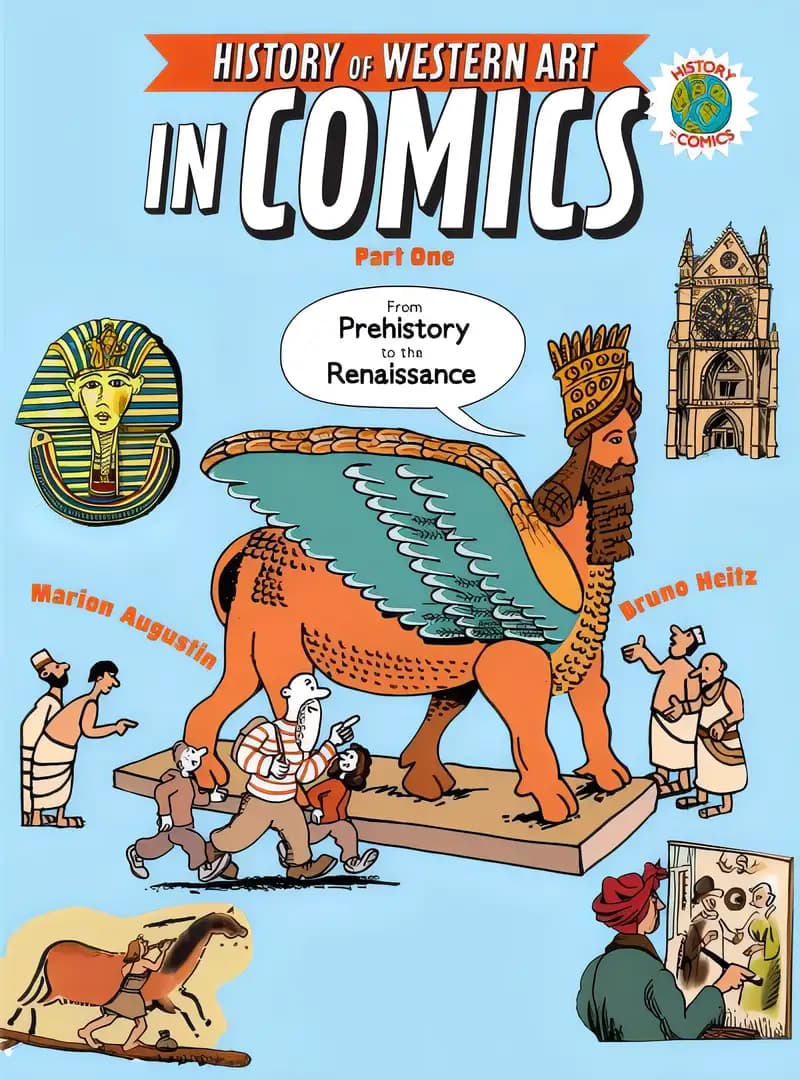
The History of Western Art in Comics Part One: From Prehistory to the Renaissance
What’s inside...
Learning about art through the ages has never been as interesting or fun as in this humorous and very informative graphic novel. As two kids give their grandpa a tour of Paris, he starts an interesting conversation with them--about where all the art they see in their lives--from the movie house to the stadiums to museums and even the subway-- started. Dad's impromptu history lesson goes back to the first Cavemen drawings to the pyramids of Giza, and by the end of the book includes Greco-Roman feats of ingenuity and the frescoes of the Renaissance. Recounted as a narrative about why different civilizations created different kinds of art, centuries of art history are explored entertainingly for young readers. Iconic works, such as Donatello's David and The Book of Kells, are included as well as architectural feats like the Colosseum. Written by a tour guide for museums and historic landmarks, the text is designed to entertain (with many funny asides and jokes) as it informs. The illustrations accurately portray the art and the artists described, with flavor and humor added to keep readers turning the page. Reproductions of the featured artworks and information about each piece are included in the back, along with a glossary of terms.
Why read this book
- Makes art history accessible and engaging for young readers.
- Illustrations stimulate visual learning and creativity.
- Encourages interest in cultural heritage and history.
- Supports development of critical thinking through historical context.
Age
10-12
Length
96 pages
Text complexity
Discussion points
What do you think life was like when the cave paintings were made?
How do different colors and shapes in the artwork make you feel?
Can you imagine being an artist in the Renaissance? What would you create?
Why do you think people created art in ancient times?
How do you think art has changed from ancient times to the Renaissance?
Tip: Role play these questions
Start by asking your child to pick their favorite piece of art from the book and describe what they see.
Encourage your child to express their thoughts and feelings about the artwork, fostering a deep, emotional connection.
Compare and contrast different periods mentioned in the book, discussing similarities and differences in styles and subjects.
Create a mini art project inspired by a favorite era or artist from the book, promoting hands-on learning.
Use the book as a starting point to explore more about cultural histories and how they have shaped modern art.
Key lessons
Example Lesson: Cultural appreciation and diversity
Explanation: The book navigates through various cultures and their contributions to art, showing the uniqueness and value of each.
Real-World Application: Children can learn to appreciate and respect different cultures, enhancing social interactions and global understanding.
Example Lesson: Historical knowledge and context
Explanation: By exploring art history from prehistory to the Renaissance, children gain insight into the historical context and evolution of human expression.
Real-World Application: This knowledge can help children understand the importance of history in shaping our present and encourage interest in past events.
Example Lesson: Creativity and expression
Explanation: The book highlights how art serves as a medium for personal and cultural expression through different historical periods.
Real-World Application: Children are encouraged to use creative outlets to express their thoughts and feelings, fostering emotional intelligence and problem-solving skills.
Example Lesson: Critical thinking and analysis
Explanation: By studying various art forms and their purposes, children learn to analyze and interpret artistic expressions critically.
Real-World Application: This skill can be applied in academic settings and in everyday decisions, promoting thoughtful and informed choices.
Example Lesson: Continuity and change
Explanation: The book demonstrates how art styles evolve over time while maintaining certain foundational elements, teaching the concepts of continuity and change.
Real-World Application: Understanding these concepts helps children grasp the dynamics of change in life and society, aiding their adaptability and long-term planning skills.