
The House on Hummingbird Island
on Goodreads (220)
What’s inside...
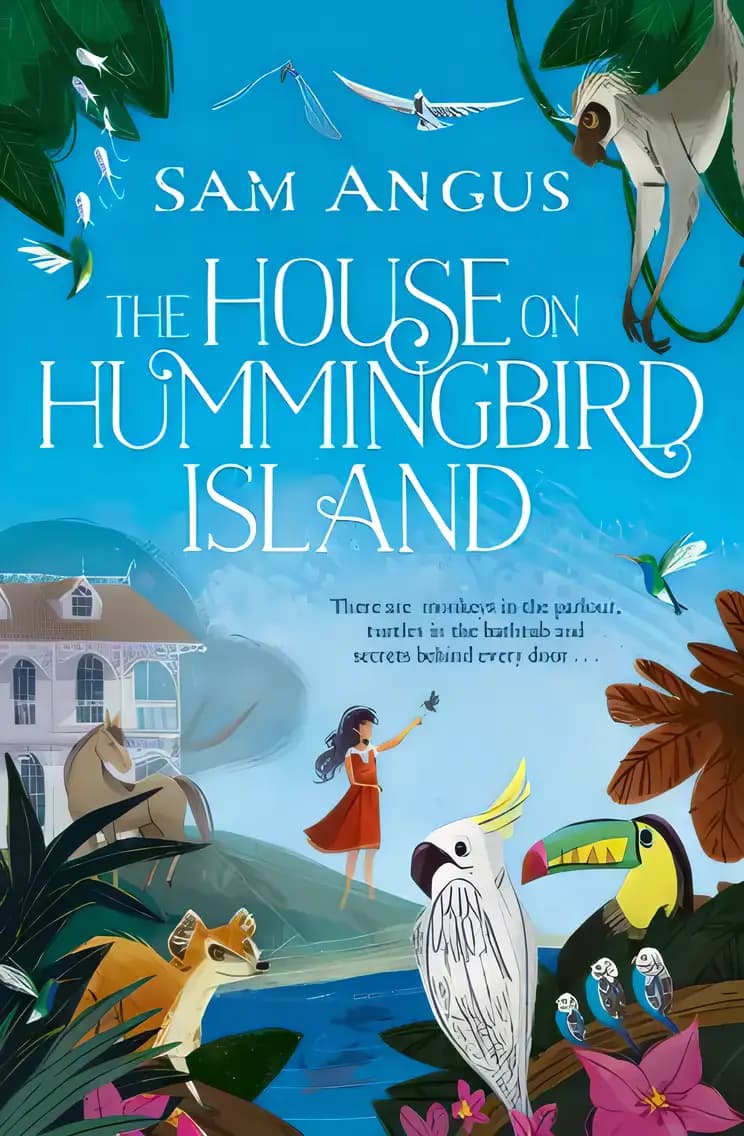
'We're going to a fine place,' Idie told Homer to console him, 'with gullies and monkeys and hummingbirds.' Idie Grace is twelve when she inherits a grand old house on a Caribbean island, and is sent away from grey old England to a place where hummingbirds hover and monkeys clamber from tree to tree. As a lady of property Idie can do as she pleases, so she fills the house with exotic animals, keeps her beloved horse in the hallway, and carries a grumpy, talking cockatoo called Homer on her shoulder. But the island house holds as many secrets as it does animals, and the truth behind Idie's inheritance is the biggest secret of all. Perfect for fans of Eva Ibbotson and Katherine Rundell.
Age
9-11
Length
389 pages
Text complexity
Discussion points
What do you think made Isla so attached to Hummingbird Island?
How do the animals on the island play a role in Isla's life and adventures?
In what ways do you think Isla changed from the beginning to the end of the story?
What would you do if you had an island all to yourself like Isla?
How do you think the story would be different if it was set in a city instead of an island?
Tip: Role play these questions
Encourage your child to imagine their own island adventure, and ask them what it would look like and the creatures they would want living there.
Discuss the importance of the setting in the story and how it influences the characters' actions and feelings.
Relate Isla's experiences to your child’s personal experiences with exploring new places or meeting new friends.
Engage in a post-reading activity like drawing a map of Hummingbird Island based on the descriptions in the book.
Key lessons
Example Lesson: The importance of empathy and understanding
Explanation: In 'The House on Hummingbird Island', the protagonist, Idie, interacts with a variety of characters from different backgrounds, showing kindness and understanding towards each person's unique circumstances.
Real-World Application: Children can learn to appreciate the diversity in people they meet in daily life and exhibit empathy towards their peers and adults alike.
Example Lesson: Resilience in adversity
Explanation: Idie faces several challenges throughout the novel, including personal loss and complex family dynamics, yet she continues to persevere and maintain a positive outlook.
Real-World Application: This teaches children the value of resilience and optimism, encouraging them to remain strong and hopeful even during difficult times.
Example Lesson: The significance of curiosity and exploration
Explanation: The story is set on an enigmatic island that Idie explores, which fuels her curiosity and love for adventure, leading to discoveries about her family history and herself.
Real-World Application: Children are encouraged to be curious about the world around them, explore their surroundings, and learn from their experiences, promoting a lifelong love for learning.
Example Lesson: Caring for animals and the environment
Explanation: Idie's interaction with the island's wildlife and her efforts to preserve the environment are significant themes in the book, highlighting her compassion and responsibility towards nature.
Real-World Application: This can inspire children to engage in activities that protect and nurture the environment and teach them the importance of coexisting harmoniously with nature.