
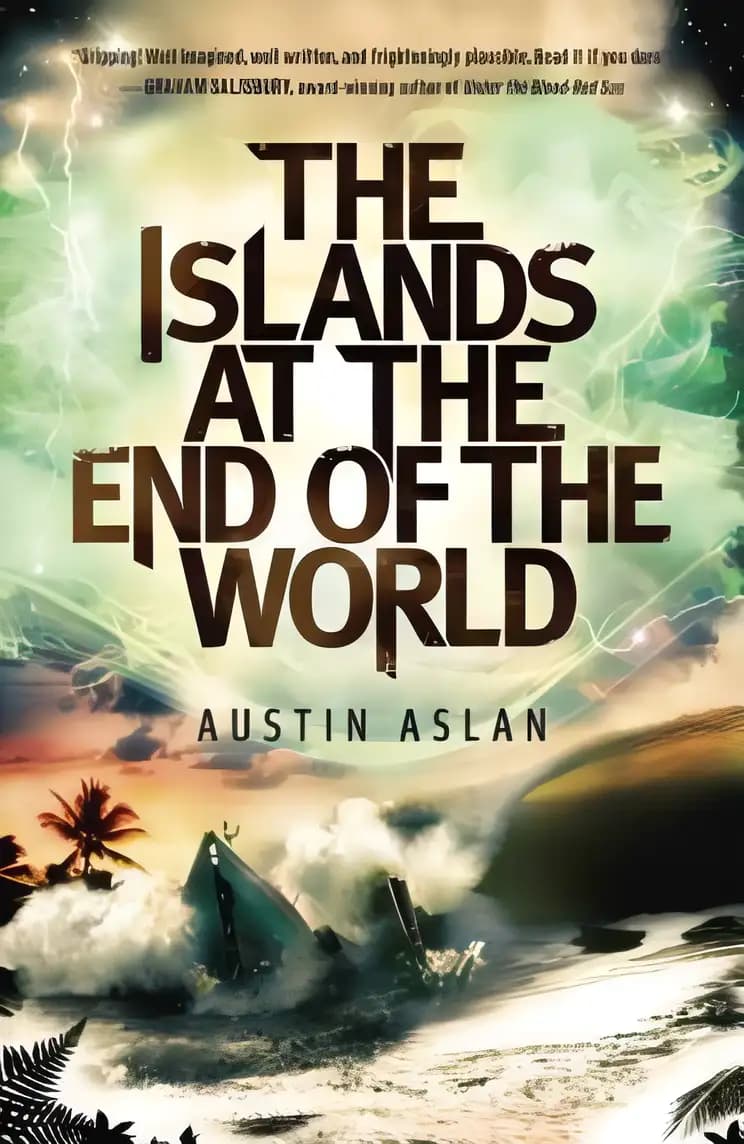
The Islands at the End of the World
#1 of 2 in Islands at the End of the World Series
on Goodreads (2,384)
What’s inside...
Right before my eyes, my beautiful islands are changing forever. And so am I ... Sixteen-year-old Leilani loves surfing and her home in Hilo, on the Big Island of Hawaii. But she's an outsider - half white, half Hawaiian, and an epileptic. While Lei and her father are on a visit to Oahu, a global disaster strikes. Technology and power fail, Hawaii is cut off from the world, and the islands revert to traditional ways of survival. As Lei and her dad embark on a nightmarish journey across islands to reach home and family, she learns that her epilepsy and her deep connection to Hawaii could be keys to ending the crisis before it becomes worse than anyone can imagine. A powerful story enriched by fascinating elements of Hawaiian ecology, culture, and warfare, this captivating and dramatic debut from Austin Aslan is the first of two novels. The author has a master’s degree in tropical conservation biology from the University of Hawaii at Hilo.
Character compass
Leilani
Mike
Discussion points
What challenges do Leilani and her father face, and how do they work together to overcome them?
How do you think you would react in a situation where the world as you know it changes drastically?
What did you learn about the importance of family and community from Leilani's experiences?
How do the themes of survival and resilience resonate with you, and can you think of examples from your own life?
In what ways do the environmental issues explored in the book reflect real-world concerns, and why is it important?
Tip: Role play these questions
Start by sharing your own reflections on the book to encourage open and honest dialogue.
Emphasize empathy and understanding by asking your child how they relate to the characters’ emotions and actions.
Highlight the importance of resilience and problem-solving skills by discussing Leilani’s decisions and their outcomes.
Connect the book’s environmental themes to real-life events to foster environmental awareness in your child.
Encourage critical thinking by asking your child what different choices they would have made if they were in the characters’ shoes.
Key lessons
Example Lesson: Resilience in face of adversity
Explanation: The protagonist, Leilani, and her father must navigate through catastrophic environmental changes and societal collapse in Hawaii, showcasing their perseverance and adaptability.
Real-World Application: Children can learn to stay determined and adapt to change whether it's moving to a new school or dealing with a challenging project.
Example Lesson: Importance of family and teamwork
Explanation: Leilani and her father rely on each other's strengths and work together to overcome numerous challenges, demonstrating the power of familial bonds and teamwork.
Real-World Application: This lesson teaches children the value of working together with family and friends to solve problems and support each other through hard times.
Example Lesson: Respect and understanding for different cultures
Explanation: The story is grounded in Hawaiian culture, including its mythology and the challenges faced by its people, promoting cultural appreciation and sensitivity.
Real-World Application: Children can apply this understanding by showing respect and interest in different cultures they encounter, helping them develop into well-rounded individuals.
Example Lesson: Environmental awareness and responsibility
Explanation: The book highlights the drastic effects of environmental neglect on Hawaii, which emphasizes the need for responsible environmental behavior.
Real-World Application: This can encourage children to engage in eco-friendly practices such as recycling, conserving water, and learning more about the environment.