
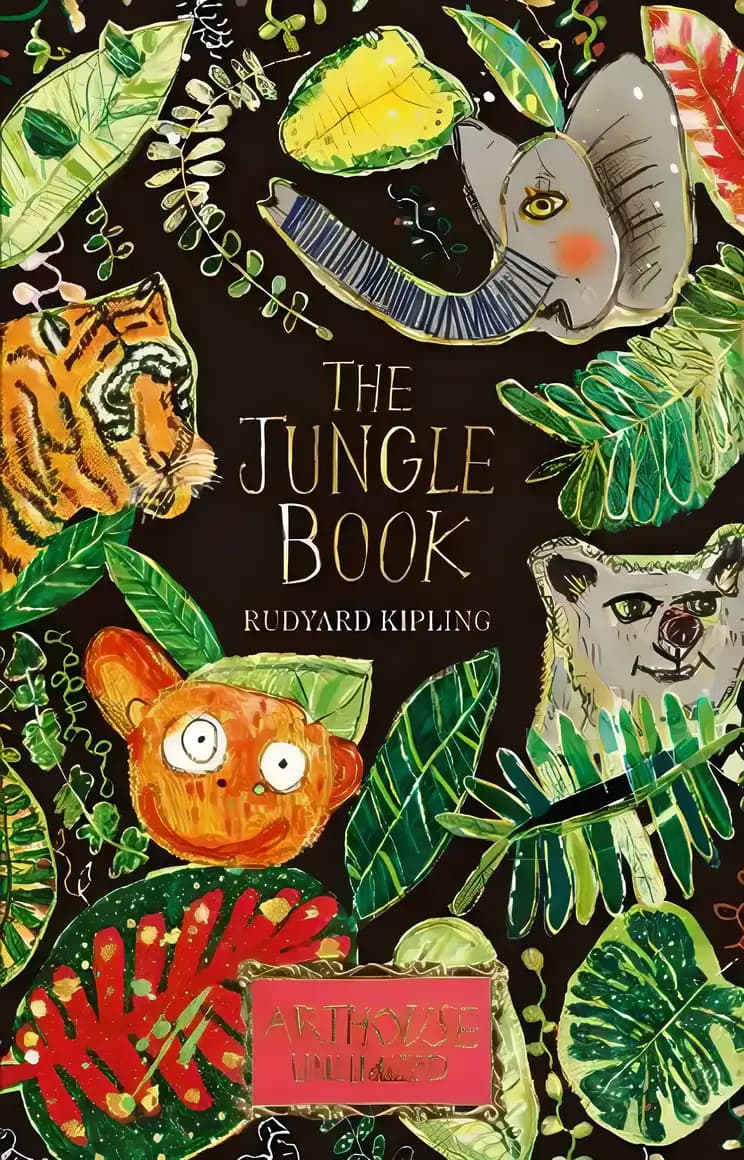
The Jungle Book: ARTHOUSE Unlimited Special Edition
on Goodreads (1)
What’s inside...
The Jungle Book is a classic collection of fables by Rudyard Kipling. Most of the characters are animals such as Shere Khan the tiger and Baloo the bear, though a principal character is the boy or 'man-cub' Mowgli, who is raised in the jungle by wolves. The stories in The Jungle Book are set in a forest in India; one place mentioned repeatedly is 'Seonee', in the central state of Madhya Pradesh.
Age
8-12
Length
256 pages
Text complexity
Character compass
Mowgli
Raksha
Kaa
Father Wolf
Akela
Bagheera
Baloo
Shere Khan
Discussion points
What do you think about Mowgli's relationship with the animals in the jungle? How do they help each other?
If you could talk to animals like Mowgli, what would you ask them?
How do the different environments in the jungle affect the story?
What lessons did Mowgli learn throughout his adventures?
Which character do you relate to the most and why?
Tip: Role play these questions
Encourage your child to imagine the jungle through Mowgli's eyes, promoting empathy and understanding. Discuss the importance of friendship and trust as demonstrated by Mowgli and his animal friends. Highlight the moral lessons in each chapter, asking your child how they might apply these lessons in their own life. Use the vivid descriptions in the book to ask your child to draw scenes or characters, enhancing their engagement and comprehension.
Key lessons
Example Lesson: The importance of friendship and community
Explanation: In 'The Jungle Book: ARTHOUSE Unlimited Special Edition', Mowgli builds strong relationships with various animals in the jungle, showcasing the strength found in diverse communities.
Real-World Application: Children can apply this lesson by learning to appreciate the value of forming friendships with people from different backgrounds and cultures.
Example Lesson: Courage and resilience
Explanation: Throughout the story, Mowgli faces various challenges and threats from the jungle's harsh environment and its predators, particularly Shere Khan, the tiger. His ability to confront these difficulties head-on demonstrates the importance of courage.
Real-World Application: This encourages children to face their own fears and challenges bravely, knowing that resilience can lead to overcoming obstacles in life.
Example Lesson: Respect for nature and wildlife
Explanation: Mowgli’s life in the jungle shows a harmonious relationship with the environment, teaching respect for wildlife and the importance of ecological balance.
Real-World Application: Children can learn to be more environmentally conscious, understanding the importance of preserving natural habitats and being kind to animals.
Example Lesson: Learning from differences
Explanation: Mowgli learns various life skills from different animals, such as building from the beavers or hunting from the wolves, illustrating the benefits of learning from differences.
Real-World Application: Children are encouraged to embrace diverse perspectives and skills from others, which can help them grow and learn more effectively.