
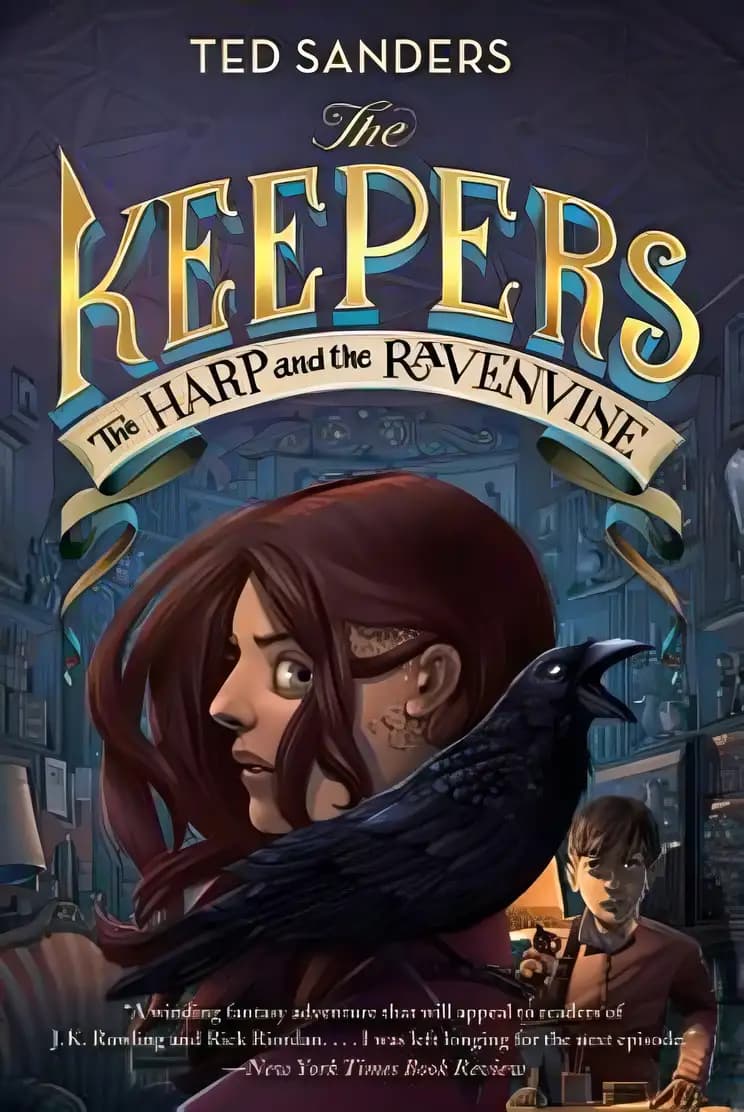
The Keepers #2: The Harp and the Ravenvine
#2 of 3 in The Keepers Series
What’s inside...
Ted Sanders's acclaimed Keepers series continues with The Harp and the Ravenvine, the eagerly awaited sequel to The Box and the Dragonfly. In this installment, Horace F. Andrews and his friend Chloe, both Keepers with unique abilities, face new challenges as a mysterious girl named April, wielding a damaged Tan'ji called the Ravenvine, journeys toward the Keeper stronghold, the Warren. As she travels, she encounters dangerous hunters and strange new companions. The story builds on the theme of curiosity, discovery, and possibility, and questions what will happen if April's Tan'ji cannot be repaired. This captivating tween fantasy combines intrigue, magic, and science fiction elements to explore a world where nothing is impossible.
Character compass
Horace F. Andrews
Chloe
Discussion points
How do you think Horace felt when he discovered the power of the Ravenvine? What would you do if you found something so unique?
What do you think about the bond between Chloe and Horace? How important is trust in their friendship?
The Keepers face many challenges. Can you think of a time when you had to overcome a difficult situation? How did you handle it?
What role do you think the artifacts play in the story? If you could have any artifact from the book, which one would it be and why?
The world in 'The Harp and the Ravenvine' is filled with wonders and dangers. What part of their world would you like to explore, and what would you hope to find?
Tip: Role play these questions
Encourage your child to put themselves in the characters' shoes, fostering empathy and deeper understanding of the narrative.
Discuss the moral and ethical decisions made by the characters to help your child develop their own sense of values.
Use the unique artifacts in the story as a springboard to discuss creativity and imagination. Ask your child what magical artifact they might invent.
Explore the theme of friendship in the book. Discuss with your child the qualities that make a good friend and the importance of trust.
Encourage your child to predict what might happen next in the story or in a hypothetical situation, enhancing their analytical thinking skills.
Key lessons
Example Lesson: The importance of trust and teamwork
Explanation: Throughout the book, Horace and Chloe must rely on each other and work together to navigate the challenges posed by the magical world. This collaboration is key to their success.
Real-World Application: Children can learn to trust and cooperate with their peers in school projects or team sports, understanding that working together can lead to successful outcomes.
Example Lesson: The value of courage in the face of fear
Explanation: The main characters frequently confront scary and uncertain situations. Their bravery in these moments is pivotal to advancing their journey.
Real-World Application: This encourages children to face their own fears, be it trying out for a new activity or standing up against something wrong, showing them the benefits of courage.
Example Lesson: Responsibility for one's actions
Explanation: Characters in the story must deal with the consequences of their choices, good or bad. This narrative element highlights the concept of accountability.
Real-World Application: Kids can learn to take responsibility for their actions, understanding that their choices affect not only themselves but others around them as well.
Example Lesson: The power of curiosity and learning
Explanation: Horace's thirst for knowledge about the magical artifacts drives much of the plot, showcasing that curiosity can lead to important discoveries and personal growth.
Real-World Application: Encouraging children to remain curious and seek out information can foster a lifelong love of learning and exploration.
Example Lesson: Resilience through adversity
Explanation: The characters often face setbacks, yet they continue to persevere. This resilience is crucial to their success.
Real-World Application: Teaching children the importance of perseverance in everyday challenges, such as mastering a new skill or overcoming a personal difficulty, reinforces the value of not giving up.