
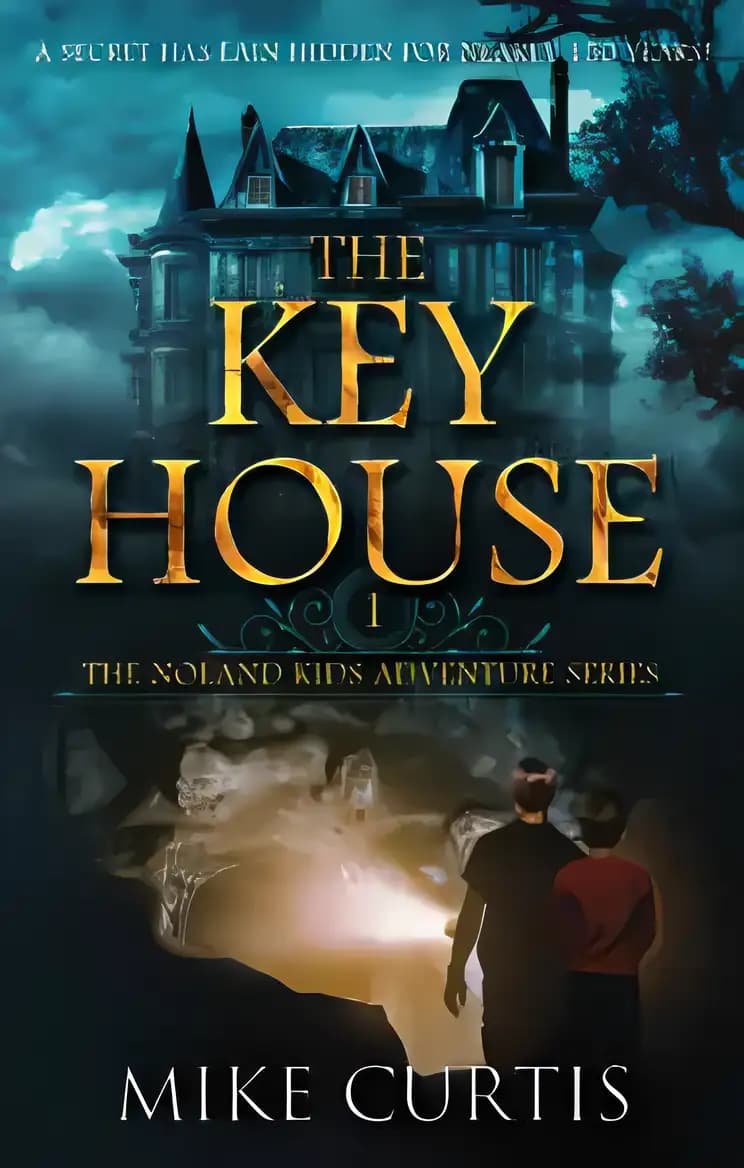
The Key House
#1 of 4 in The Noland Kids Adventure Series
on Goodreads (114)
What’s inside...
After moving into a newly inherited house, the Noland kids discover clues to a supposed treasure hidden by their great-great-grandfather. But when town rumors and some spiteful neighbors suggest foul play was involved, Caleb and David set out on a quest to prove otherwise. With unexpected dangers looming large and threatening their mission, can the Noland kids discover the mysterious treasure or whatever lies at the end of their treacherous venture, before time runs out and all is lost?
Discussion points
What do you think the key in 'The Key House' symbolizes and why?
How did the characters' feelings change throughout the story?
If you found a key like the one in the book, what do you hope it would open?
Why do you think the author chose a house as an important part of the story?
How would you help a friend who was in a similar situation to the characters?
Tip: Role play these questions
Encourage your child to imagine alternative endings for the story to foster creativity.
Ask your child to draw their version of the Key House, incorporating elements from the story.
While discussing the book, relate the characters' experiences to real-life situations your child might encounter to enhance understanding.
Encourage your child to think about the symbolism in the book, such as what the key represents in their own life.
Discuss the moral or lesson of the story to reinforce values and ethical thinking.
Key lessons
Example Lesson: Importance of teamwork
Explanation: In 'The Key House', characters work together to solve the mystery of the missing key, showing that collaboration leads to success.
Real-World Application: Children are encouraged to cooperate with others in tasks at school or during play, understanding that teamwork often achieves better results.
Example Lesson: Value of perseverance
Explanation: The protagonist faces many challenges but never gives up. Their determination is pivotal to finding the key.
Real-World Application: This teaches children the importance of persisting through difficulties whether in learning new skills or facing personal challenges.
Example Lesson: Respect for diversity
Explanation: Characters in 'The Key House' come from diverse backgrounds, promoting inclusivity and understanding.
Real-World Application: Children learn to embrace and respect people’s differences, contributing to a more inclusive attitude in their everyday interactions.
Example Lesson: Problem-solving skills
Explanation: The book requires characters to think critically and creatively to uncover clues, enhancing their problem-solving capabilities.
Real-World Application: This encourages children to approach their problems thoughtfully, applying critical thinking skills to overcome obstacles at school or in life.
Example Lesson: Courage to face the unknown
Explanation: As characters explore unfamiliar parts of the house, they learn to conquer fear and step into the unknown.
Real-World Application: Children learn the virtue of bravery when encountering new experiences or environments, helping them grow and learn confidently.