
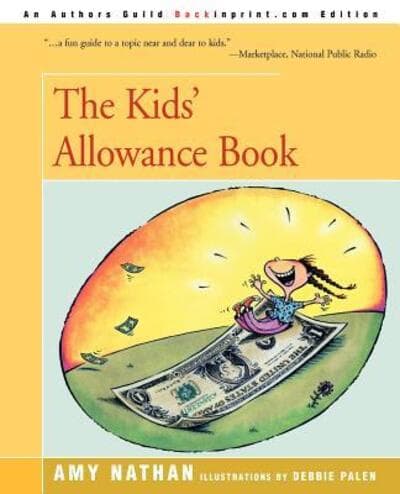
The Kids' Allowance Book
What’s inside...
"A completely charming discussion of allowances.communicates some of life's important skills in a way that is fun and practical." -Kirkus Reviews "Well worth the investment." -School Library Journal This lively book answers families' questions about allowances: How much to give? When to start? How to set it up? How to keep kids from blowing it? Written for kids, but vital for parents, the book's advice comes from the Allowance All-Star Squad, 166 kids who have tackled tons of allowance snags-with great results! Their parents chime in, too, as do financial and psychology experts.
Age
9-12
Length
112 pages
Text complexity
Discussion points
What would you do if you received an allowance? How would you manage it?
Can you think of some ways to earn money besides getting an allowance?
What are some things you'd like to save money for?
How do you feel about sharing or donating some of your money to others?
What did you learn from the book about managing money wisely?
Tip: Role play these questions
Encourage your child to think critically about money by asking them to plan a small budget using their allowance or imagined earnings.
Discuss the importance of saving versus spending immediately, and ask your child to think about short-term and long-term goals they might have.
Make connections between earning and responsibility by talking about chores or tasks that could be tied to an allowance.
Use examples from the book to highlight good financial decisions and discuss any mistakes characters may have made to teach valuable lessons.
Encourage empathy by discussing why it might be a good idea to use some money for helping others, and ask your child how they feel about it.
Key lessons
Example Lesson: Financial Responsibility
Explanation: This book introduces children to the concept of managing an allowance, teaching them how to handle money wisely from a young age.
Real-World Application: Children can apply these principles by saving portions of their allowance for larger purchases or dividing it into spending, saving, and giving categories.
Example Lesson: The Value of Saving
Explanation: Through narrative and examples, the book encourages children to save their allowance, showing them the rewards of patience and foresight.
Real-World Application: Kids can start a savings jar or a bank account, where they regularly deposit a part of their allowance to understand the growth over time through interest or saved amount.
Example Lesson: Budgeting Basics
Explanation: The book provides simple, child-friendly explanations of budgeting, allowing children to plan how they might spend or save their allowance.
Real-World Application: Children can create their own budget charts, decide upon short-term and long-term spending goals, and track their financial decisions.
Example Lesson: Decision Making
Explanation: Children learn to make choices about how to spend their money, understanding the consequences of their financial decisions.
Real-World Application: When faced with the decision to buy a small toy now or save for a much-wanted video game, children will be equipped to make informed decisions that balance immediate pleasure with long-term rewards.
Example Lesson: Charitable Giving
Explanation: The book suggests that part of a child's allowance could be set aside for charitable donations, instilling a sense of empathy and social responsibility.
Real-World Application: Children can choose a charity they feel passionate about and donate a small portion of their allowance, learning the importance of helping others and understanding the impact of generosity.