
The Kids' Nature Book:
on Goodreads (43)
What’s inside...
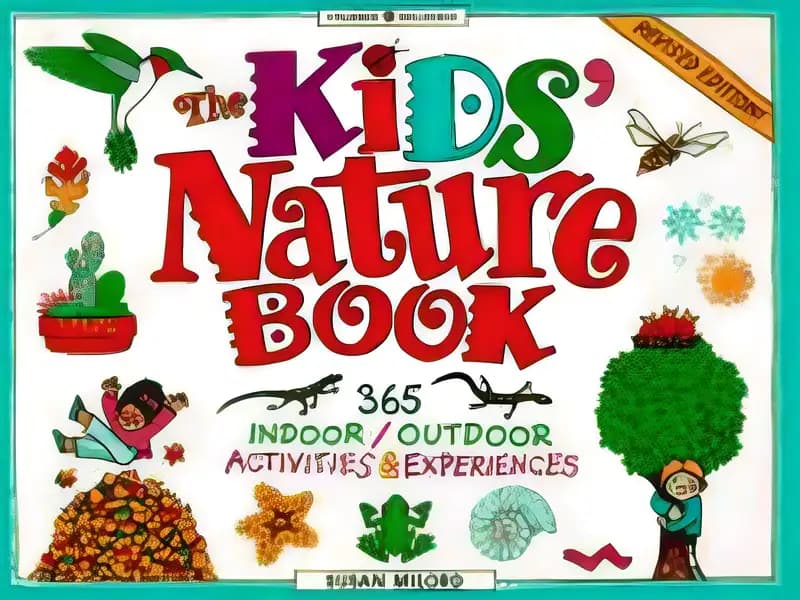
Winner of Parents' Choice Gold Award and endorsed by the National Wildlife Federation and the Massachusetts Audubon Society, this book includes 365 self-contained, fully-explained indoor and outdoor activities, observations, and experiences, coupled with charming illustrations.
Age
8-12
Length
158 pages
Text complexity
Discussion points
What is your favorite activity from 'The Kids' Nature Book' and why?
How do you think the animals feel in their natural habitats?
Can you imagine creating your own nature adventure? What would it include?
What are some ways we can help take care of nature as shown in the book?
If you could ask the author one question about nature, what would it be?
Tip: Role play these questions
Share your own experiences with nature as you discuss the book, making the conversation more relatable.
Encourage your child to draw or describe their favorite scene or activity from the book to deepen their connection.
Use the book as a springboard to plan a family nature outing, tying the themes of the book to real-life experiences.
Ask follow-up questions to your child’s responses to encourage deeper thinking and exploration of the book’s themes.
Key lessons
Example Lesson: Curiosity about the natural world
Explanation: Through various adventures and activities outlined in 'The Kids’ Nature Book', children are encouraged to explore and ask questions about the environment.
Real-World Application: Children learn to observe nature, ask questions, and seek answers through hands-on experiences — skills that are applicable in academic and real-world problem solving.
Example Lesson: Responsibility towards nature
Explanation: The book discusses different ways children can care for the environment, instilling a sense of responsibility for nature’s wellbeing.
Real-World Application: This lesson helps children understand the importance of environmental conservation, promoting actions like recycling, conserving water, and preserving habitats in their daily lives.
Example Lesson: Seasonal changes and their impacts
Explanation: Susan Milord explains the four seasons and their effects on flora and fauna, teaching children about the cyclic patterns of nature.
Real-World Application: Understanding seasonal changes can help children grasp the concept of time and change, and the importance of adapting to shifting conditions.
Example Lesson: Creativity through interaction with nature
Explanation: The book offers various crafts and activities using natural materials, which encourages creativity.
Real-World Application: Engaging in creative activities with elements from nature can enhance children’s artistic skills and their appreciation for natural beauty, promoting both creativity and emotional well-being.
Example Lesson: Science fundamentals through observation
Explanation: Children are prompted to observe natural phenomena and draw conclusions, which introduces basic scientific inquiry and reasoning.
Real-World Application: This method of learning fosters critical thinking and analytical skills as children make observations, predict outcomes, and verify their predictions.