
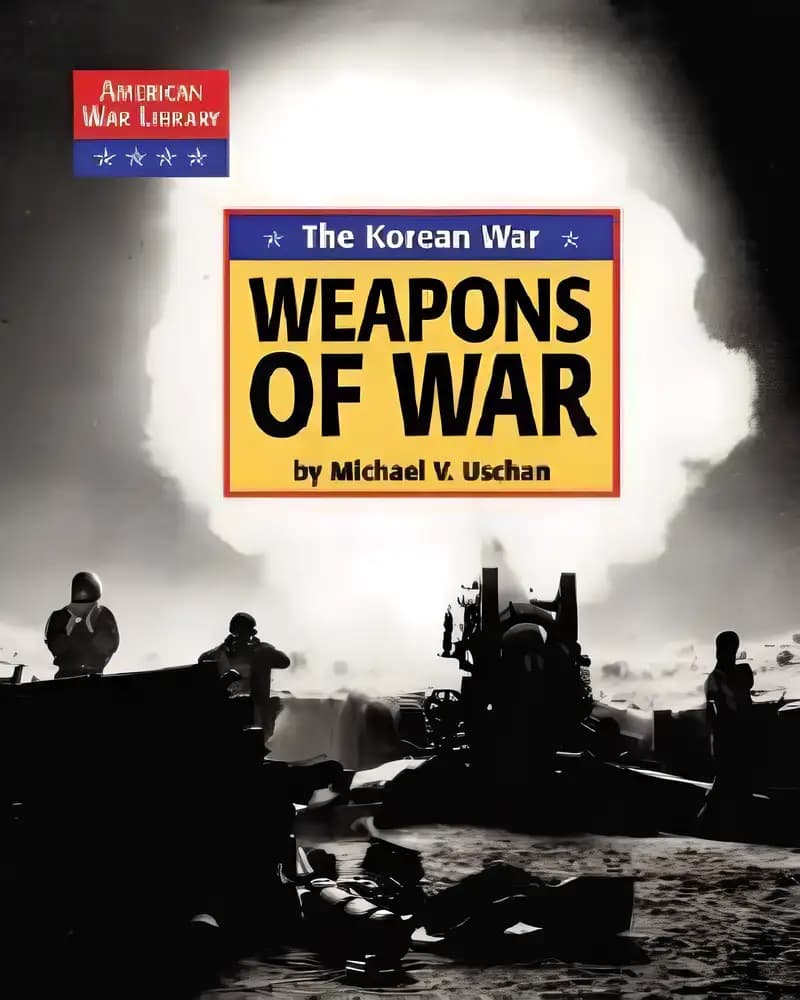
The Korean War: Weapons of War
American war library Series
What’s inside...
Discusses the weaponry used during the Korean War, including ships, tanks and artillery, and fighter planes. The Korean War was basically fought with the same weapons used in World War II -- rifles, machine guns, hand grenades, tanks, mortars, and artillery pieces. However, this conflict also featured the first combat between jet airplanes. And one weapon the United States dared not use was the atomic bomb.
Series reading
Non-Sequential
Age
11-17
Length
112 pages
Text complexity
Discussion points
How did the different weapons used in the Korean War impact the outcome of the conflict?
What do you think were the main reasons countries involved in the Korean War chose to use these specific types of weapons?
Can you compare the technologies of the weapons used in the Korean War to modern weaponry? What differences and similarities do you notice?
How do you think the soldiers felt using these weapons during the war?
What can we learn from the use of these weapons about the importance of peace and conflict resolution?
Tip: Role play these questions
Before starting the discussion, give a brief overview of the Korean War to ensure your child understands the context of the book.
Encourage your child to think critically about the reasons behind the use of different weapons and their consequences.
Ask follow-up questions based on your child's responses to encourage deeper thinking and connection to the material.
Relate the discussion to current events, helping your child see the relevance of historical wars to modern-day conflicts.
Praise your child’s insights and contributions to the conversation to boost confidence and encourage further learning and curiosity.
Key lessons
Example Lesson: The importance of understanding history
Explanation: Craig Blohm's 'The Korean War: Weapons of War' provides a comprehensive look into the historical events and weaponry used during the Korean War, teaching children the significance of past conflicts.
Real-World Application: Kids can apply this lesson by becoming more informed about world history which can foster awareness and empathy towards different cultures and historical backgrounds.
Example Lesson: Technological advancement and its impacts
Explanation: The book details various military technologies and their evolution during the Korean War, highlighting how technology can change warfare and societies.
Real-World Application: Children can relate this to the role technology plays in their everyday lives, understanding both its benefits and the responsibilities it brings.
Example Lesson: The value of peace
Explanation: Through the exploration of war and its consequences, 'The Korean War: Weapons of War' teaches the value of peace and the importance of diplomatic solutions over conflict.
Real-World Application: This lesson teaches children to resolve conflicts amicably in their personal interactions and understand the importance of peaceful negotiations.
Example Lesson: Critical thinking about war and morality
Explanation: The book encourages readers to think critically about the moral implications of war, including the reasons behind it and the effects on people's lives.
Real-World Application: Children can use this understanding to form their own opinions on ethical issues and learn to evaluate complex situations from multiple perspectives.